
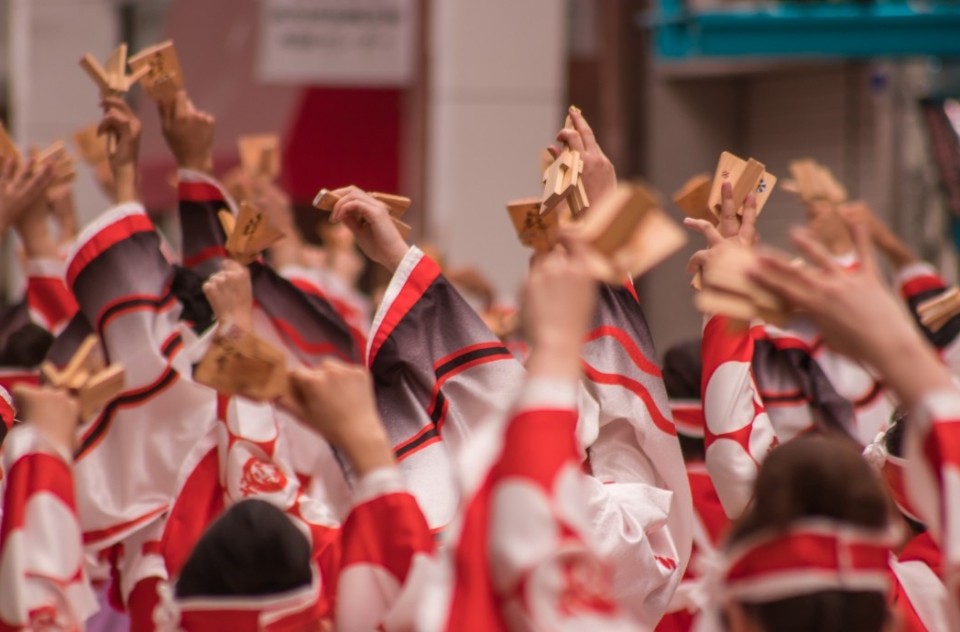
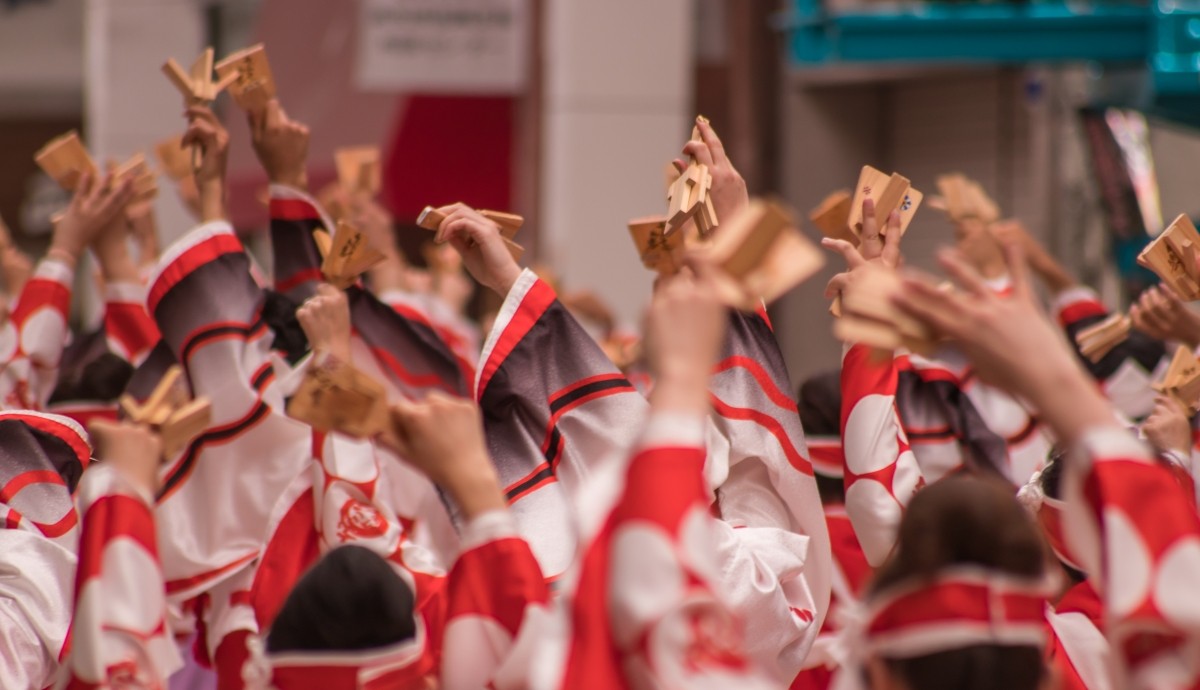
From summer to early autumn, Tokyo becomes the gathering place for traditional dances from all over Japan, such as the Koenji Awa Odori and Harajuku Omotesando Genki Matsuri Super Yosakoi, featuring Awa Odori, Yosakoi, Soran Bushi, and more. There are also many unique and unmissable events, such as community-driven Bon Odori festivals with a charming local feel, like the Kanda Myojin Noryo Matsuri. In this article, we will clearly explain Yosakoi, Soran Bushi, Awa Odori, Eisa, Bon Odori, and introduce the diverse dance festivals held in Tokyo. Discover the charm of Japanese culture through these dances.
First Things to Know! The Characteristics of Japan’s Representative Traditional Dances: What’s the Difference Between Yosakoi and Soran Bushi?
What is Yosakoi? | An Energetic Dance from Kochi Using Naruko Clappers
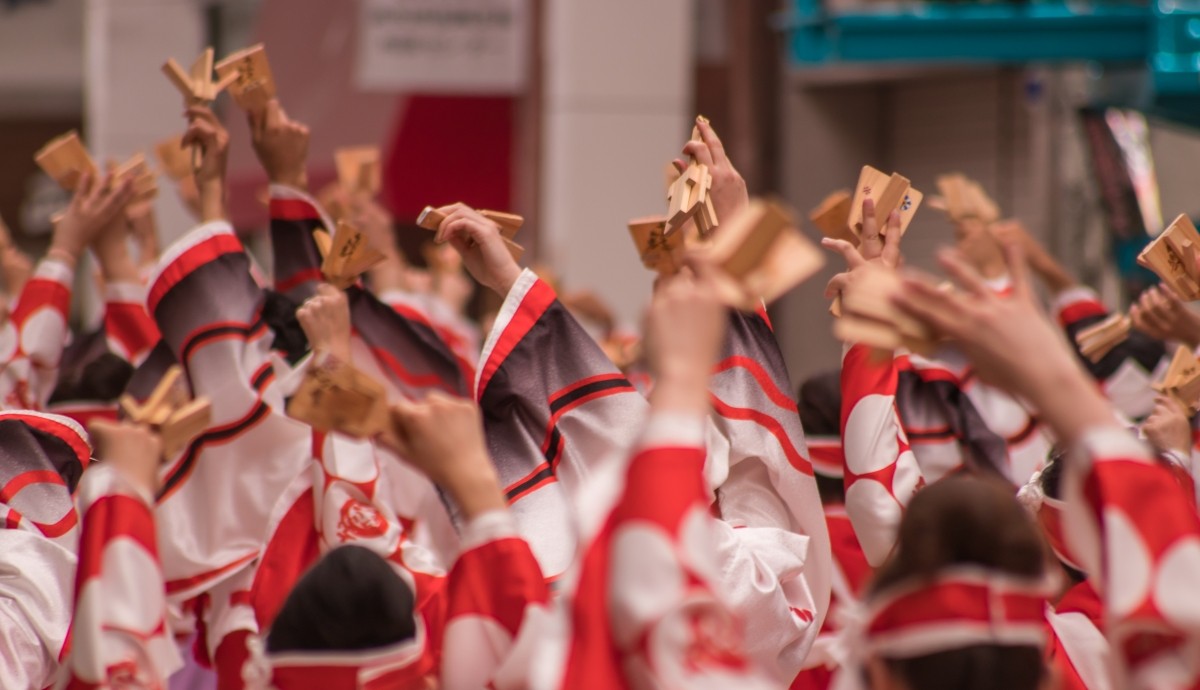
Yosakoi Naruko Dance was born in Kochi in 1954, created to pray for the health and prosperity of local residents, overcome the economic downturn, and revitalize local shopping districts. The two basic rules are: dancers must move forward while shaking “naruko” (wooden clappers) in their hands, and the phrase “Yosakoi Naruko Odori” must be included in the song. Other than these, the style is extremely free, evolving not only with traditional dance but also incorporating samba, rock, and many other genres. Another major feature is the presence of the flamboyant “jikata-sha” (music trucks) that lead the performance and provide the music. This free-spirited style has spread nationwide, and today, Yosakoi has developed into a lively festival with many fans.
What is Soran Bushi? | A Powerful Dance Style Based on a Hokkaido Folk Song
Soran Bushi is a dance performed to a folk song that was sung along the Sea of Japan coast in Hokkaido from the Edo to Taisho periods, to synchronize the movements of herring fishermen. Soran Bushi is one of the folk songs traditionally sung by herring fishermen, and its origin is the “Okiage Ondo,” sung when lifting large catches of herring from the boats onto land. As a result, the dance features powerful movements such as bracing the legs, rowing oars, and pulling in nets. In the 1980s, “Nanchu Soran,” a rock-style arrangement of the traditional Soran Bushi, was created. Today, Soran Bushi is performed at festivals and events all over Japan.
What’s the Difference Between Yosakoi and Soran Bushi? Explaining the Differences in Origin, Dance Style, and Music
Soran Bushi, which originated in Hokkaido, is a folk song sung to help coordinate the strenuous work of herring fishing, so the dance reflects fishing movements. On the other hand, Yosakoi was born in Kochi with the hope of recovery from recession and for citizens’ health, and is characterized by its diverse evolution by each team. In terms of music, while Soran Bushi may be arranged in rock or other modern styles while still staying true to its traditional roots, Yosakoi teams are free to create and change both the lyrics and music as they wish.
What is Awa Odori? | One of Japan’s Three Great Bon Odori, Originating in Tokushima
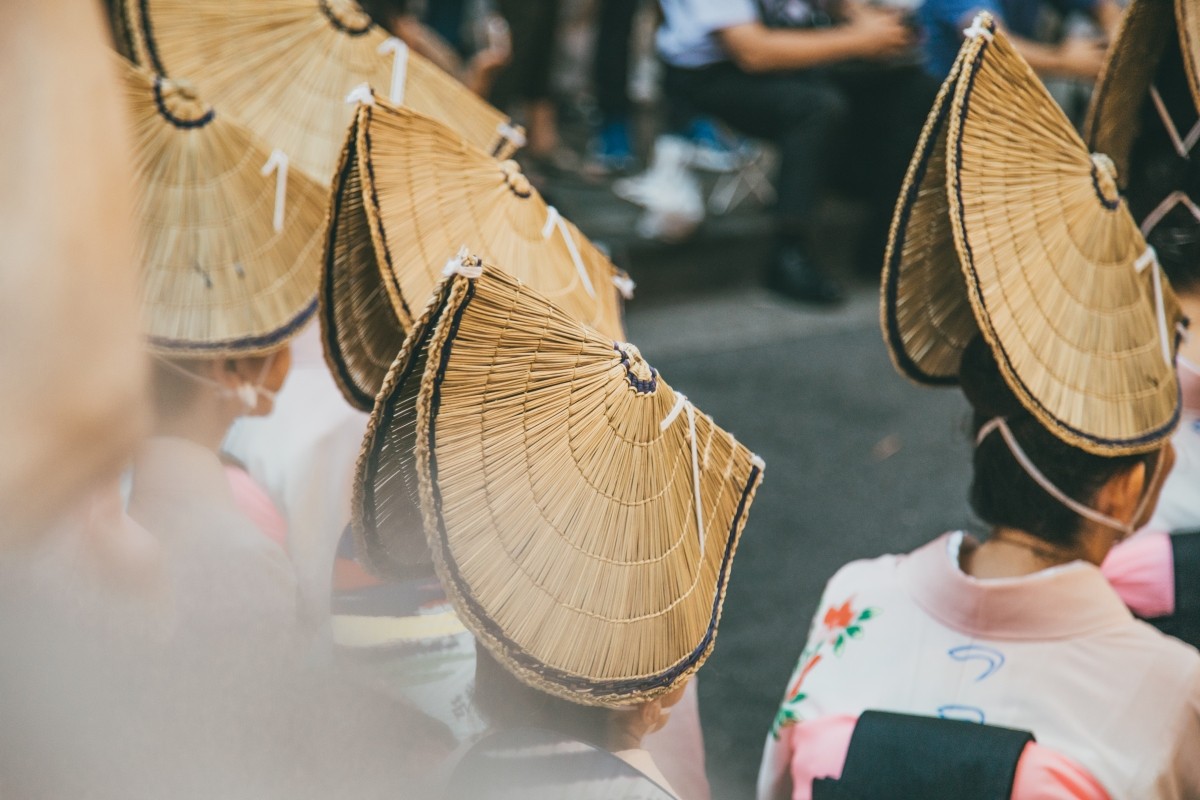
Awa Odori, which originated in Tokushima Prefecture and has a history of over 400 years, is one of Japan’s three great Bon Odori. Every year, a large-scale festival is held in Tokushima City, attracting over one million visitors from Japan and abroad. There are over 1,000 groups known as “ren,” and the basic structure consists of powerful men’s dances, graceful women’s dances, and musicians playing instruments. Awa Odori is said to be so easy to join that “if you raise your hands and move your feet, you’re doing Awa Odori,” making it accessible even for beginners. The entire city is enveloped in excitement with various forms such as “nagashi” (processions through the streets), “kumi-odori” (stage performances), and “niwaka-ren” (groups that anyone can join on the spot).
What is Eisa?|A Traditional Performing Art of Okinawa Featuring Powerful Taiko Drum Dances
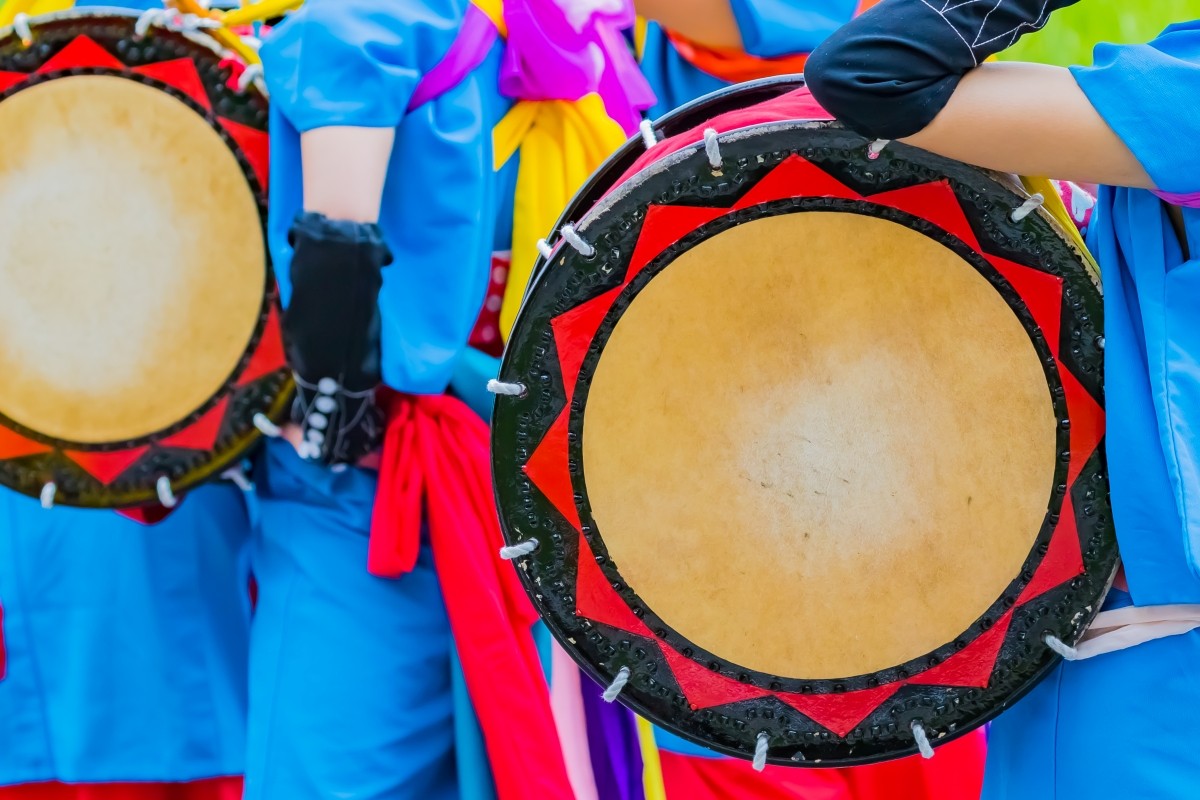
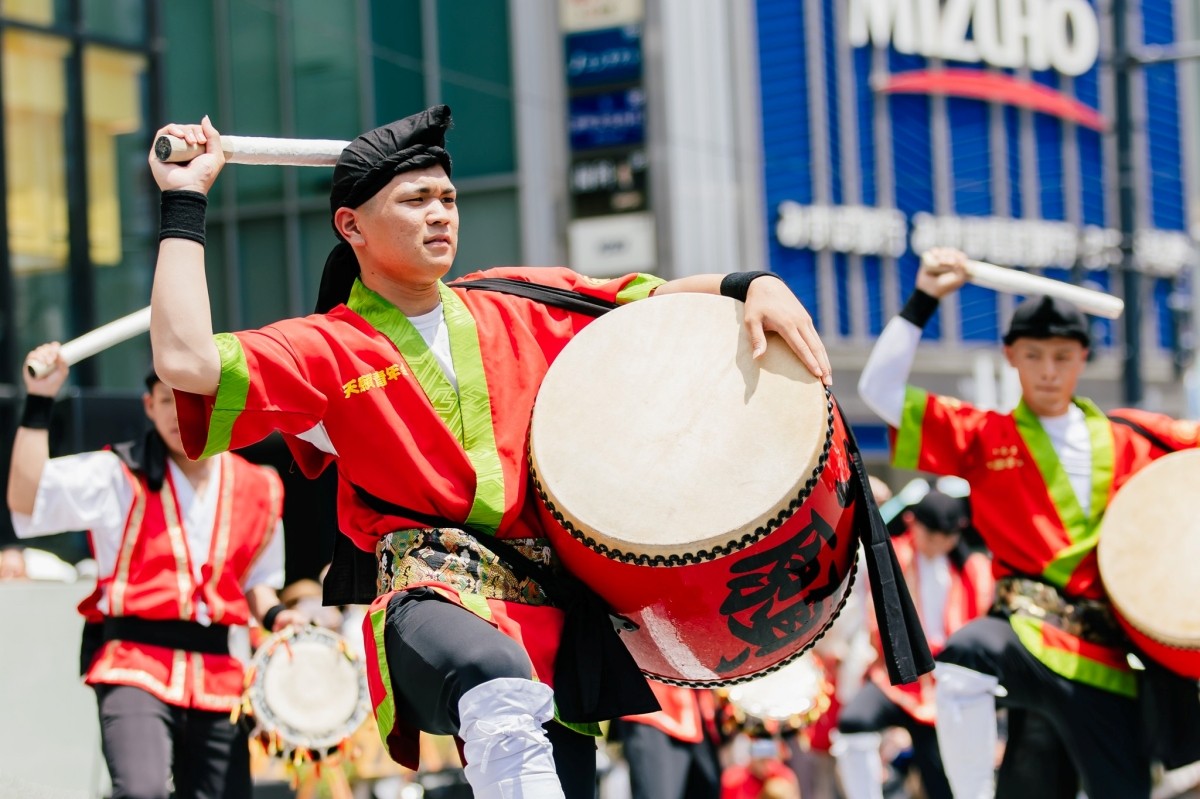
Eisa is a traditional performing art from Okinawa, originally danced to honor and send off ancestors, much like Bon Odori. During the Obon season, youth groups in each area of Okinawa march through their local communities while performing Eisa. While Eisa was originally composed only of hand dances, today the mainstream style is "Taiko Eisa," which features dynamic performances using large taiko drums, shime-daiko (small hand-held drums), and paranku (small hand drums). The basic formation consists of a flag leader at the front, followed by drummers, male and female hand dancers, shamisen players and singers, and the clown-like "Chondara" characters. The powerful, perfectly synchronized dances, filled with spirit and intensity, are a major attraction.
What is Bon Odori?|A Traditional Japanese Folk Event Danced in Communities During Summer
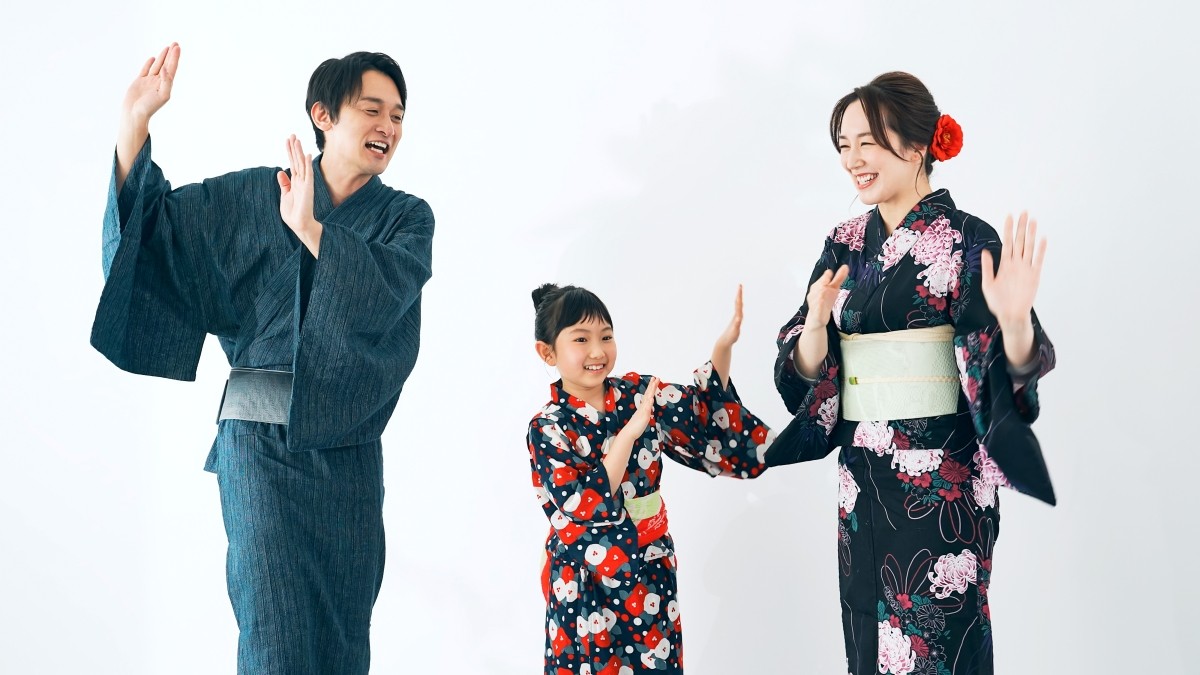
Bon Odori is a traditional folk event held to honor ancestors during the Obon period, typically from August 13th to 16th (though in some regions it is held in July). Among the three most famous Bon Odori festivals in Japan are "Nishimonai Bon Odori," "Gujo Odori," and "Awa Odori," all of which attract large numbers of tourists. In addition, Bon Odori festivals are held all over Japan during the Obon season, and many of them are open for anyone to join, not just to watch.
Next, we’ll introduce dance festivals and events in Tokyo where you can experience these performances firsthand.
① Koenji Awa Odori|Tokyo's Largest Dance Festival
© TCVB
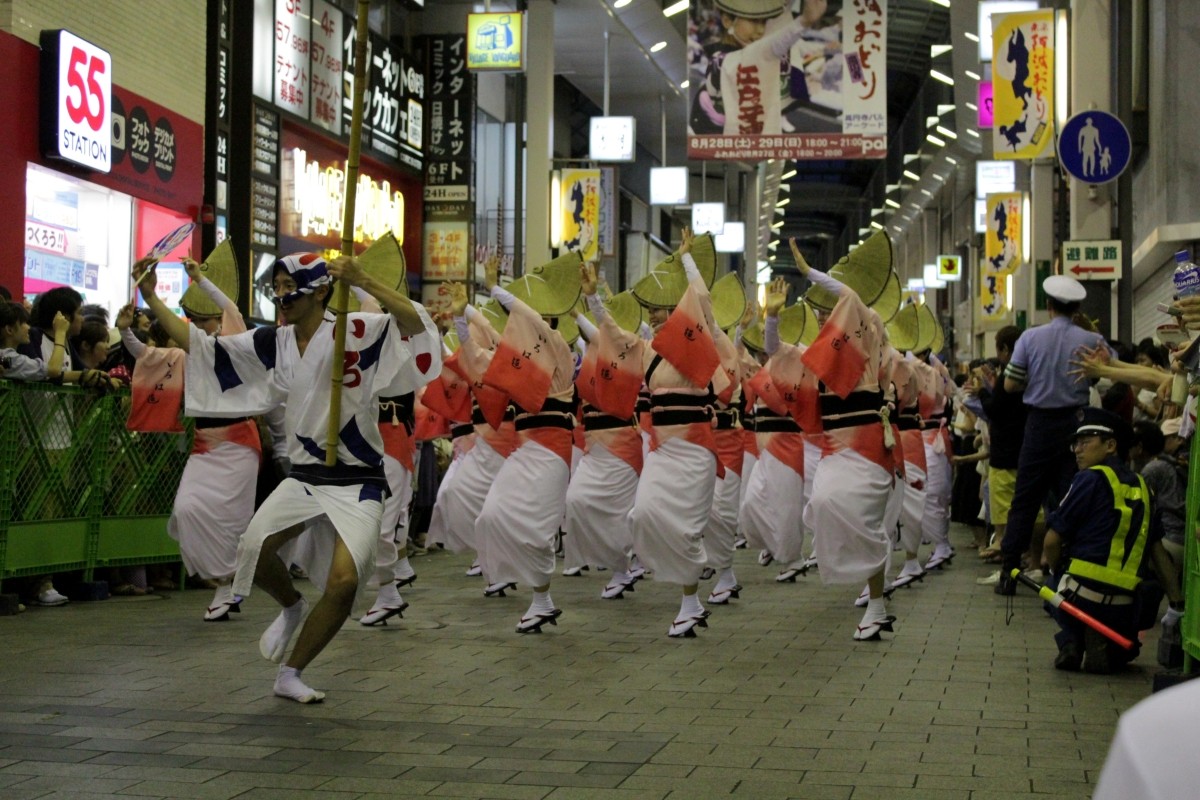
The "Tokyo Koenji Awa Odori" began in 1957 in the Koenji Pal Shopping Street as a way to revitalize the local community. Today, it has become the largest Awa Odori event in the Kanto region, attracting over one million spectators. There are eight performance venues, and many participating "ren" (dance troupes) parade through the streets in nagashi-style dances or perform choreographed group dances on stages, filling the entire area with excitement. When watching, it is convenient to use the official website's "Ren Performance Schedule." You can check the current location of your favorite ren, whether you want to see the winning troupe or a group you've seen before. Since the event draws large crowds, congestion is expected, but as the dance troupes move, so do the spectators, so aiming for open spaces can be a good strategy.
- Event Dates: August 29 (Sat) – 30 (Sun), 2026
- Location: Around JR Koenji Station and Tokyo Metro Shin-Koenji Station shopping streets, etc.
- Access: About a 5-minute walk from Koenji Station or Shin-Koenji Station
- Official Website: https://www.koenji-awaodori.com/
② Super Yosakoi (Harajuku)|Yosakoi Teams from All Over Japan Gather
"Super Yosakoi" is one of the largest Yosakoi festivals in the Tokyo metropolitan area, held every year in Harajuku and Omotesando. More than 100 teams participate, gathering from all over Japan, including Kochi, the birthplace of Yosakoi. There are two types of performances: stage dances and parade-style performances through the streets. You can enjoy unique and energetic performances at venues such as Meiji Jingu, Harajuku, Yoyogi Park stages, and Omotesando Avenue. For beginners, it is recommended to first watch the many teams' parade dances on the street. If you find a team you like, check the "Team Performance Schedule" to see where they will perform next, and move to that venue to watch your favorite team's dance.
- Event Dates: Saturday, August 29, 2026 – Sunday, August 30, 2026
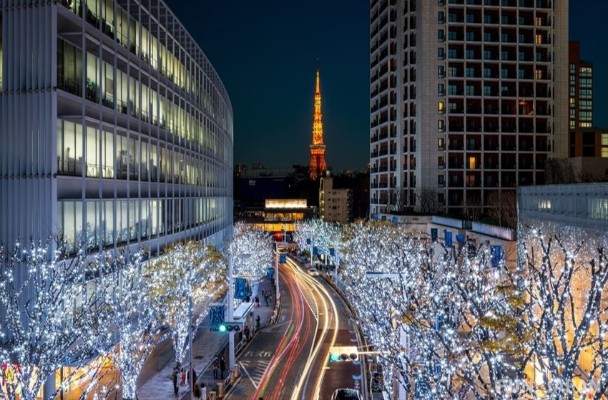
- Venue: Meiji Jingu Shrine, Harajuku Omotesando, Yoyogi Park, Keyaki Namiki Street in front of NHK, and more
- Access: About 1 minute on foot from Harajuku Station, about 1 minute on foot from Meiji-Jingumae
Station, about 1 minute on foot from Omotesando Station - Official Website: https://www.super-yosakoi.tokyo/
③ Tokyo Yosakoi (Ikebukuro) | The Most Popular Program of the Fukuro Festival
© TCVB
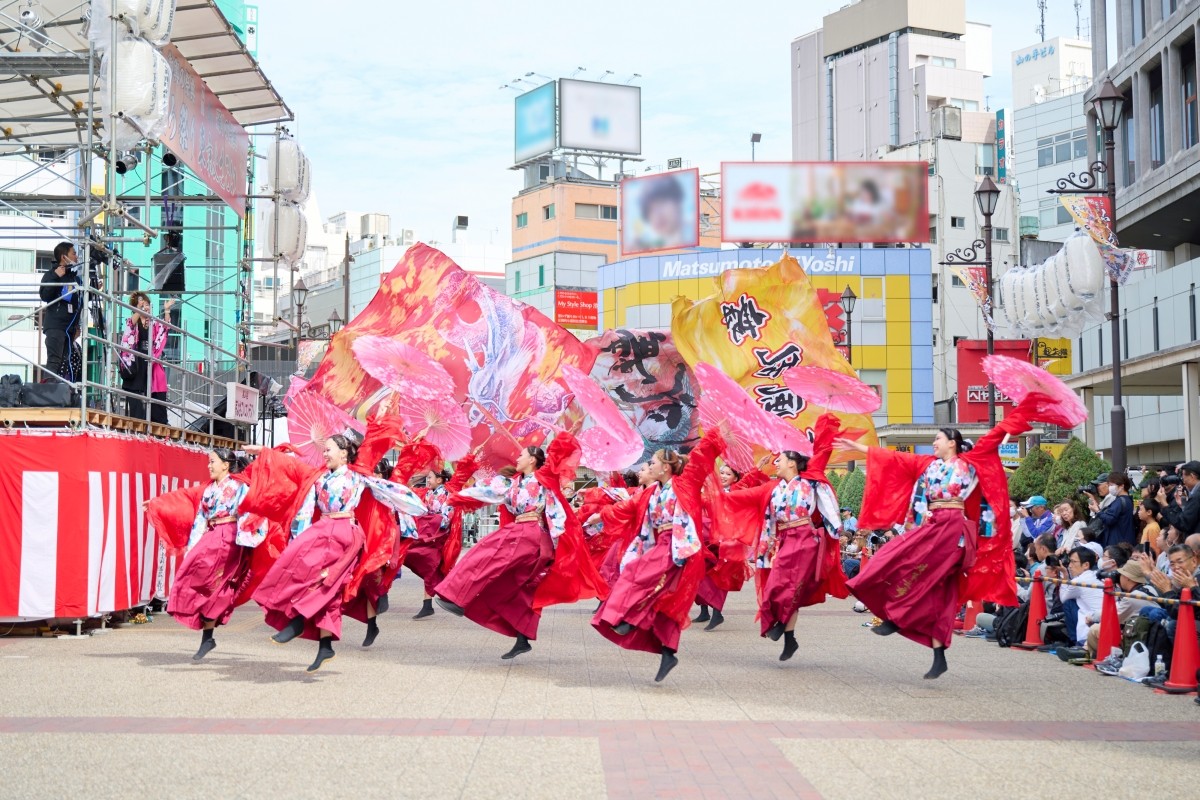
"Tokyo Yosakoi" began as one of the programs of the "Fukuro Festival." Today, with a growing number of participants, it is held as a major two-day dance festival. There are multiple venues, and at each one, you can watch teams with unique makeup and gorgeous costumes performing creative Yosakoi dances. For first-time visitors, the venues around Ikebukuro Station are especially recommended, as the venues are close to each other, making it easy to visit several locations and enjoy the festival even as a traveler.
The highlight of this festival is the Yosakoi dance contest, one of the largest in Tokyo, with over 100 teams participating. The plazas and main streets around Ikebukuro Station are filled with dancers and spectators, and the entire area is enveloped in an atmosphere of excitement.
- Event Dates: Saturday, October 10, 2026 – Sunday, October 11, 2026
- Venues: Ikebukuro West Exit Station Square, Ikebukuro West Exit Park, Azalea Street, Mizuki Street, Four Shopping Streets, Sugamo Station Square, Otsuka Station North Exit Square
- Access: Immediate to about 5 minutes from Ikebukuro Station, immediate from Sugamo Station, immediate from Otsuka Station
- Official Website: https://tokyo-yosakoi.jp/
④ Shinjuku Eisa Festival | Rising in Popularity with Powerful Taiko Drumming
Source: PR TIMES
The Shinjuku Eisa Festival is a large-scale event held every July around Shinjuku Station. It officially began in 2002 after inviting a team from Okinawa in 2001. Today, 22 teams perform, and the festival has grown into a signature summer event in Shinjuku, attracting up to 800,000 visitors. At the venue, you can enjoy up-close performances by authentic Okinawan Eisa teams, teams made up of Okinawan residents in Tokyo, and teams with their own creative styles. Its convenient location near a major terminal station also attracts many international tourists. The powerful sound of the taiko drums and the energetic performances continue to captivate people of all nationalities.
- Event Dates: Every July (In 2025, July 26)
- Venue: Around Shinjuku Station East Exit and West Exit
- Access: Around Shinjuku Station
- Official Website: https://www.shinjuku-eisa.com/
⑤ Nakano Champloo Festa | Enjoy Eisa and Yosakoi All at Once
Nakano Ward in Tokyo has long had deep ties with Okinawan culture and is known as a sacred place for Eisa in the Kanto region. The "Nakano Champloo Festa," a beloved event in Nakano, will see its Eisa division become independent, launching as the "1st Kanto Okinawa Eisa Festival" in July 2026. With a record number of teams gathering, the area around Nakano Station is expected to be filled with the sounds of the sanshin and the powerful beat of taiko drums, creating an electrifying event. Local shopping streets also come together to liven up the festival, making it a valuable opportunity to experience deep community connections and passionate performances. Meanwhile, the existing "Nakano Champloo Festa" will move to the autumn season in the same year. During the summer and autumn festival periods, the entire town is filled with the spirit of Okinawa.
- Event Dates: July 18 (Sat) – July 19 (Sun), 2026
- Venue: Around Nakano Station North Exit
- Access: Right next to Nakano Station
- Official Website:
https://nakanocf.com/
https://nakanocf.com/eisa/
⑥ Tokyo Otsuka Awa Odori | The Most Popular Awa Odori Event in Tokyo After Koenji
Held every year in late August, the Tokyo Otsuka Awa Odori is a summer festival that has continued for over half a century in Otsuka, Toshima Ward. More than 1,000 dancers perform lively routines around JR Otsuka Station. The warm atmosphere created by the local community is one of its main attractions. At this festival, you can enjoy dynamic group dances and the flowing parade-style dances up close, and the grand finale features a lively all-participant dance performance. While preserving the traditions of authentic Tokushima Awa Odori, each group incorporates their own music and choreography, resulting in unique and colorful performances. Compared to larger festivals like the Koenji Awa Odori, this event is less crowded, making it ideal for first-timers who want to take their time watching or taking photos.
- Event Dates: Every August (August 23 in 2025)
- Venue: Tram Pal Otsuka, Minami Otsuka Main Street
- Access: Right next to Otsuka Station
- Official Website: https://otsuka-awaodori.com/
⑦ Kanda Myojin Summer Festival | Tokyo’s Summer Tradition with Bon Odori & Food Stalls
The “Kanda Myojin Summer Festival” began as a traditional summer festival centered around Bon Odori and food stalls. Today, it is characterized by its fusion with subculture, taking advantage of its location in Akihabara, a hub for the content industry. In 2025, as in previous years, the event featured everything from anime song Bon Odori to traditional Bon Odori, making it enjoyable for all generations. Even if you’re unfamiliar with the music, there are dance instruction sessions, so first-timers can join in with confidence. There are also many live performances and anime collaboration events on the special stage. The venue is lined with numerous food stalls, allowing visitors to fully experience the Japanese atmosphere within the historic shrine grounds. This is a unique summer tradition in Akihabara, where history and innovation intersect.
- Event Dates: Every August (August 8–10 in 2025)
- Venue: Kanda Shrine
- Access: About 5 minutes on foot from Ochanomizu Station, about 7 minutes from Akihabara Station, about 5 minutes from Shin-Ochanomizu Station, about 5 minutes from Suehirocho Station
- Official Website: https://www.nouryo-matsuri.com/
⑧ Tsukiji Hongwanji Bon Odori Festival | Tokyo’s Most Famous “Anyone Can Join” Bon Odori
The “Tsukiji Hongwanji Bon Odori Festival,” held every summer at Tsukiji Hongwanji, is one of the largest events of its kind in Tokyo. Anyone is free to join the Bon Odori, set against the fantastical backdrop of the Important Cultural Property main hall illuminated by lights and lanterns. The number of participants increases every year, and the highlight of the festival is dancing in multiple circles around the yagura tower amid the lively atmosphere. Many famous shops from the local Tsukiji Outer Market set up food stalls, earning the festival the reputation of being “Japan’s most delicious Bon Odori.”
- Event Dates: Late July to early August every year (July 31–August 2 in 2025)
- Venue: Tsukiji Hongwanji
- Access: Directly connected to Tsukiji Station
- Official Website: https://tsukijihongwanji.jp/
⑨ Shibuya Bon Odori | A Modern Bon Odori Held in Front of the Station
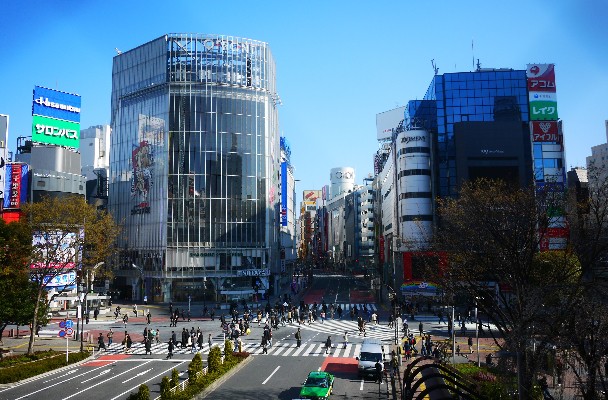
First held in 2017, the Shibuya Bon Odori is a summer festival designed to foster interaction between locals and visitors at one of Tokyo’s most popular tourist spots. On the day of the event, streets like Dogenzaka become pedestrian zones, and people of all ages and nationalities form large circles around the yagura tower set up in front of SHIBUYA109 to enjoy Bon Odori. Anyone can join the dance, making it easy to stop by and participate or watch while sightseeing. The stage and sound system are sophisticated, and the lighting beautifully illuminates the night city, making it perfect for photos and videos. In addition to traditional festival stalls like shooting games and super ball scooping, food trucks also set up shop, allowing visitors to experience vibrant Japanese traditional culture and festival food right in the heart of the city.
- Event Period: Every August (August 2nd in 2025)
- Venue: 109 Event Space, Dogenzaka, and Bunkamura-dori
- Access: About a 3-minute walk from Shibuya Station
- Official Website: https://shibuyadogenzaka.com/ https://shibuyadogenzaka.com/?p=6827
⑩ Roppongi Hills Bon Odori | A Modern Bon Dance Festival Popular Among International Visitors
Source: PR TIMES
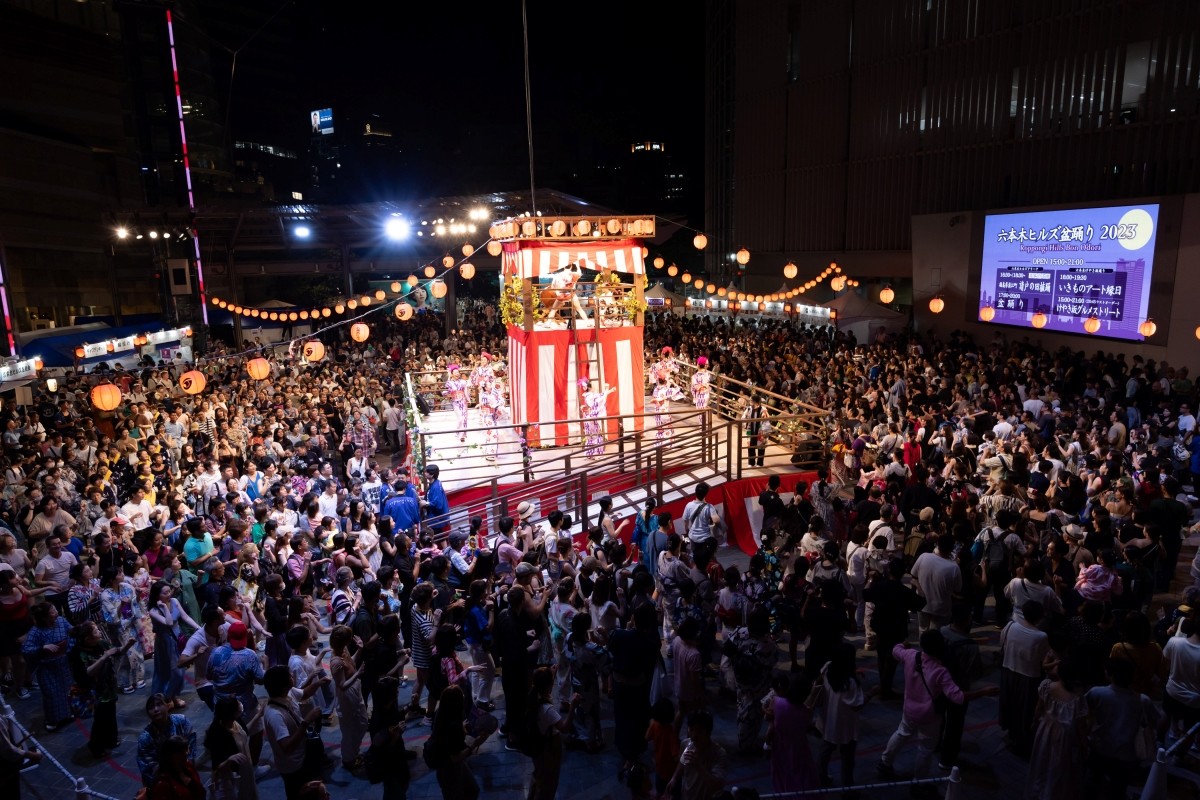
The "Roppongi Hills Bon Odori" is held every summer at Roppongi Hills. This popular event allows you to experience a traditional Japanese summer in a space surrounded by modern skyscrapers. A large yagura (raised platform) is set up in the center of the venue, and many participants from both Japan and abroad form circles around it and dance together. As the event takes place in a highly popular tourist spot, it is also characterized by a large number of international participants. In 2025, in addition to the Bon Odori, the festival also featured performances of the original Roppongi Hills performing art "Gakugeki Roppongi Gaku" and traditional performing arts from the Hokuriku region. Authentic gourmet food stalls and nostalgic festival games will also appear at the venue, delighting families and tourists alike. This festival uniquely blends the sophisticated atmosphere of the city with nostalgic charm, creating an internationally welcoming summer celebration.
- Event Period: Every August (August 22nd–24th in 2025)
- Venue: Roppongi Hills Arena, Roppongi Keyakizaka-dori
- Access: Directly connected to Roppongi Station on the Hibiya Line; about a 4-minute walk from Roppongi Station on the Oedo Line; about a 5-minute walk from Azabu-juban Station on the Oedo Line; about a 10-minute walk from Nogizaka Station
- Official Website: https://www.roppongihills.com/

Comments