
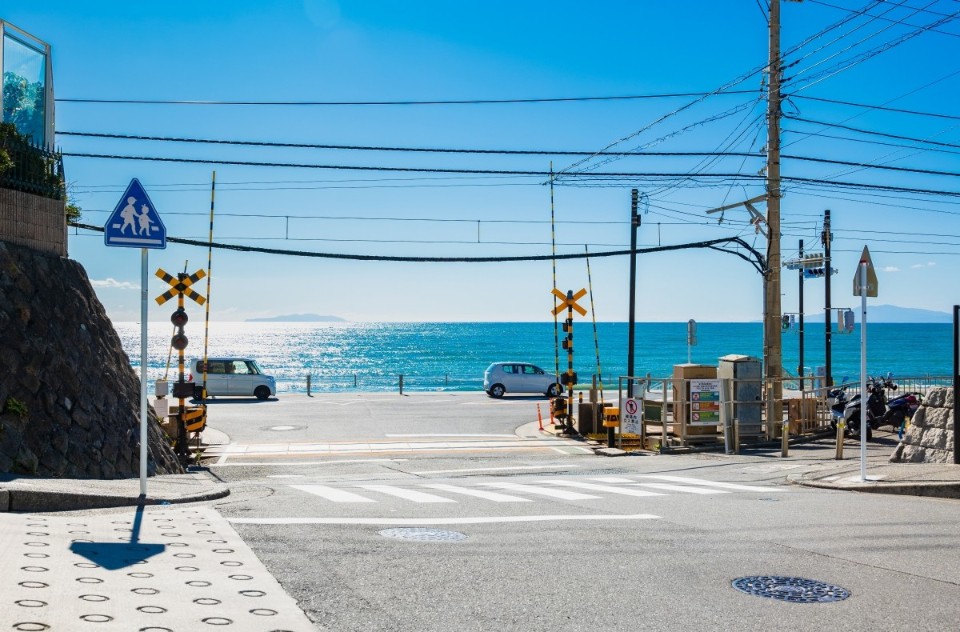
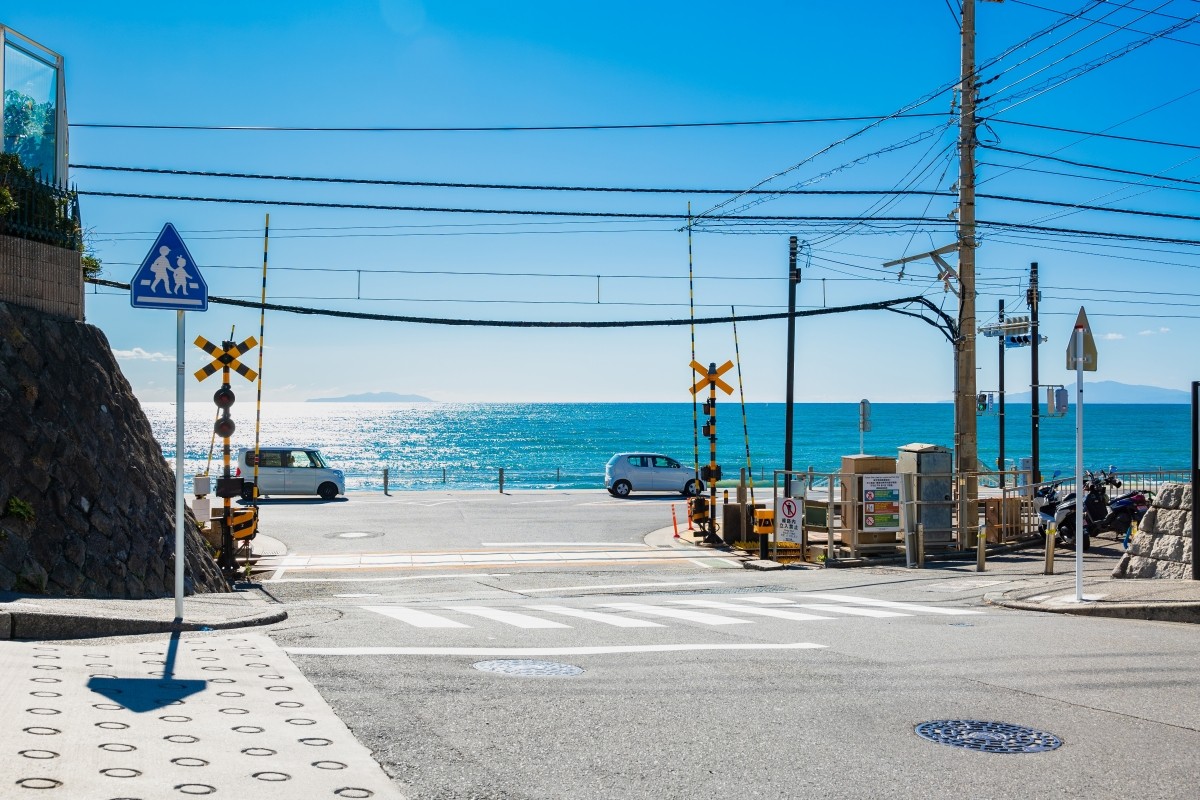
The Korean drama “Can This Love Be Translated?”, which has become a hot topic on Netflix, is a romantic comedy set on the world stage. In the series, Kamakura and Enoshima in Japan are impressively depicted as the starting point of the story. In this article, we will introduce 11 filming locations featured in the drama, and also suggest a one-day model course that is easy to follow even for first-time visitors to Kamakura and Enoshima. This is a must-read not only for drama fans, but also for travel and photography enthusiasts!
*If you purchase or make reservations for products introduced in this article, a portion of the proceeds may go to FUN! JAPAN.
*Spoiler alert
🚅 Reserve your Shinkansen tickets with NAVITIME Travel! 👉Click here
😄 Make your trip to Japan even more comfortable with NAVITIME eSIM! 👉Click here
What is "Can This Love Be Translated?" Where can you watch it? Synopsis and Cast Introduction
Synopsis (All 12 Episodes)
Joo Ho-jin (Kim Seon-ho), a multilingual interpreter, meets an unknown actress, Cha Mu-hee (Go Youn-jung), one day at Enoshima in Japan, a place full of memories for him.
After an accident during filming, Mu-hee falls into a deep sleep. When she finally wakes up, the movie she starred in has become a worldwide hit. Ho-jin is then asked to become her exclusive interpreter as she suddenly rises to international stardom overnight.
As they travel to various countries for the show, emotions that cannot be translated by words alone gradually begin to cross paths—a heartwarming love story that is sure to make your heart flutter.
The script is written by the Hong Sisters (Hong Jung-eun & Hong Mi-ran), renowned for their expertise in Korean romantic comedies. The duo, known for hits like "Hotel Del Luna" and "Alchemy of Souls," weaves a story themed around language and love.
Main Cast
Kim Seon-ho: as Joo Ho-jin
Go Youn-jung: as Cha Mu-hee
Sota Fukushi: as Hiro Kurosawa
Where to Watch
"Can This Love Be Translated?" is exclusively available on Netflix. All 12 episodes are released at once, so you can binge-watch the entire series.
Filming Location ①: Gokurakuji Station
This is where the story begins. The scene where Mu-hee and Ho-jin pass by each other is depicted both inside the Enoden train and at Gokurakuji Station. The two standing at the small wooden station building foreshadows the story to come.
Gokurakuji Station opened in 1904 and was selected as one of the "100 Best Stations in Kanto" in 1999. The station platform is filled with greenery, and its tranquil atmosphere, surrounded by mountains, is a reason why it is repeatedly chosen as a filming location for movies and TV dramas. The only brick tunnel on the Enoden Line, "Gokurakudō," is located between Hase Station and Gokurakuji Station, and is a popular photo spot. The red post box in front of the station also creates a retro Showa-era atmosphere, making it a great spot for photos.
In the area around the station, you’ll find historic sites such as Gokurakuji Temple and Joju-in Temple, a famous power spot for matchmaking, making it a perfect place to enjoy a stroll while visiting filming locations.
Gokurakuji Station
- Address: 3-7-4 Gokurakuji, Kamakura-shi, Kanagawa Prefecture
- Access: About 15 minutes (5 stops) from JR Kamakura Station via the Enoden Line
Filming Location ②: Around tenzan lab.
In Episode 1, the scene where Mu-hee and Ho-jin coincidentally enter the same ramen shop marks an important turning point in the story. The exterior filming location for the ramen shop "Momo-chan Ramen" in the show is in the area around "tenzan lab." in Enoshima. The shop Mu-hee enters through the blue noren curtain closely resembles "tenzan lab." on the outside, but since the actual "tenzan lab." is a sweets café, it is believed that the interior ramen shop scenes were filmed elsewhere.
This area, located just past Enoshima Benzaiten Nakamise Street, is a unique space that, while bustling with tourists, also has the quiet charm of a back alley.
Around tenzan lab.
- Address: Around 1 Enoshima, Fujisawa-shi, Kanagawa Prefecture
- Access: 18 minutes on foot from Enoshima Station
Filming Location ③: Benzaiten Nakamise Street
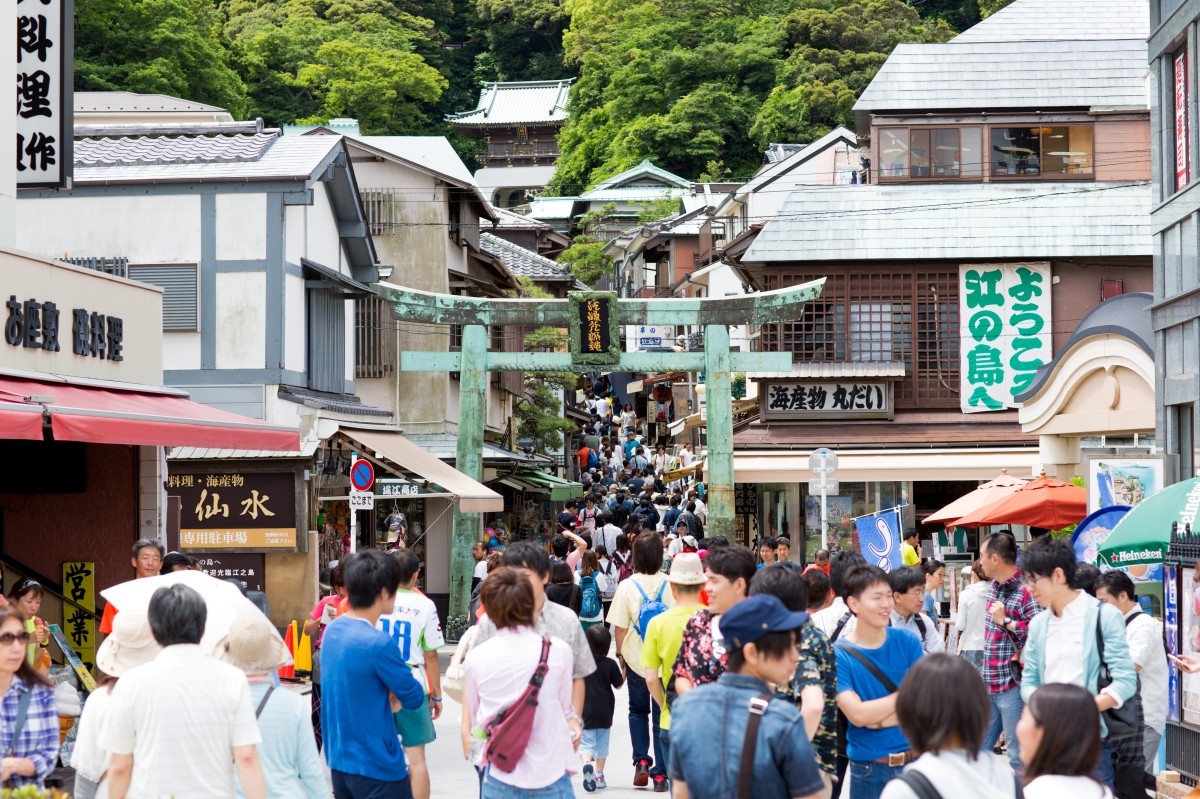
Benzaiten Nakamise Street is a lively shopping street that stretches from the entrance of Enoshima to Enoshima Shrine. In the show, there is a scene where Ho-jin carries the son of an Italian family and runs through this street toward the main road
Passing through the bronze torii gate, you’ll find Nakamise Street lined on both sides with shops unique to Enoshima, offering local gourmet foods and souvenirs. There are plenty of must-visit spots, such as shirasu (whitebait) dishes, whole grilled octopus crackers, and ice monaka (ice cream sandwiched in a wafer). Many shops also sell local ingredients and crafts, making it a fun shopping street to explore.
Benzaiten Nakamise Street
- Address: Around 1-4-13 Enoshima, Fujisawa-shi, Kanagawa Prefecture
- Access: 17 minutes on foot from Enoshima Station
Filming Location ④: Enoshima Post Office
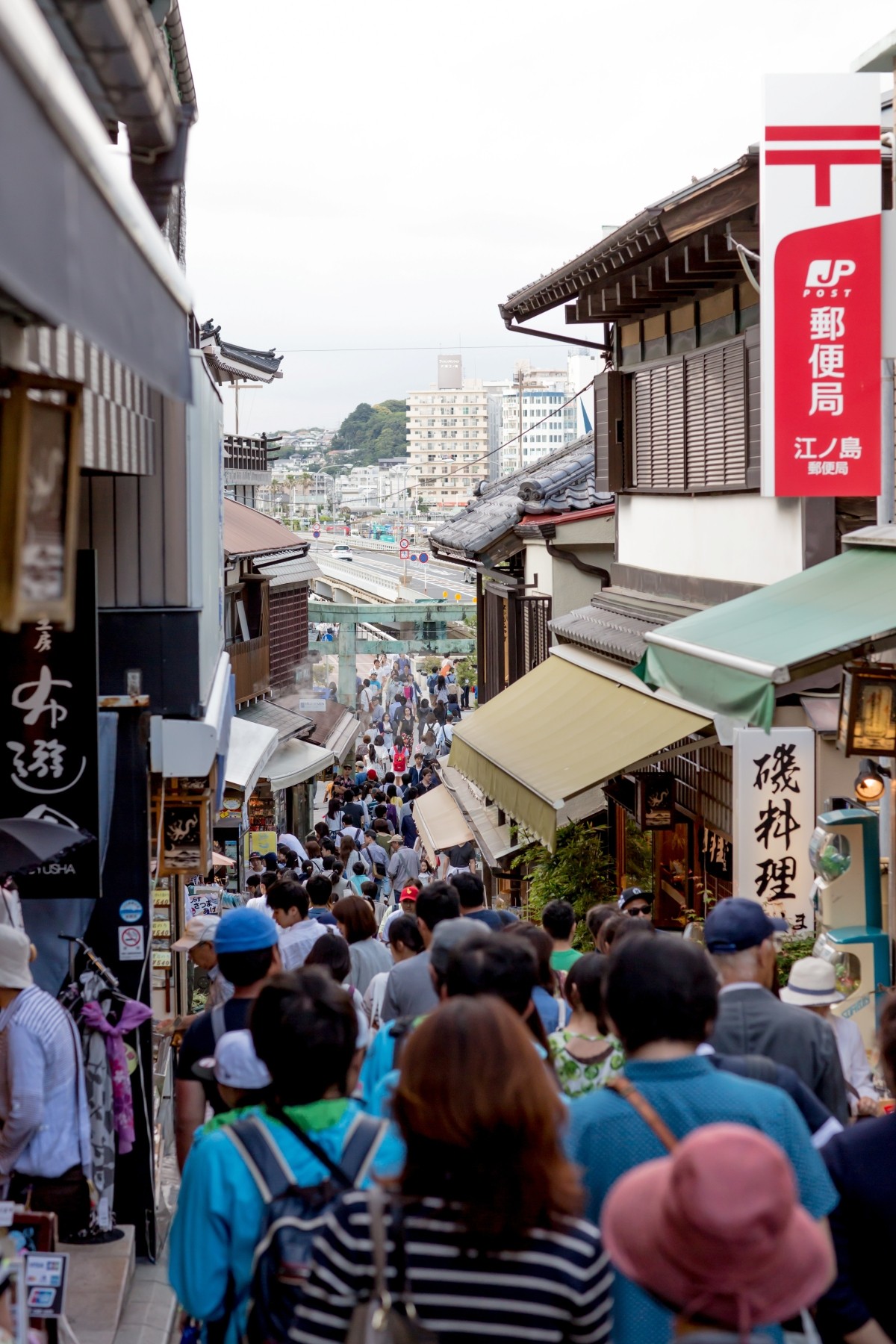
Enoshima Post Office is located along Benzaiten Nakamise Street. In the show, there is a scene where Mu-hee waits for Ho-jin while holding his bag in front of the post box.
The post office is also known for its restored black post box, which was actually used during the Meiji era, making it a popular photo spot. At the Enoshima Post Office counter, you can get a "scenic postmark" featuring Enoshima’s landscape. If you collect commemorative or local stamps, be sure to stop by.
Enoshima Post Office
- Address: 1-4-13 Enoshima, Fujisawa-shi, Kanagawa Prefecture
- Access: 17 minutes on foot from Enoshima Station
Filming Location ⑤: Oiwaya-michi Street
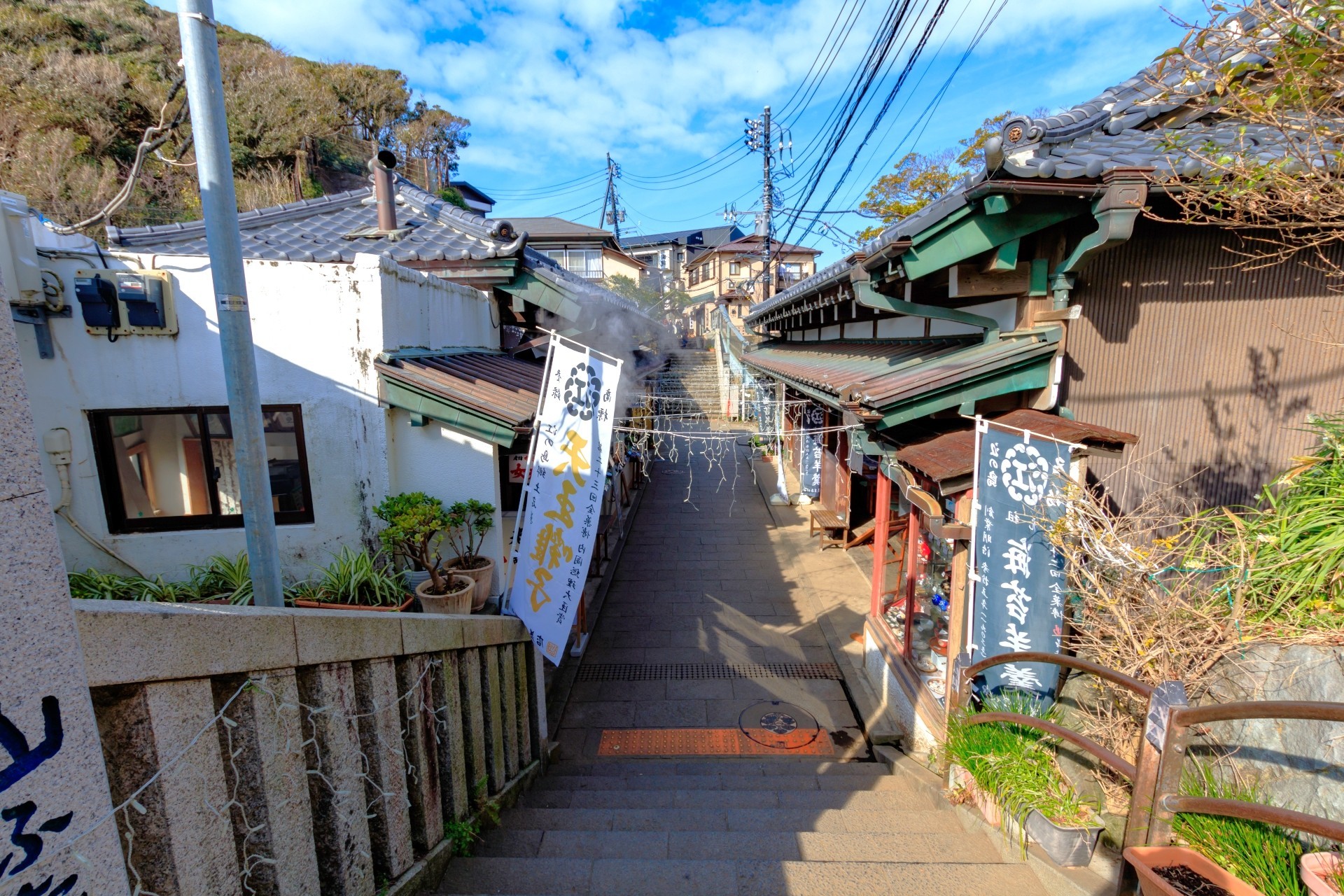
Oiwaya-michi Street is the road leading from Okutsunomiya Shrine of Enoshima Shrine to the Iwaya Caves. In the show, there is a scene where, just after Mu-hee buys an anman (steamed bun with sweet bean paste), she realizes she forgot to return Ho-jin’s smartphone and hurriedly goes to look for him.
A quiet, atmospheric path where tourists come and go, yet the island’s nature and history coexist. The stone-paved lane and rows of trees continue on, and the deeper you go, the more you feel as if you’re approaching the original landscape of Enoshima. At the end of the path lies the Iwaya Caves, said to be the origin of Enoshima, and you can also explore inside the caves.
Oiwaya-michi Street
- Address: Around 2-5-25 Enoshima, Fujisawa City
- Access: 26 minutes on foot from Enoshima Station
Filming Location ⑥: Goryo Shrine
Goryo Shrine is the place where Mu-hee returns Ho-jin’s smartphone in the drama. This historic shrine dates back to the Heian period and enshrines Kamakura Gongoro Kagemasa. The highlight is the sight of the Enoden train passing right in front of the white torii gate, almost close enough to touch. Since the Enoden runs every 10–15 minutes, it’s easy to capture this scene on camera. In early summer, hydrangeas bloom around the torii, letting you enjoy the trio of train, torii, and flowers.
Note: Photography is prohibited within the shrine grounds. You may take photos from outside the torii, but please do not enter the railroad crossing.
Goryo Shrine
- Address: 4-9 Sakanoshita, Kamakura City, Kanagawa Prefecture
- Access: 5 minutes on foot from Hase Station
Filming Location ⑦: Near Miharashitei
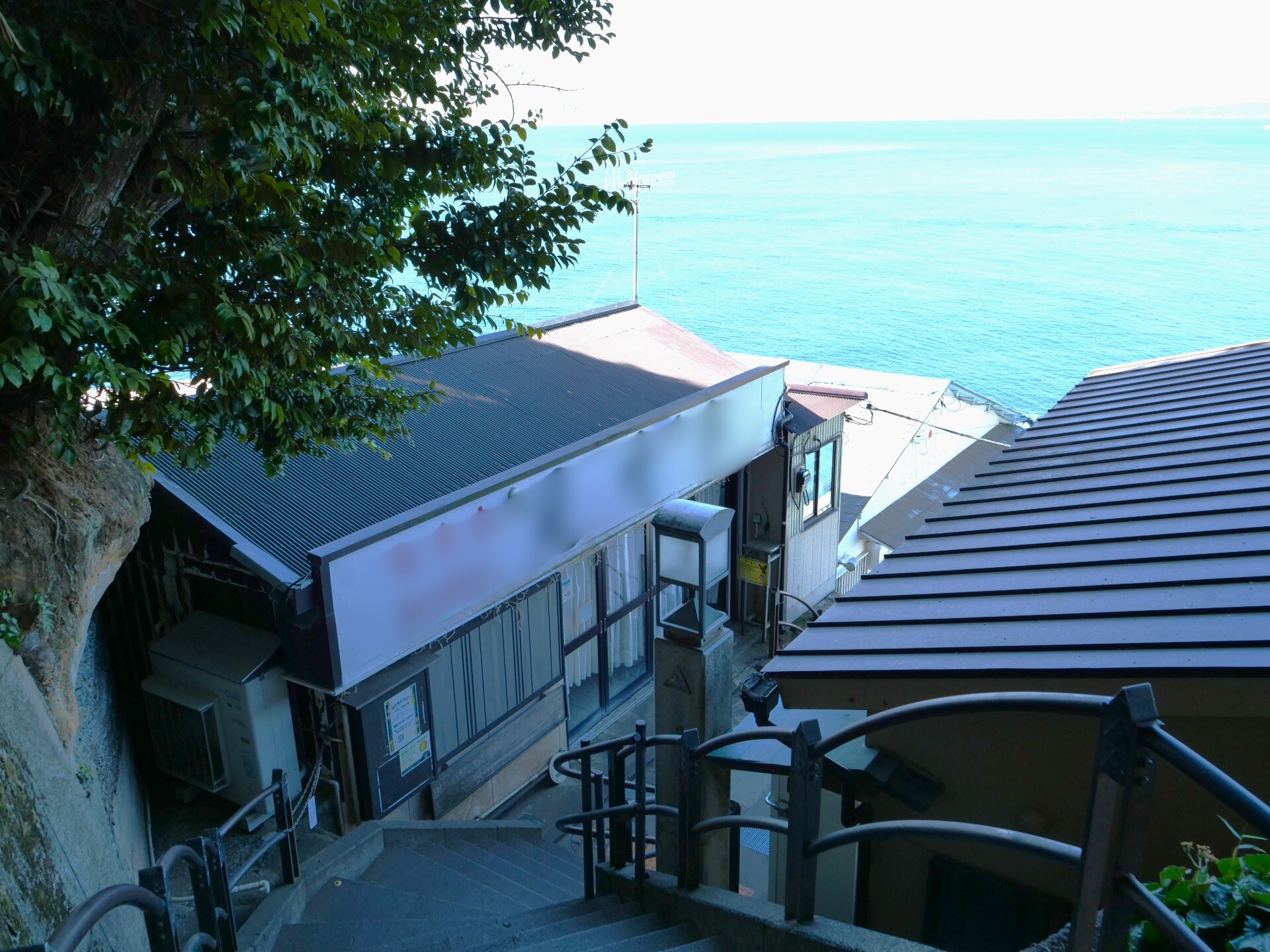
Miharashitei is a long-established eatery located halfway up the stone steps leading to the Iwaya Caves at the southwestern tip of Enoshima. Right below the restaurant spreads Chigogafuchi, and on clear days, you can enjoy an open view of Mt. Fuji. In the drama, the area around the restaurant appears in scenes where the two characters are sightseeing in Enoshima.
This entire area is a popular photo spot often seen on social media, thanks to its dynamic scenery of the sea and cliffs.
Miharashitei is known as “the restaurant at the very back of Enoshima.” You can enjoy your meal while gazing at the sea through the windows in a retro Showa-era atmosphere. Their specialties include “Nama Shirasu-don” (raw whitebait rice bowl) and “Enoshima-don” (turban shell and egg rice bowl). The sea at sunset is exceptionally beautiful, so visiting at dusk is highly recommended.
Near Miharashitei
- Address: Around 2-5-3 Enoshima, Fujisawa City, Kanagawa Prefecture
- Access: 30 minutes on foot from Enoshima Station
Filming Location ⑧: Katase Fishing Port & White Lighthouse
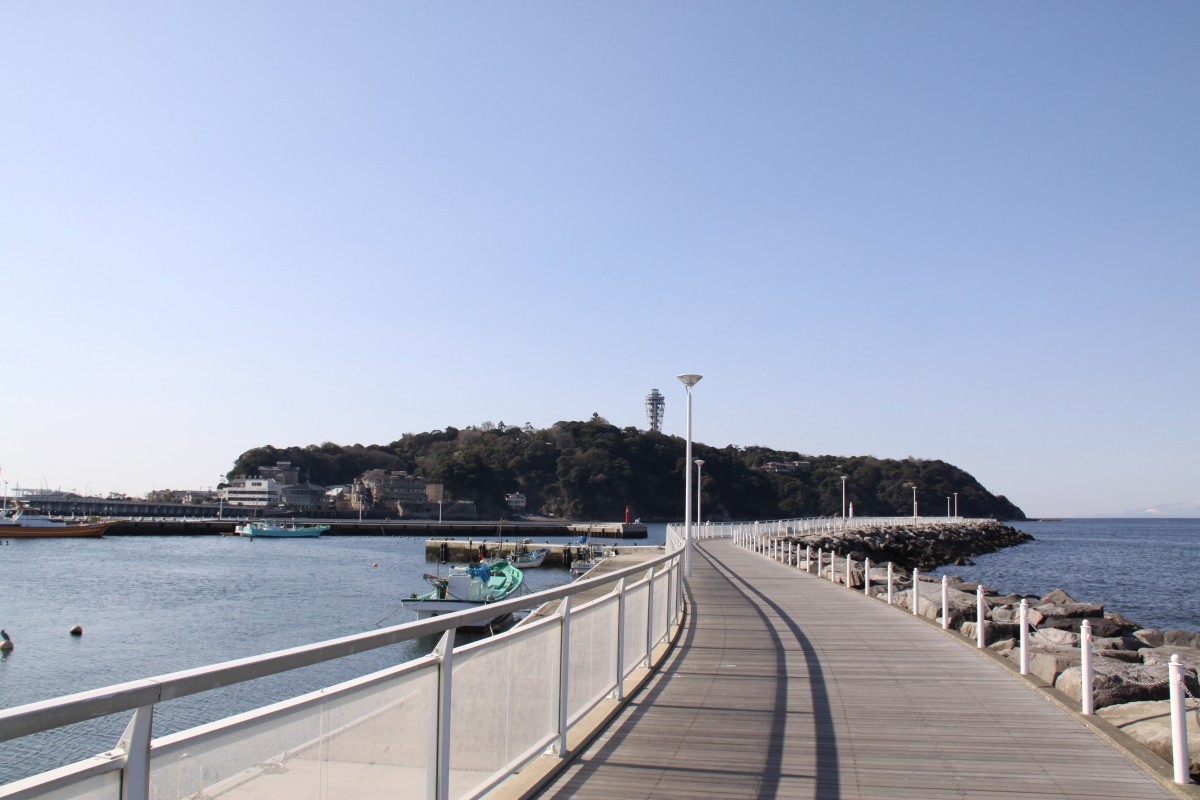
Katase Fishing Port is located near the entrance to Enoshima. In the drama, there is a scene where the two characters sit on a bench, looking out at the coastline and Mt. Fuji.
Katase Fishing Port sits at the foot of the Enoshima Bridge and is a peaceful port where local fishing boats are moored. From the white lighthouse at the tip of the port, you can enjoy a panoramic view of Katase Beach and Sagami Bay, and on clear days, even see the silhouette of Mt. Fuji. It’s a spot slightly removed from the hustle and bustle of major tourist areas, where you can quietly enjoy the authentic Shonan seaside scenery.
Katase Fishing Port & White Lighthouse
- Address: 2-20-25 Katase Kaigan, Fujisawa City, Kanagawa Prefecture
- Access: 12 minutes on foot from Enoshima Station
Filming Location ⑨: Railroad Crossing near Hase Station
The railroad crossing near Hase Station (in front of Tanaka Barber Shop) is one of the most memorable locations. In the drama, it appears in a scene where the two characters walk around looking for a restaurant. The cut where Ho-jin disappears after the Enoden passes right in front of them is especially memorable.
The narrow residential street from Hase Station to Goryo Shrine offers a classic Kamakura view, with the Enoden running right alongside. Seasonal flowers blooming along the tracks and the old-fashioned houses add a nostalgic touch.
Railroad Crossing near Hase Station
- Address: Around 2-12 Sakanoshita, Kamakura City, Kanagawa Prefecture
- Access: 2 minutes on foot from Hase Station
Filming Location ⑩: Enoshima Sea Candle (Enoshima Observation Lighthouse)
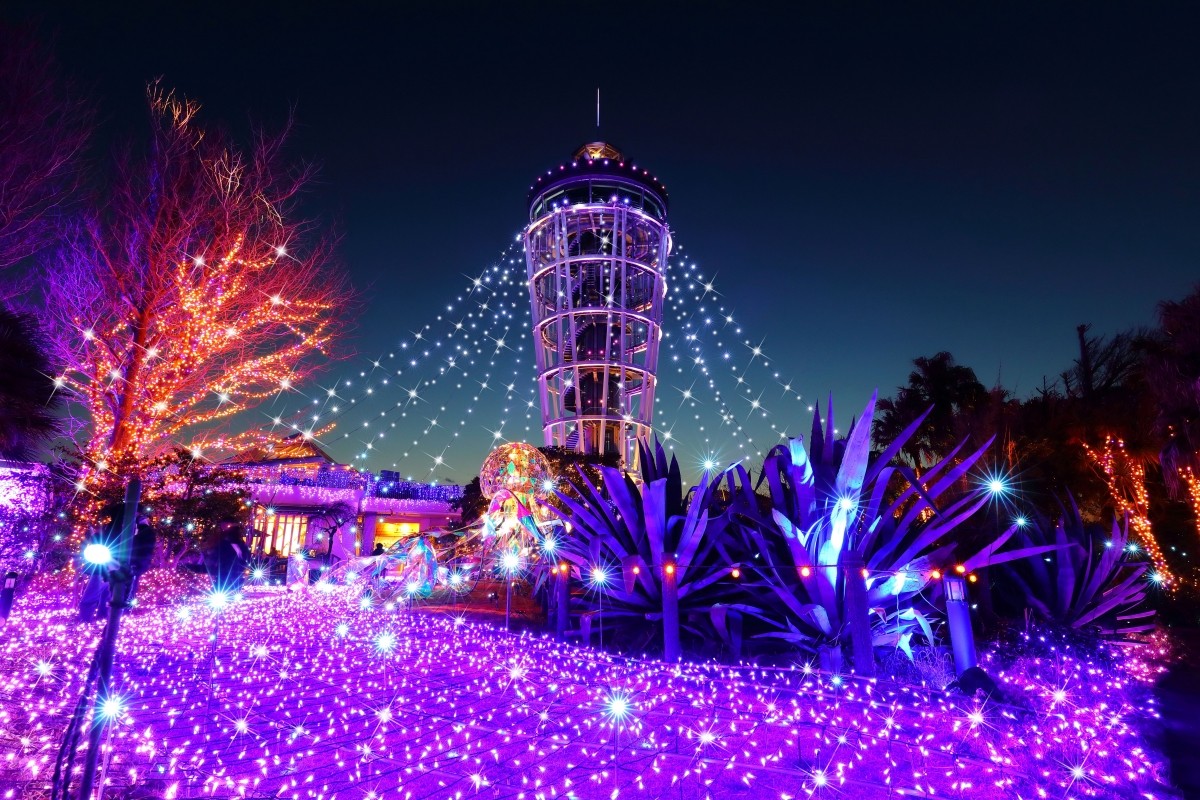
The Enoshima Sea Candle, a 59.8-meter-tall observation lighthouse, is a beloved symbol of Enoshima. In the drama, there is a scene where Ho-jin visits this spot to search for Ji-sun.
The glass-walled observation floor at an elevation of 101.56 meters, as well as the outdoor observation deck above it, offer breathtaking 360-degree panoramic views. After sunset, the tower is illuminated (until 22:00), creating a romantic atmosphere. During the "Shonan no Hoseki" illumination event, held from mid-November to around February, the entire island of Enoshima is bathed in blue and purple lights, making the night view even more magical.
Enoshima Sea Candle
- Address: 2-3-28 Enoshima, Fujisawa City, Kanagawa Prefecture
- Access: 28-minute walk from Enoshima Station
- Opening Hours: 9:00-20:00 (last admission 19:30)
- Admission: Adults ¥800, Children ¥400
Filming Location ⑪: Inamuragasaki Park
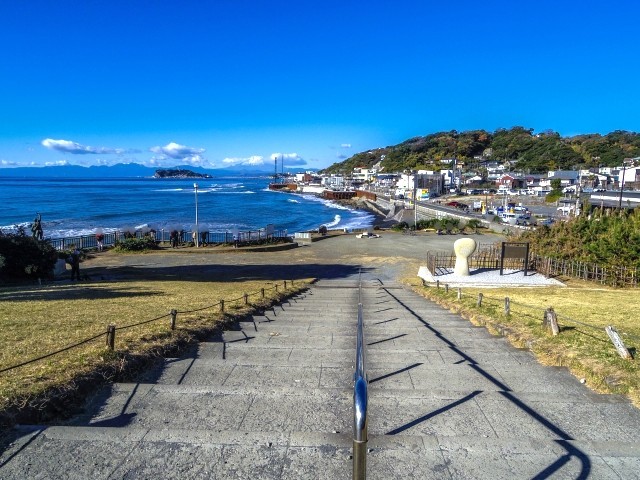
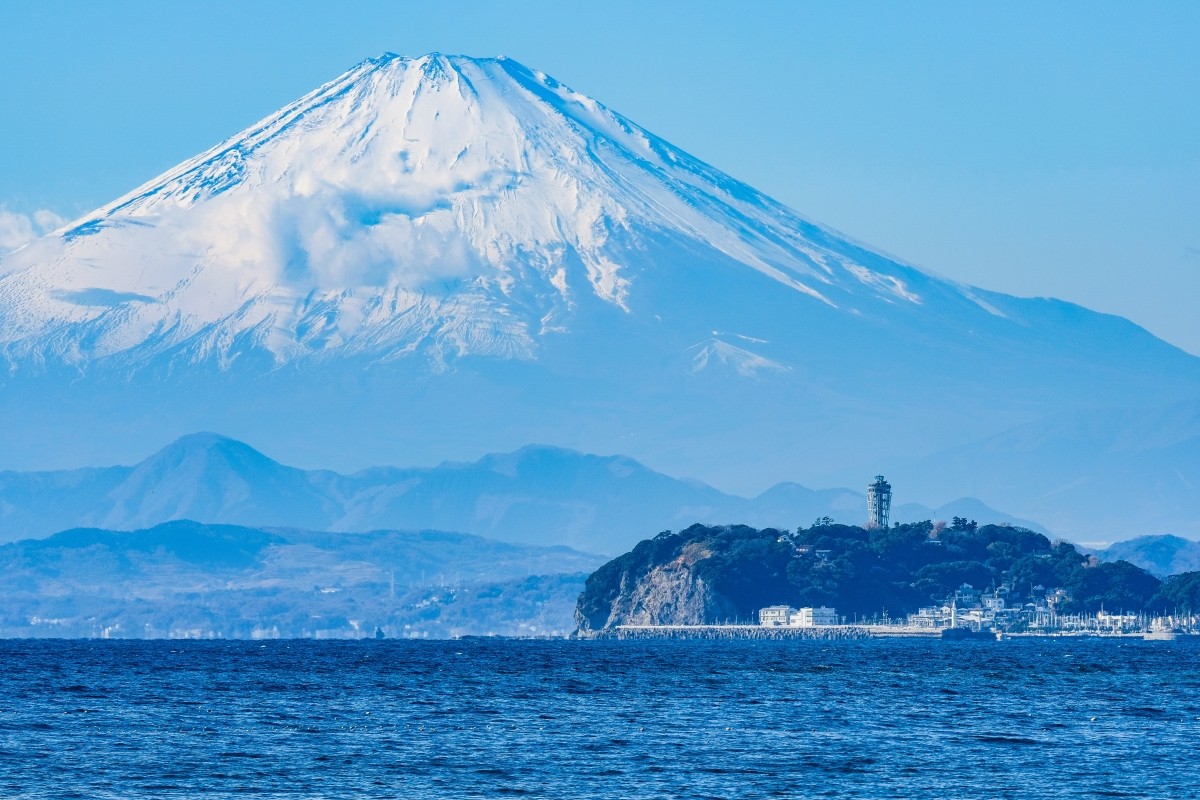
Inamuragasaki is a cape jutting out between Shichirigahama and Enoshima at the western edge of Kamakura. Inamuragasaki Park is known as a scenic spot where you can capture both Enoshima and Mt. Fuji in the same frame. In the drama, this location is featured in the scene where Ji-sun gives Ho-jin a protective charm.
Selected as one of the "100 Historic Parks of Japan" and "100 Scenic Views of Mt. Fuji in Kanto," Inamuragasaki is one of Kamakura's top sunset spots. From the observation deck on the cape, you can enjoy the white waves of Shichirigahama to your right, Enoshima straight ahead, and on clear days, the majestic silhouette of Mt. Fuji. The offshore area is also famous as a mecca for surfers, and the sight of surfers riding the waves blends seamlessly into the landscape.
Inamuragasaki Park
- Address: 1-19 Inamuragasaki, Kamakura City, Kanagawa Prefecture
- Access: 4-minute walk from Inamuragasaki Station
‘Can This Love Be Translated?’ Filming Locations : 1-Day Model Course in Kamakura & Enoshima
Here is a 1-day model course for visiting the filming locations, perfect even for first-time visitors to Kamakura and Enoshima.
Morning: Kamakura Area (about 2–3 hours)
9:00 ■ Arrive at Gokurakuji Station
Take the JR or Enoden Line to Gokurakuji Station. You can also stop by nearby Jojuin Temple or Gokurakuji Temple (each about 2–3 minutes on foot).
↓ About 9 minutes on foot
9:30 ■ Goryo Shrine
Take photos of the Enoden train and the torii gate. Trains come every 10–15 minutes, so it’s recommended to time your visit accordingly.
↓ About 3 minutes on foot
10:00 ■ Railroad Crossing near Hase Station
Walk along the narrow path by the tracks and experience the quintessential Kamakura scenery as the Enoden train passes by just inches away.
↓ Enoden and on foot (about 13 minutes)
10:45 ■ Inamuragasaki Park
About a 5-minute walk from Inamuragasaki Station. Take commemorative photos at this scenic spot overlooking Enoshima and Mt. Fuji.
Afternoon: Enoshima Area (about 4–5 hours)
12:00 ■ Head to Enoden "Enoshima Station"
From Inamuragasaki Station, take the Enoden Line for 4 stops (about 12 minutes) to Enoshima Station.
↓ About 12 minutes on foot
12:30 ■ Katase Fishing Port & White Lighthouse
Immerse yourself in the world of the drama while gazing at the silhouette of Sagami Bay and Mt. Fuji.
↓ About 15 minutes on foot
13:30 ■ Benzaiten Nakamise Street
Stroll along the street while enjoying local delicacies such as shirasu (whitebait) dishes and whole grilled octopus crackers.
↓ On foot (within the street)
14:00 ■ Around tenzan lab. & Enoshima Post Office
Continue along Nakamise Street to find the exterior filming locations from the drama and the black post box.
↓ On foot (further into the island)
14:30 ■ Oiwaya-michi Street → Miharashitei
Walk along the stone-paved street toward Iwaya. Experience the natural beauty at the far end of Enoshima as you head to Miharashitei.
At Miharashitei, savor local specialties such as fresh shirasu rice bowls and enjoy the spectacular view of Chigogafuchi.
↓ On foot (back toward the center of the island)
16:00 ■ Enoshima Sea Candle
Take in the breathtaking views from the observation deck and immerse yourself in the world of the drama. After sunset, enjoy the beautiful illuminations as well.
Why not step into the world of "Can This Love Be Translated?"
Experience the unique blend of history, nature, and stunning ocean scenery in Kamakura and Enoshima, all while exploring the setting of the drama. Walk the same paths that Mu-hee and Ho-jin did, and you’re sure to feel a different kind of excitement than what you see on screen.
Whether you’re a fan of the series or visiting Kamakura and Enoshima for the first time, be sure to fully enjoy all the charms these areas have to offer.
🚅Reserve your Shinkansen tickets with NAVITIME Travel! 👉Click here
😄Make your trip in Japan even more comfortable with NAVITIME eSIM! 👉Click here
Comments