


"Where do I buy tickets?" "Are there subtitles?" This article is a comprehensive guide for first-timers visiting Japanese movie theaters, covering everything from how to reserve and purchase tickets, what to expect on the day, how to choose your seat, and even special experiences unique to Japan such as "stage greetings," "cheering screenings," and "live-viewing events." Whether you love anime or are a fan of Japanese actors and idols, even foreigners can easily enjoy "oshi-katsu" (supporting your favorite stars) through the big screen at Japanese cinemas!
[Beginner’s Guide] How to Watch Movies at Japanese Cinemas

There are movie theaters all over Japan, ranging from major cinema complexes to unique mini-theaters. Major cinema chains include TOHO Cinemas, MOVIX (Shochiku Multiplex Theatres), AEON Cinema, and 109 Cinemas.
The screening schedule changes every week. At most theaters, the schedule for one week starting Friday is usually announced on the official website around Tuesday or Wednesday each week. Even within the same cinema chain, each location has a different schedule, so be sure to check the official website for each theater.
The average screening period is about one month. Hit movies may run for two to three months or even longer, but smaller films may end after about a month. Also, for major overseas movies, it is not uncommon for the Japanese release to be released several months later than in the home country.
There are also unique manners to follow at Japanese cinemas. Recording audio or video is strictly prohibited by law, and you must remain quiet during the screening. Additionally, it is customary in Japan to stay seated until the end credits (staff credits) finish, as a sign of respect.
How to Watch Subtitled Movies at Japanese Cinemas
For foreign films, Japanese cinemas offer two types: "subtitled version" (字幕版), where the original audio is played with Japanese subtitles, and "dubbed version" (吹き替え版), where the audio is replaced with Japanese and there are no subtitles. For example, if you want to enjoy an English-language movie in English, choose the "subtitled version."
On the other hand, Japanese films are generally only available in Japanese audio, with no Japanese or foreign language subtitles. Recently, more films are being screened with Japanese subtitles for accessibility, but there are still very few with English subtitles.
💡 When purchasing tickets, "subtitled version" and "dubbed version" will be indicated, so make sure to check carefully before buying.
Two Types of Subtitles Available for Japanese Films
- Open captions are subtitles displayed directly on the screen. No special equipment is needed, and everyone attending that screening will see the same subtitles. Screenings with "Japanese subtitles" (日本語字幕付き) listed in the schedule fall into this category.
💡Since only certain movie theaters and films are supported, please check each movie or the official website of each theater in advance.
- Closed captions are a system that displays subtitles only for you, using dedicated devices such as "Subtitle Glasses" (字幕メガネ) or special apps like "HELLO! MOVIE" and "UD Cast." Since the subtitles are not visible to other audience members, you can use this service even during regular screenings. However, not all films or showtimes are supported, so availability may vary.
💡For detailed instructions on how to use these services, please check the official website of each theater, or ask at the theater counter or staff.
Ticket Prices and How to Buy Tickets: Tips for Getting the Best Deals!
The standard adult ticket price at movie theaters in Japan is usually between 1,900 and 2,000 yen (tax included). Discounted rates are available for students, children, and seniors (aged 60 and over). For special screens such as IMAX, 4DX, or Dolby Atmos, an additional fee (ranging from a few hundred yen to about 1,000 yen) is required on top of the regular price.
How to Watch Movies at Japanese Theaters for Less
If you purchase an advance ticket called "MoviTicket" (ムビチケ) before the movie is released, you can save a few hundred yen compared to the regular price, and sometimes receive special bonuses. In addition, Japanese theaters offer discounted rates on certain days and times, such as "Movie Day" (映画の日) on the first of every month, "Ladies' Day" (レディースデー), and "Late Show Discount" (レイトショー割引). Many theaters also have their own membership services, so if you live in Japan or are staying long-term, consider registering as a member.
How to Purchase or Reserve Movie Tickets
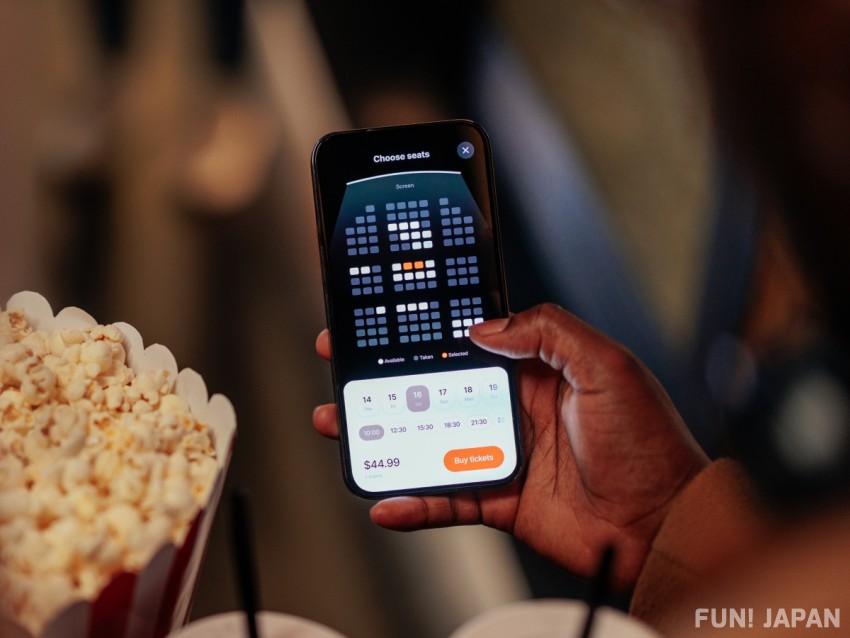
① Online Reservation (Recommended)
Reservations usually become available 2–3 days before the screening date. You can select your seat and reserve or purchase tickets through the official website or app of each theater. Generally, there are no handling fees for credit card payments.
If you have a MoviTicket advance ticket, you can also use it for online reservations. Enter your MoviTicke number on the reservation screen to apply the advance ticket price and complete your seat selection.
② Purchase at the Theater on the Day
You can also buy tickets directly at the theater's ticket counter. More and more theaters now have automated ticket machines, and many of these can be switched to English as well as Japanese. However, please note that popular films may be sold out just before the screening.
💡Important Points When Purchasing Tickets
Even for the same film, there may be additional charges for special screenings such as "IMAX" or "4DX," and there are different versions such as "Subtitled" and "Dubbed." These are indicated in the screening schedule, so be sure to check carefully when making your reservation.
💡Tips for Choosing Your Seat
The best seats for enjoying both the picture and sound are usually in the center rows, from the middle to slightly toward the back, where you can see the entire screen. For large screens, seats toward the back are recommended, while for smaller screens, seats closer to the center are best. For screenings with stage greetings, if you want to see the cast up close, aim for seats in the front (from the very front row to about the 10th row).
What to Expect on the Day You Watch a Movie at a Japanese Theater
Here are the steps for the day, introduced in order.
STEP 1: Purchase Your Ticket
Purchase a MoviTicket in advance and reserve your seat online, or simply buy your ticket online or at the theater counter on the day of the screening.
STEP 2: Arrive at the Theater
It is recommended to arrive 20–30 minutes before the screening time. Even if you have reserved your seat online, Some theaters require you to pick up your ticket at a ticket machine. (some theaters allow you to simply scan a QR code).
STEP 3: Purchase Food and Drinks
You can buy popcorn and drinks at the theater's concession stand. Combo menus are often a better deal than buying items individually.
💡Note: Please note that bringing outside food and drinks into the theater is generally prohibited.
STEP 4: Use the Restroom
Some theaters have restrooms past the entrance gate, while others do not. If you are concerned, it is safer to use the restroom before entering.
STEP 5: Go Through the Ticket Gate
Show your ticket to the staff, or they will tear off the stub for you. If you purchased your ticket online, you may be able to enter by scanning a QR code.
STEP 6: Enter the Theater
Ideally, you should be seated in your assigned seat 5–10 minutes before the screening starts. About 10–15 minutes of trailers and movie-etiquette notices will play before the main feature.
STEP 7: Exit After the Movie
After the main feature and the end credits (staff credits) are over, exit through the same exit through the same doorway you entered from.
[Intermediate Level] Various Types of Screenings at Japanese Movie Theaters!
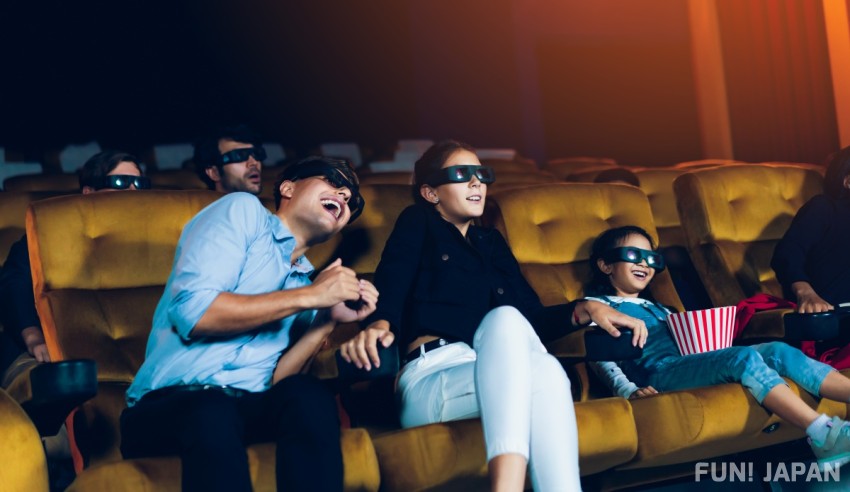
In addition to regular screenings, Japanese movie theaters offer a variety of special screening formats. Knowing the differences will help you find the style that suits you best. Please note that ticket prices may differ from regular screenings, so be sure to check when purchasing your ticket.
Special Events (特別興行) / Special Screenings (特別上映)
These are screenings that include events such as appearances by cast or staff, or screenings with special rules or presentations different from regular showings. Here are some representative examples:
- Preview Screening (試写会): A special screening event held several months before the official release. Selected guests, chosen by lottery or invitation, can watch the film for free ahead of the public. These events are often part of promotional campaigns to generate buzz on social media and by word of mouth. Sometimes, talk events or surprise appearances by cast members are also planned.
- Advance Screening (先行上映): A ticketed screening held a day or several days before the general release date. Targeted at fans who want to see the movie before anyone else, these screenings are conducted in the same format as regular showings, so there are usually no cast appearances or special events.
- Stage Greeting (舞台挨拶): On the day before or the day of the release, cast members or the director appear on stage in the theater to give a talk just before or after the screening. Sometimes, additional stage greetings are held during the screening period.
- Live Viewing (ライブビューイング): A special one-day-only screening. Events such as stage greetings or concerts are broadcast live to other theaters on the big screen in real time.
- Cheering Screening (Interactive Screening) (応援上映): An interactive screening where the audience can cheer, shout, or wave penlights during the movie. These are often held alongside regular screenings after the movie's release, and may be added depending on the film's popularity.
Special Format Screenings (特殊上映)
This is a screening format that utilizes state-of-the-art visual and audio technology and sound equipment, allowing you to enjoy an overwhelming sense of presence and immersion that cannot be experienced with a regular screen. An additional fee is required, but your movie experience will be greatly enhanced.
- IMAX: Enjoy movies with a gigantic screen, ultra-high-definition visuals, and powerful sound.
- 4DX / MX4D: An immersive screening where seats move and effects such as wind, water splashes, and scents are added. Perfect for action movies.
- Dolby Atmos / Dolby Cinema: Features immersive sound with 3D audio technology, allowing you to hear sounds from above and behind.
- Bakuon Screening (爆音上映): A format where movies are screened at screened at extremely high volume levels. Especially popular for music films and works with many live scenes.
- ScreenX: Images are projected not only on the front but also on the theater walls, allowing you to experience movies with a 270-degree field of view.
[Advanced] How to Enjoy “Oshi-Katsu” at the Movie Theater
Japanese movie theaters offer many events and cultural experiences where you can enjoy Oshi-Katsu. “Repeat viewing,” where you watch the same movie multiple times, is also popular. Here are some highly recommended ways to enjoy Oshi-Katsu.
Related Article: A Unique Japanese Culture!? The “Oshi-Katsu” Boom of Supporting Idols and Singers
Participate in Special Screening Events such as Stage Greetings
At “stage greeting” events, cast members or the director appear on stage before or after the screening to talk about the work, giving you a rare chance to see your favorite artist up close. Tickets for stage greetings are sold by lottery or on a first-come, first-served basis. Since competition is fierce, be sure to check the official website or social media for updates as early as possible. Please note that all photography, audio recording, and video recording are strictly prohibited.
Experience the Atmosphere with Live Viewing
This format broadcasts concerts or stage greetings live to large screens in movie theaters across the country. Even if you can’t get a ticket to the actual event, you can still enjoy the excitement with the big screen and high-quality sound of the theater. At some events, you can bring penlights or fans just like at the actual venue, allowing you to feel a sense of unity with the audience. Since these events are held only on the day, be sure to get your tickets early.
Enjoy Cheering Screenings
These are special screenings where you can cheer out loud for the movie. Especially popular for anime movies and idol movies, you can bring penlights or fans, shout or sing along with the scenes of your favorite actors, idols, or characters, and get excited together. Some screenings allow cosplay or commemorative photos before and after the show. Since rules vary by screening, please check the official website in advance.
Get Movie-Related Items!
Advance tickets called "MoviTicket" and "admission bonuses" (入場者特典) distributed to attendees are also popular as collector’s items. In addition, don’t miss out on limited-edition goods and pamphlets available at the theater, as well as collaboration food menus. Also recommended are the free "flyers" available in the lobby area and taking commemorative photos with panels and posters from the movie.
Japanese movie theaters are not just places to watch movies. They offer a uniquely Japanese movie-going experience, with all-reserved comfortable seating, weekly visitor gifts, stage greetings where you can meet your favorite performers, and special “cheering screenings” where the audience can participate together. Read this article and enjoy movies at Japanese movie theaters!



Comments