
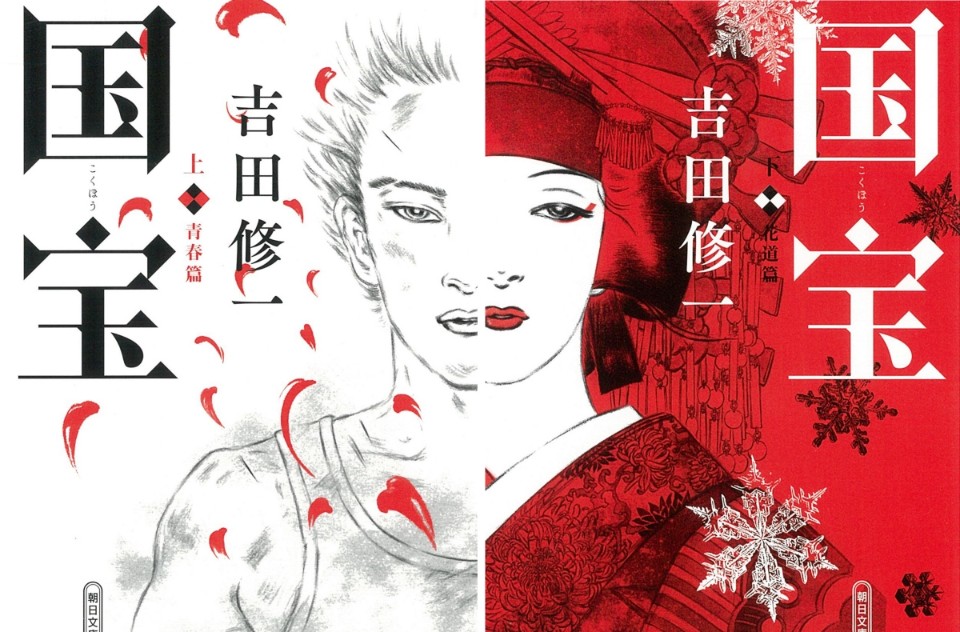
The film "Kokuhō" has surpassed 17.37 billion yen in box office revenue, making it the highest-grossing Japanese live-action film in history for the first time in 22 years. This masterpiece follows the journey of the protagonist, Kikuo Tachibana, played by Ryo Yoshizawa, who is born into a yakuza family but is taken in by a family of kabuki actors. He dedicates himself entirely to the art, eventually growing to perform the iconic kabuki dance piece "Sagi Musume" (The Heron Maiden).
This article will provide not only the synopsis and basic knowledge of kabuki to help you enjoy the film even more, but also clear explanations of all the performances featured in the movie, including the climactic "Sagi Musume" and "Sonezaki Shinju."
🎫 Kabuki Viewing Ticket with English Subtitle Guide & Merchandise (Sunrise Tours)
*If you purchase or reserve products introduced in this article, a portion of the sales may be returned to FUN! JAPAN.
What is the film "Kokuhō"? Based on Shuichi Yoshida's Novel

The film "Kokuhō" is based on a novel by Shuichi Yoshida, a renowned Japanese author highly acclaimed worldwide. Yoshida, the original author, spent four years conducting research behind the scenes at theaters across Japan, such as Kabukiza, Shochikuza, and Hakataza, working as a kurogo (stagehand who assists actors behind the scenes). The story is deeply rooted in his firsthand experiences, including having a kurogo costume made by the kabuki master, the fourth-generation Ganjiro Nakamura, and observing the actors' movements and atmosphere up close in dressing rooms, rehearsal spaces, and backstage. This work was born from experiencing the world of kabuki, which is never visible from the outside, and its rich research underpins the realism of the story.
👉Purchase the novel "Kokuhō" (Yahoo! Shopping)
Synopsis of the Film "Kokuhō": Ryo Yoshizawa Plays the Protagonist Enchanted by Kabuki
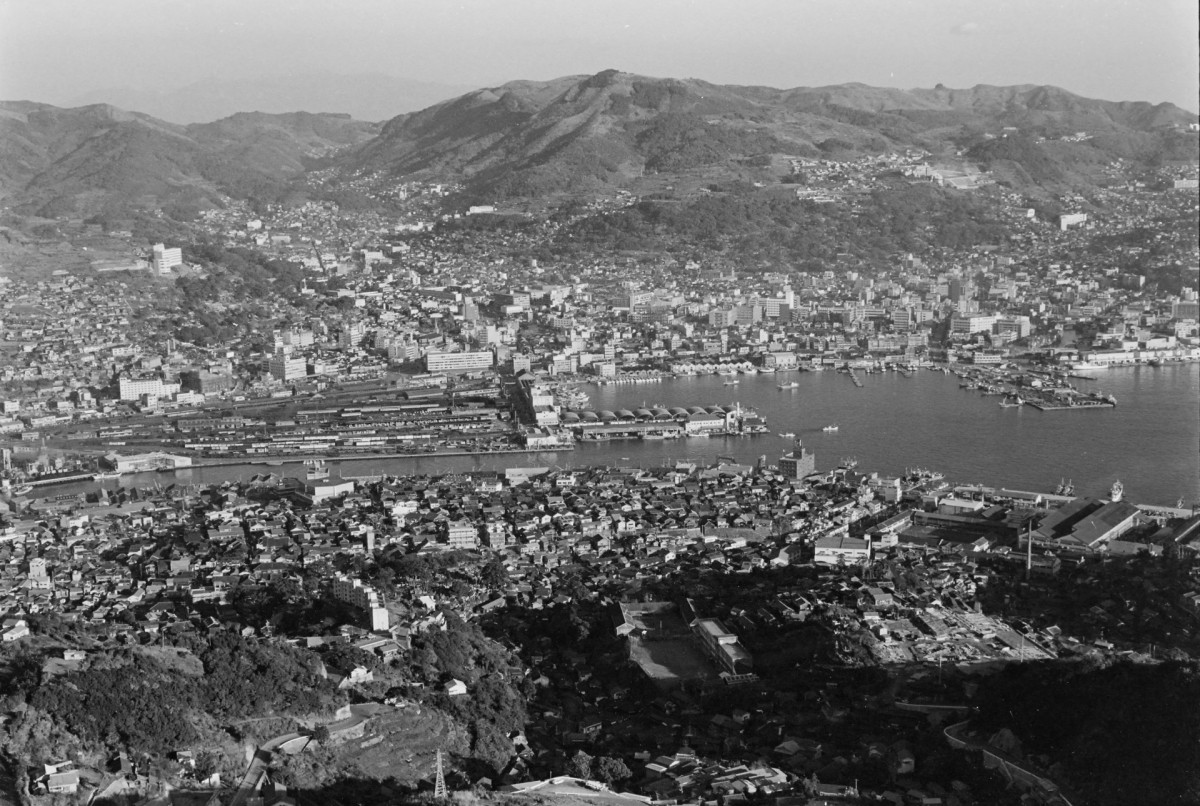
The story begins in Nagasaki in 1964. While postwar Japan was rapidly recovering, traditional yakuza organizations still remained in local communities, maintaining their own unique order. Kikuo Tachibana, a boy raised in such an environment, loses his father in a gang conflict and is left all alone.
It is Hanai Hanjirō, the head of the prestigious Hanai family of Kamigata kabuki (which developed mainly in Kyoto and Osaka) and its leading actor, who recognizes Kikuo's innate talent for the stage. Hanjirō takes Kikuo in and introduces him to the world of kabuki, a traditional performing art with over 400 years of history. Kikuo grows up alongside Hanjirō's son, Shunsuke, like brothers, and they push each other to improve as they undergo rigorous training together.
However, when Kikuo is chosen to substitute for Hanjirō, their relationship is shaken, and the wheels of fate begin to turn quietly.
Main Characters and Cast of the Film "Kokuhō"

Kikuo Tachibana / Tōichirō Hanai (Ryo Yoshizawa)
Kikuo Tachibana, played by Ryo Yoshizawa—who appears in the “Kingdom” film series and enjoys international popularity—is a young man born into a yakuza family but taken in by a family of kabuki actors, where he discovers and develops his talent in the world of traditional performing arts. Yoshizawa brilliantly expresses the character’s delicate emotions.
To master the graceful movements required in iconic kabuki dances such as “Futari Dojoji” and “Sagi Musume,” Yoshizawa trained for over a year, learning the unique physical techniques of kabuki from the basics. In the kabuki world, where lineage is highly valued, Yoshizawa powerfully embodies Kikuo’s journey as he approaches the pinnacle of the “onnagata” (female role specialist) not by blood, but by talent, with quiet passion and refined physical expression.
Shunsuke Ogaki / Hanai Hanya (Ryusei Yokohama)
Shunsuke Ogaki, played by Ryusei Yokohama, is born into a prestigious Kamigata kabuki family and is the son of the star actor Hanai Hanjiro, making him a man whose future has been promised since birth.
Eventually taking the stage as Hanai Hanya, Shunsuke grows up with Kikukio like brothers, sharing a complex relationship as both best friends and lifelong rivals. As Kikukio’s skills improve, Shunsuke struggles with the conflict between talent and family background, causing him to question his own place in the world.
Yokohama’s portrayal of Shunsuke vividly brings to life the universal themes of the “weight of inheritance” and the “fierceness of competition” that traditional performing arts must bear.
Hanai Hanjiro (Ken Watanabe)
Hanai Hanjiro, played by Ken Watanabe—who is also a Hollywood actor—is the leading star of a prestigious Kamigata kabuki family. Hanjiro recognizes Kikukio’s innate talent as a performer after the boy loses his father and is left alone, welcoming him into the home and raising him with strict yet deep affection. He believes in Kikukio’s talent as much as, or even more than, his own son Shunsuke, and rigorously trains him as a successor to the tradition.
Eventually, Hanjiro makes a major decision to entrust the role of Ohatsu in “Sonezaki Shinju”—a role he was supposed to play himself—not to his son Hanai Hanya, but to Hanai Toichiro, based on merit. This choice becomes a turning point that opens up Kikukio’s destiny, while also casting a deep shadow over his relationship with Shunsuke and greatly moving the story forward.
Harue Fukuda (Mitsuki Takahata)
Harue Fukuda, played by Mitsuki Takahata, is Kikukio’s childhood friend, a woman who grew up overcoming hardships in Nagasaki. Later, she follows Kikukio to Osaka, working at a snack bar in the entertainment district and supporting his life from behind the scenes.
As Kikukio soars as a kabuki actor, Harue watches over his transformation from a step back, sometimes strict, sometimes warm and supportive. In contrast to the glamorous stage, she brings the warmth of “everyday life” to the story. At the same time, her choices deeply shake Kikukio’s heart and become the catalyst for a turning point in his life.
Mangiku Onogawa (Min Tanaka)
Mangiku Onogawa, played by Min Tanaka, is the most outstanding onnagata representing Kamigata kabuki and is a legendary kabuki actor celebrated as a Living National Treasure (an artist officially recognized by the Japanese government).
He is a significant figure whom the young Kikukio and Shunsuke encounter, and his way of life and attitude toward his art quietly but surely influence the careers of both actors.
Drawing on his many years of experience as a dancer, Tanaka portrays Mangiku as a person who exudes the “special aura that only those who stand on stage possess.” Especially in the “Sagi Musume” scene, his physical expression transcends words and leaves a profound impression on the work. Mangiku is an important character who symbolizes the tradition and spirituality of the kabuki world, adding depth and weight to the story.
Deepen Your Understanding of “Kokuhou”! Essential Kabuki Knowledge to Know

Tachiyaku and Onnagata
Kabuki is a traditional performing art with a history of over 400 years, and one of its defining features is that all roles, including female characters, are played by male actors. The roles are broadly divided into “tachiyaku” and “onnagata.” Tachiyaku take on a wide range of male roles such as samurai and townspeople, while onnagata are actors who specialize in female roles, embodying delicate feminine gestures down to the fingertips, the way they walk, and even their gaze.
The protagonist of "Kokuhō," Kikuo (Toichiro Hanai), blossoms with extraordinary talent as an onnagata (male actor specializing in female roles). By taking on major roles such as "Futari Dōjōji" and "Sonezaki Shinjū," he forges his own path as an actor.
The Weight of Family Art and Stage Name Succession (Shūmei)
In Kabuki, each family has its own "kata" (forms) and "gei" (artistry), which include unique acting styles and signature plays passed down through generations. Actors inherit the same stage names as their predecessors. This is called "shūmei," and it is not merely a name change, but a significant milestone in inheriting the family's history and artistry. To take on a stage name that has been passed down for generations requires both skill and resolve, and audiences watch the stage with an understanding of this weight.
In "Kokuhō," the contrast between Shunsuke, who is born as the heir to a prestigious family, and Kikuo, who enters the world of acting through talent rather than bloodline, highlights the traditions and conflicts of the shūmei system—one of the story’s major themes.
Kabuki Stages and Performances
Kabuki performances are unique in that they often use a "rotation system," where multiple plays are performed in a single day, or different programs are scheduled for day and night. Actors may play several roles in one day, and audiences can choose their favorite plays to watch.
Additionally, Kabuki has traditional, dedicated theaters, which themselves are important centers for preserving cultural heritage.
In the film "Kokuhō," the real-life Eirakukan theater in Hyogo Prefecture was used for filming. Furthermore, the dedicated theater "Hinomoto-za" depicted in the film was meticulously recreated by art director Yohei Taneda to capture the authentic atmosphere of a Kabuki playhouse. The weight of this theater culture adds a deep sense of realism to the story.
The Effects of Stage Devices such as "Hanamichi," "Seri," and "Suppon"
Kabuki features many unique stage devices that bring stories to life in three dimensions. The most iconic is the "hanamichi," a walkway that runs through the audience. It is used not only for entrances and exits but also as a space for emotional expression. The "seri," a stage elevator, and the smaller "suppon" located in the center of the hanamichi, are devices used for sudden appearances and mystical effects.
In "Kokuhō," these stage devices are used to express the actors’ tension and excitement, emphasizing that Kabuki is a "comprehensive art of technique and the body."
Introducing the Synopses of All Seven Kabuki Plays Featured in the Film "Kokuhō," Including "Sagi Musume" and "Sonezaki Shinjū"!
Tsumoru Koi Yuki no Sekinoto: A Fantastical Dance Where Snow and Cherry Blossoms Intertwine
At the barrier of Ōsaka-yama, where heavy snow falls, the "Komachi-zakura" cherry trees, which bloom in a pale ink color out of grief for the lost Emperor, are in full bloom. Guarding the barrier are Sekibee (who is actually Otomo no Kuronushi), Shōshō Munesada, who mourns the Emperor’s death, and his lover, Princess Ono no Komachi. The three of them perform a fantastical dance where snow and cherry blossoms intertwine.
According to a fortune-teller’s reading, Sekibee learns that "if you cut down the cherry tree tonight and use it as gomagi (special firewood for ritual burning), you can rule the land." Just as he raises his axe, the courtesan Sumizome appears. As they exchange rumors, Sumizome realizes that Sekibee is actually Otomo no Kuronushi. Sumizome’s true identity is the spirit of the Komachi-zakura, and out of resentment for Kuronushi, who killed Antei, the younger brother of her beloved Munesada, she fiercely confronts him.
In the film, the scene where the young Kikuo plays Sumizome is depicted with particular impact.
👀About Courtesans: Women who worked in officially sanctioned pleasure quarters. Many were skilled in arts such as poetry, music, and dance.
Fuji Musume: A Pure Dance Depicting the Heart of a Maiden in Love
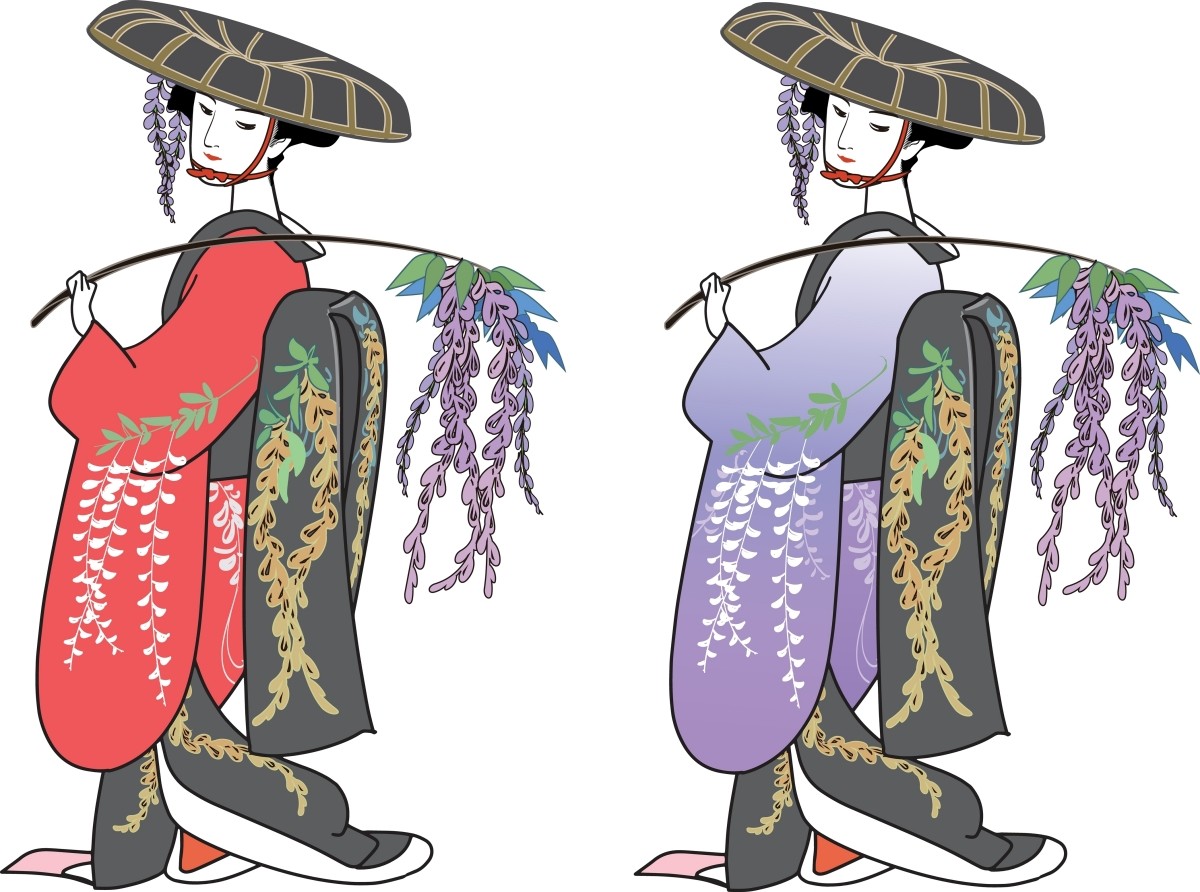
In a fantastical world where wisteria flowers are in full bloom across the stage, the spirit of the wisteria appears in the form of a beautiful young woman, expressing the heart of a maiden in love through various dances.
Accompanied by the "nagauta" music that supports Kabuki dance, a girl wearing a black-lacquered hat stands beneath a pine tree, expressing shyness, joy, and the bittersweet longing for a fickle lover through elegant movements with a fan and umbrella. She reappears in a different costume, and In the “Fuji Ondo” scene, the wisteria spirit dances lightly as if she were tipsy from sake. The charming hand dances continue, and in the end, she carries a branch of wisteria, bidding farewell to spring as the curtain falls.
In the film, the performance is depicted as "Futari Fuji Musume," featuring two onnagata (male actors specializing in female roles) sharing the stage, which highlights the splendor of the production.
Renjishi: The Bond and Trials of Parent and Child
"Renjishi" is a brilliant kabuki dance piece inspired by the famous Noh play "Shakkyo." It vividly portrays the deep affection and trials between a parent and child lion.
The stage is set at the stone bridge of Seiryozan in China. Based on the legend that a lion pushes its cub into a valley and only raises the one that climbs back up on its own, the first half features Kyogen actors using hand-held lion puppets to express the strictness of the parent lion and the growth of the cub through dance. In the second half, kabuki actors appear as the spirit of the white-maned parent lion and the red-maned cub, performing the dynamic and powerful "kefuri" (mane-swinging dance).
In the film, the scene where Hanai Hanjirō performs the mane-swinging dance as the parent lion is depicted with great impact.
Futari Dōjōji: A Grand Piece Expressing Female Obsession and Beauty
"Futari Dōjōji" is a variation of the grand kabuki dance "Kyōkanoko Musume Dōjōji," performed by two dancers. Based on the Noh play "Dōjōji" and the legend surrounding the bell of Dōjōji Temple in Kishu, it is a dazzling dance piece.
At Dōjōji Temple in Kishu, a memorial service for a new temple bell is being held when Hanako, a shirabyōshi (female dancer), appears, wishing to worship the bell. allowing her to join the ceremony on the condition that she dedicate a dance, Hanako and her partner perform a series of elegant dances together.
However, Hanako's true identity is the vengeful spirit of Kiyohime, who, after being betrayed by the man she loved, transformed into a giant serpent and destroyed the bell. Her obsession gradually reveals itself as the dance progresses.
the scene where Kikuo and Shunsuke, growing through friendly rivalry, give their all in this grand piece is one of the most memorable moments in the film.
Sonezaki Shinjū: A Tragic Love Beyond Social Status
"Sonezaki Shinjū" is a masterpiece based on the jōruri (narrative music drama) written by Chikamatsu Monzaemon in 1703. It became widely popular in kabuki after the second Nakamura Senjaku (the fourth Sakata Tōjūrō) played the role of Ohatsu in 1953, leading to a major hit.
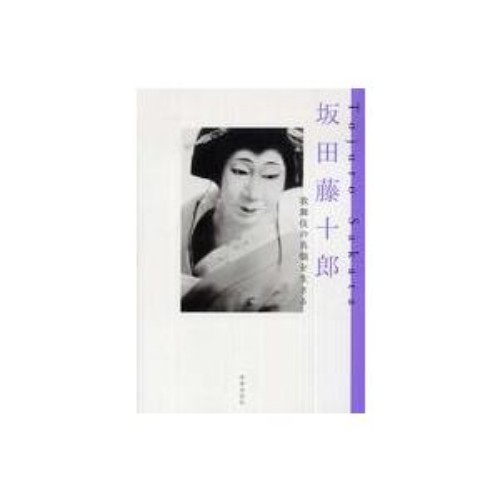
Set in Sonezaki, Osaka, the story follows Tokubei, a servant, and Ohatsu, a courtesan, as they are driven to despair by the barriers of social status and betrayal, ultimately choosing to "become husband and wife in death" in a tragic love story.
In the film, when the master Hanai Hanjirō is forced to step down due to illness, Kikuo, not his real son but his apprentice, is chosen to play Ohatsu as a substitute. Kikuo's challenge in portraying this demanding Kamigata kabuki role, which requires delicate emotional expression, vividly highlights his determination and growth as an actor.
Sagi Musume: The Anguish of the White Heron Spirit in Love with a Human
The kabuki dance "Sagi Musume" is a fantastical work depicting the suffering of the spirit of a white heron who falls in love with a human, ultimately enduring the torments of Hell. The performance begins with a maiden in a pure white bridal kimono appearing on a snowy stage, standing quietly with an umbrella. The onnagata expresses the heart of a woman swayed by love through a series of dances, changing costumes one after another.
Premiered in 1762 during the Edo period, the piece features unique kabuki stage techniques such as "hikinuki" (instant costume changes) and "bukkaeri" (transforming back into a bird), which are highlights of the performance. Today, it is internationally renowned as a signature role of Bandō Tamasaburō.
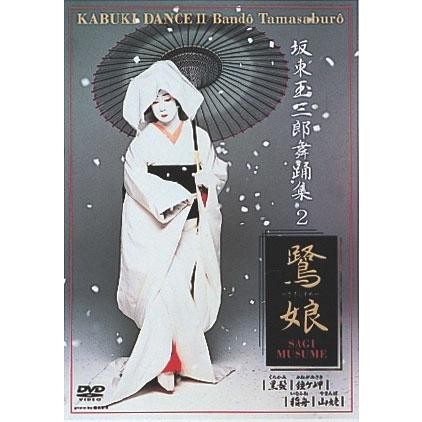
Source: Yahoo! Shopping
In the film, Living National Treasure Mangiku Onogawa and Kikuo perform this piece, and their expression—filled with beauty and tension—brings the climax to life.
Discover the Profound World of Japanese Entertainment Through the film “Kokuhō”
The film “Kokuhō” gently opens the door to the vast world of kabuki, serving as a perfect introduction. The actors’ dedication to their craft, the relentless effort poured into every fleeting moment on stage, and the overwhelming beauty that moves the audience—all of this overflows from the screen, inviting us into the deep woods of kabuki.
If this film stirs your heart even a little, take the next step and experience a real stage performance. The spark of excitement you felt from the movie will surely grow into a powerful emotion.
👉Tokyo |Learn About the Traditional Japanese Performing Art of Kabuki in Ginza (kkday)
Comments