
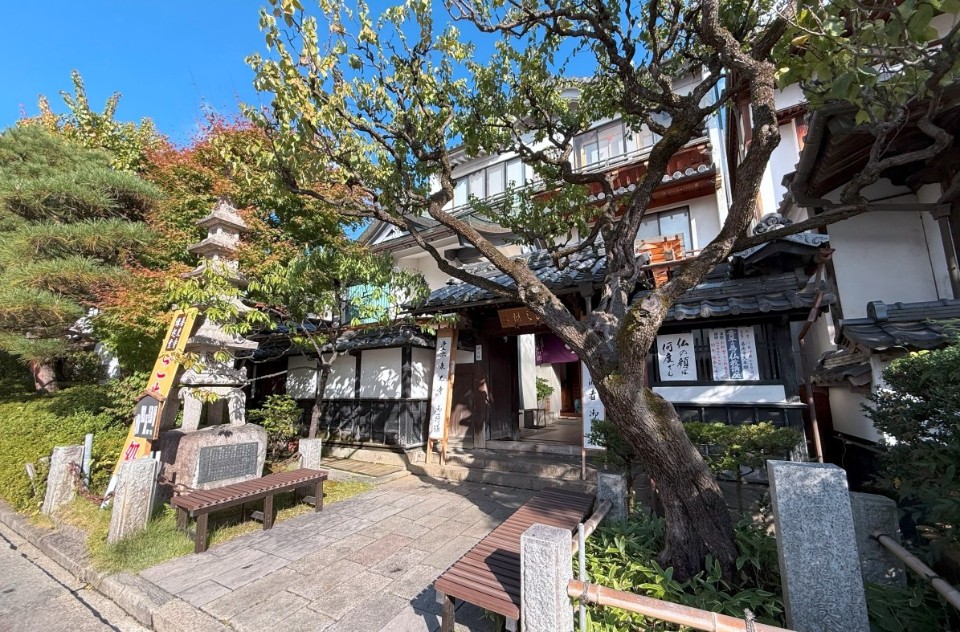
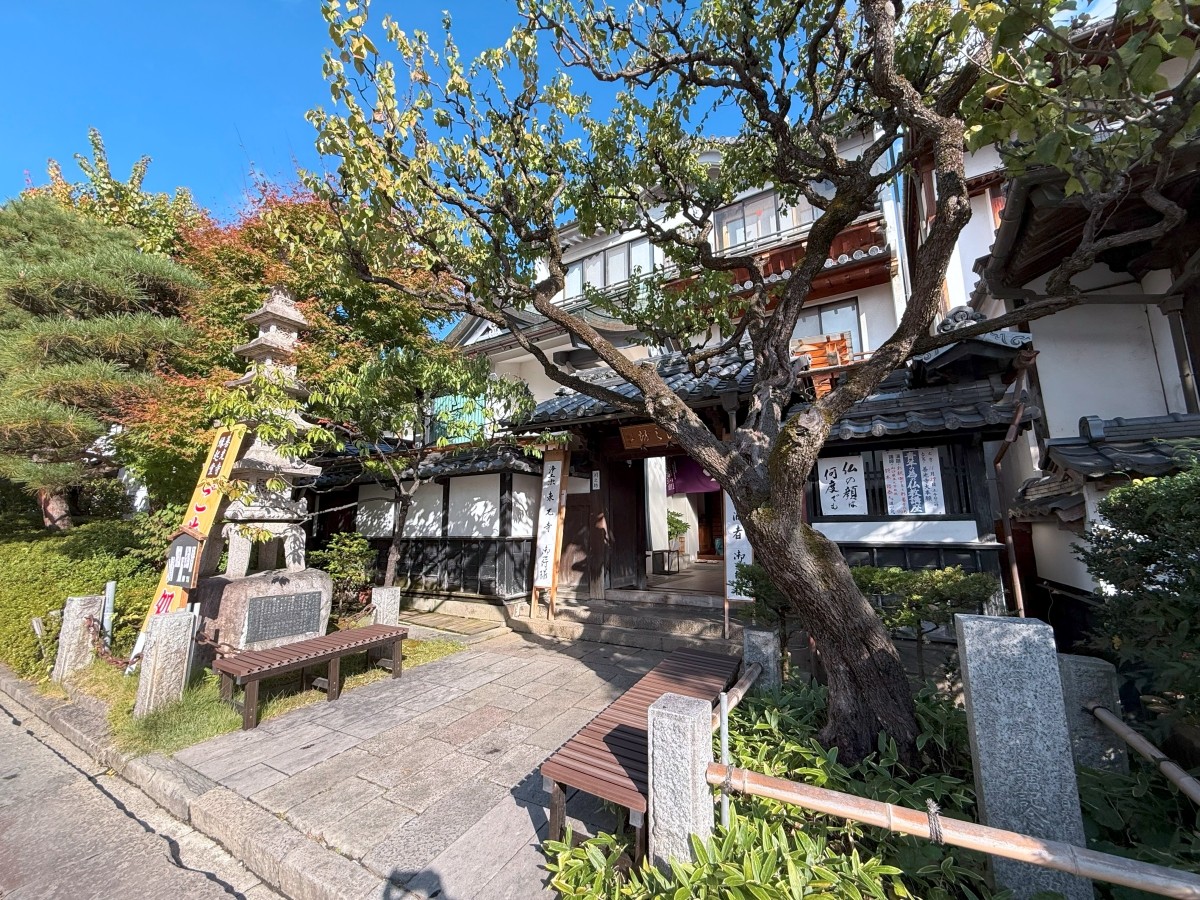
The “shukubo,” or temple lodging, originally served as accommodation for monks and worshippers at temples. Today, they are open to general travelers as well, and are gradually gaining popularity among international tourists, especially those who want to experience Japanese culture more deeply, with Kyoto at the center of this trend.
However, even for Japanese people, staying at a shukubo is quite rare. For foreigners, the experience can seem even more daunting due to language barriers and a lack of basic knowledge about Japanese Buddhism and etiquette.
For this article, we visited “Fuchinobo,” one of the 39 shukubo at Zenkoji Temple in Nagano Prefecture, which welcomes international guests. We will share a detailed report of our stay, including photos and videos taken on site.
What is "Fuchinobo"? A Shukubo Where You Can Stay Inside the Grounds of Zenkoji Temple
Fuchinobo, located along the approach to Zenkoji Temple, has long been known as the “Engido” (Hall of Origins).
“Engi” refers to the origin stories and historical legends of a temple. Fuchinobo has played a special role in passing down the history and traditions of Zenkoji Temple to visitors.
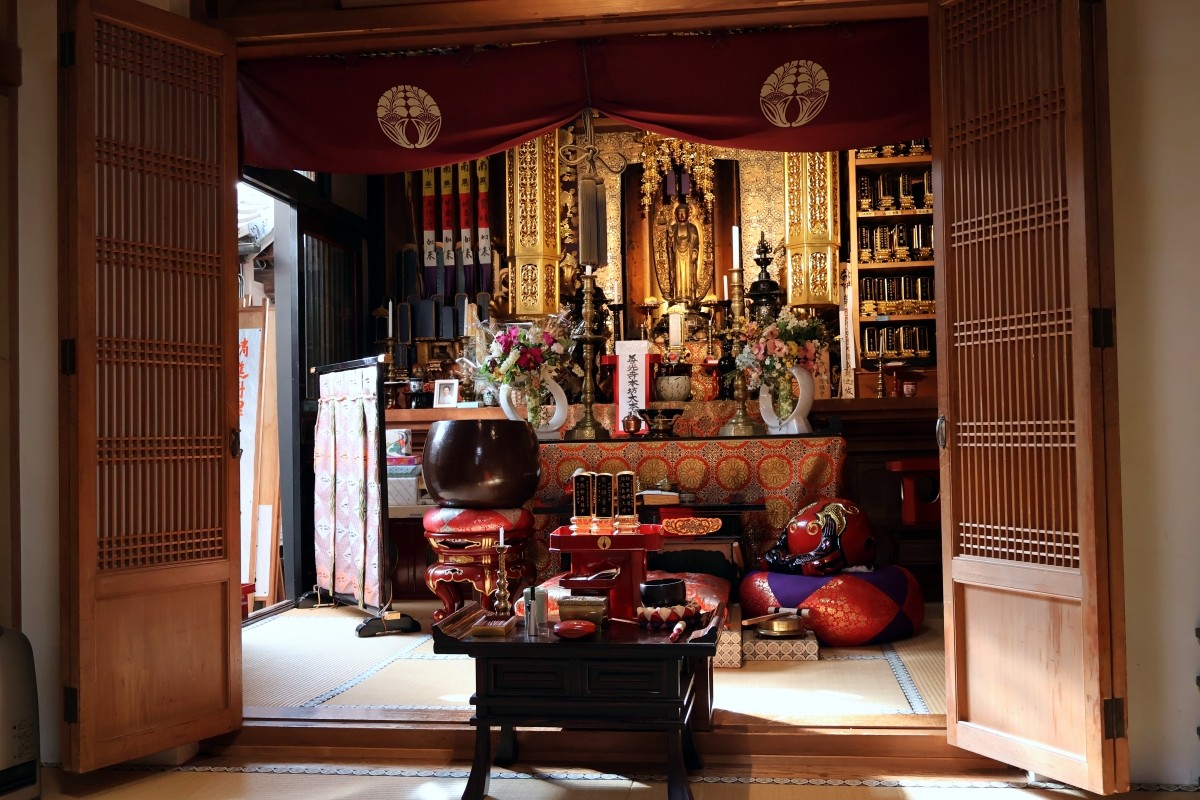
As soon as you step inside, you are enveloped by a profound sense of history and a tranquil atmosphere nurtured over centuries.
Each shukubo has its own principal deity and a resident priest. Since Fuchinobo enshrines an image of Amida Nyorai, please take a moment to pay your respects upon your arrival.
Simply kneel, place your hands together in silent prayer, and offer a quiet greeting in your heart. Please remember not to clap your hands because this is a Buddhist temple, not a Shinto shrine.
Peace of Mind for International Travelers! Fuchinobo’s Guest Rooms, Facilities, and Warm Hospitality
You may worry that a temple lodging is a place for strict training and might be inconvenient as a hotel, but there is no need for concern. While Fuchinobo honors its traditions, it is also fully equipped with modern facilities to ensure that today’s travelers can stay in total comfort.
Private Rooms for Your Comfort
There are seven calm, Japanese-style rooms where you can enjoy your own private time. While traditional shukubo often have rooms separated only by sliding doors or paper screens and may not have locks, here you will find private rooms with locks for your peace of mind.
Special Room A
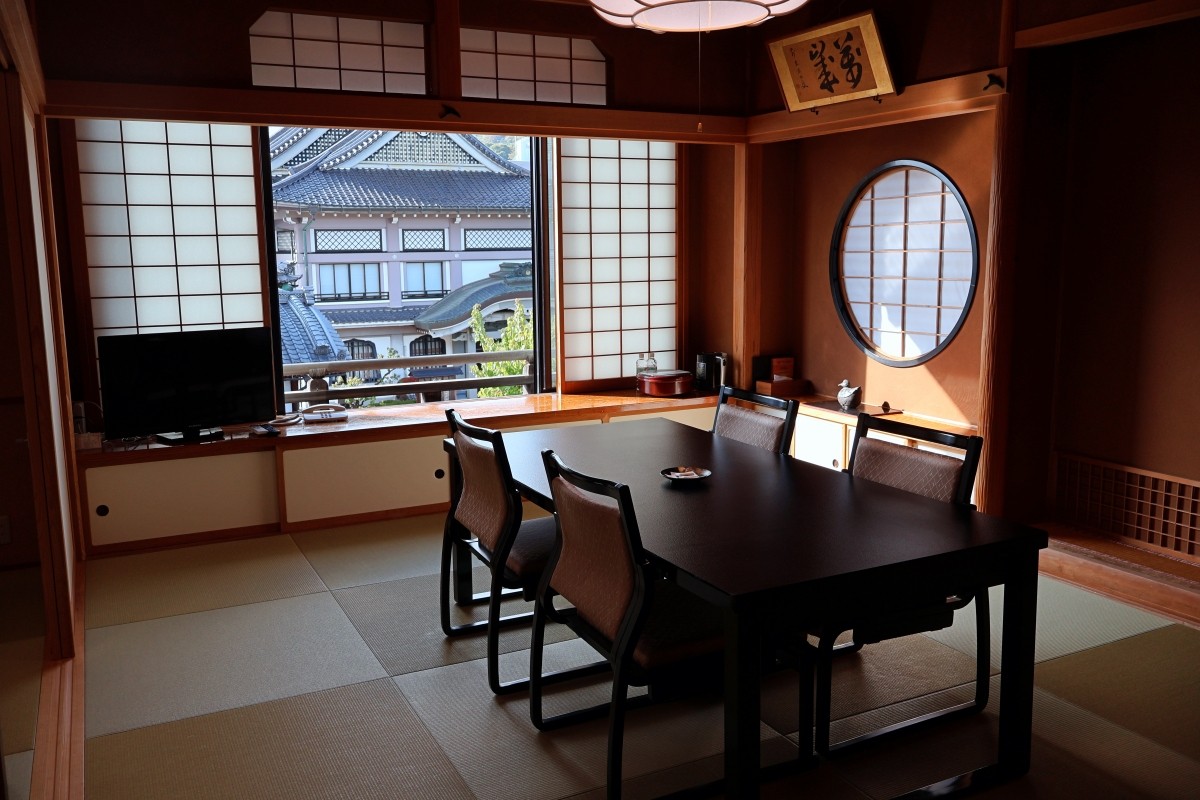
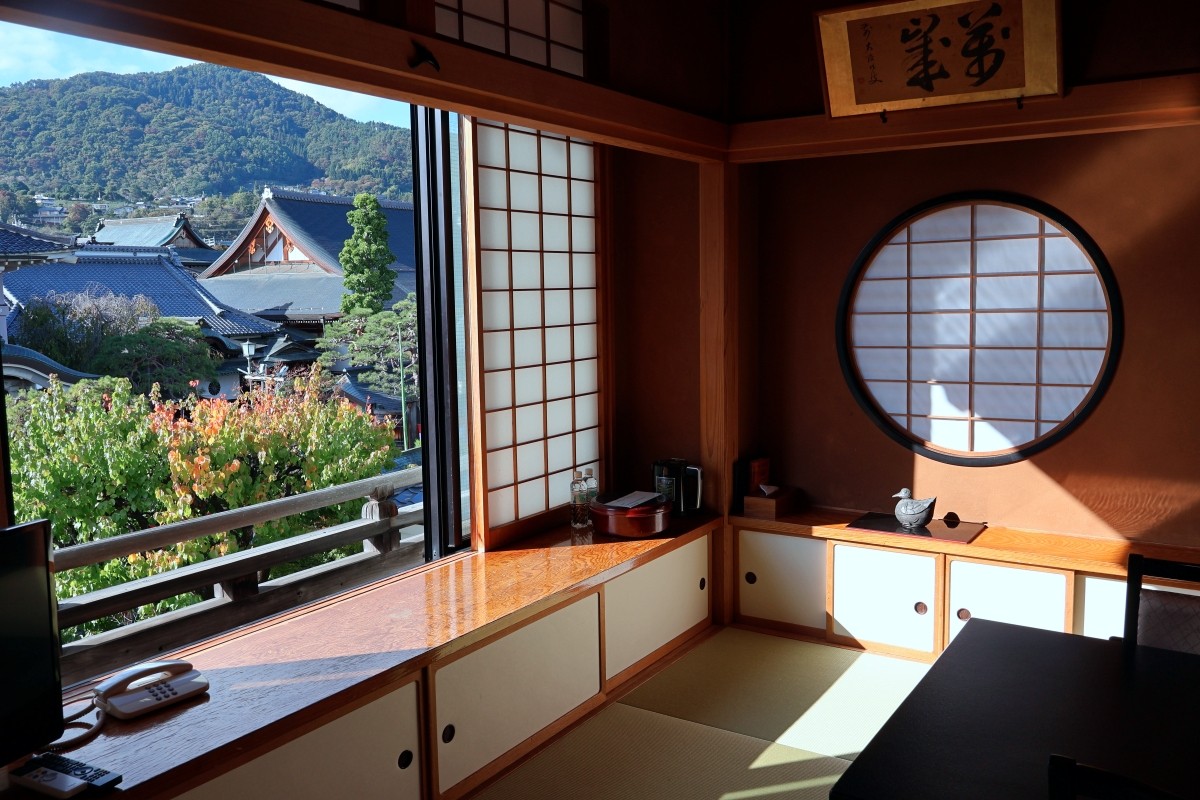
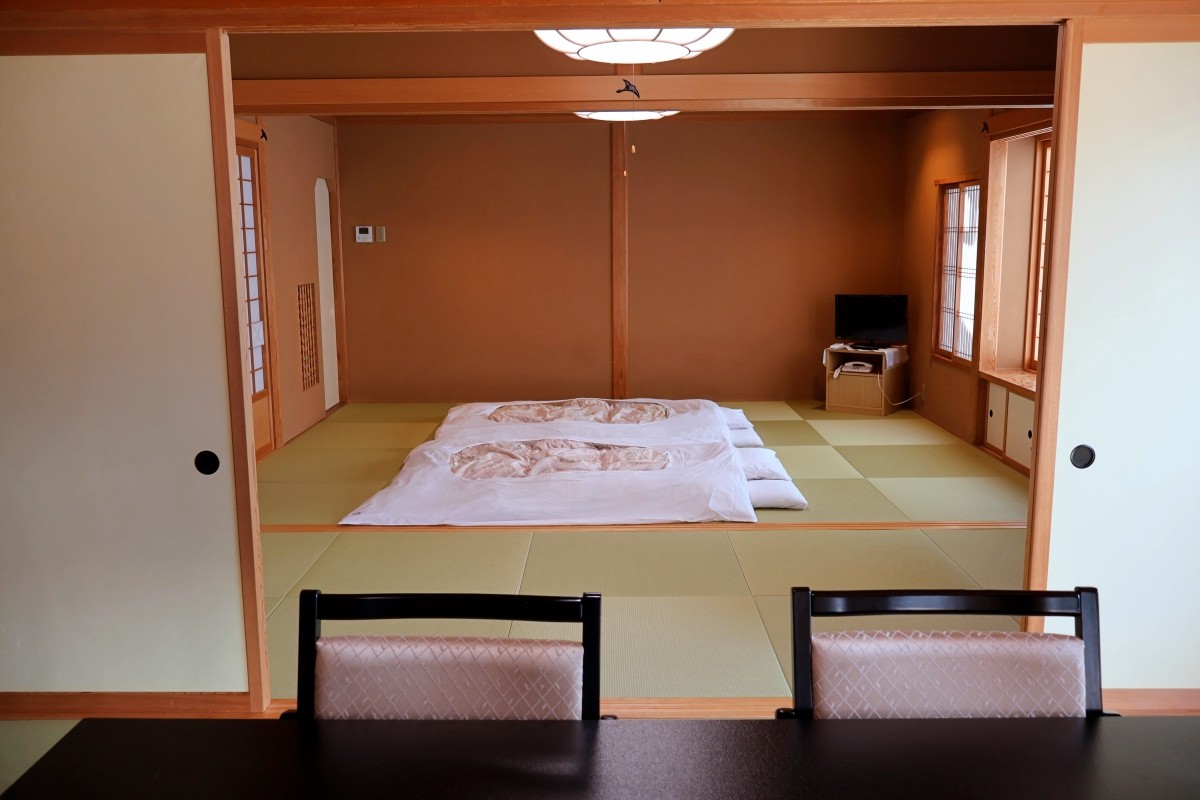
This is the only guest room at Fuchinobo that faces the Zenkoji Temple's omotesando (the main approach to the temple). Although it is a traditional tatami room, you can relax comfortably with a desk and chairs provided. In the adjacent bedroom separated by fusama sliding doors, the futons are already laid out for you. The view from the window is wonderful, offering a look at the surrounding architecture and the beautiful mountains rising behind Zenko Temple.
Special Room C
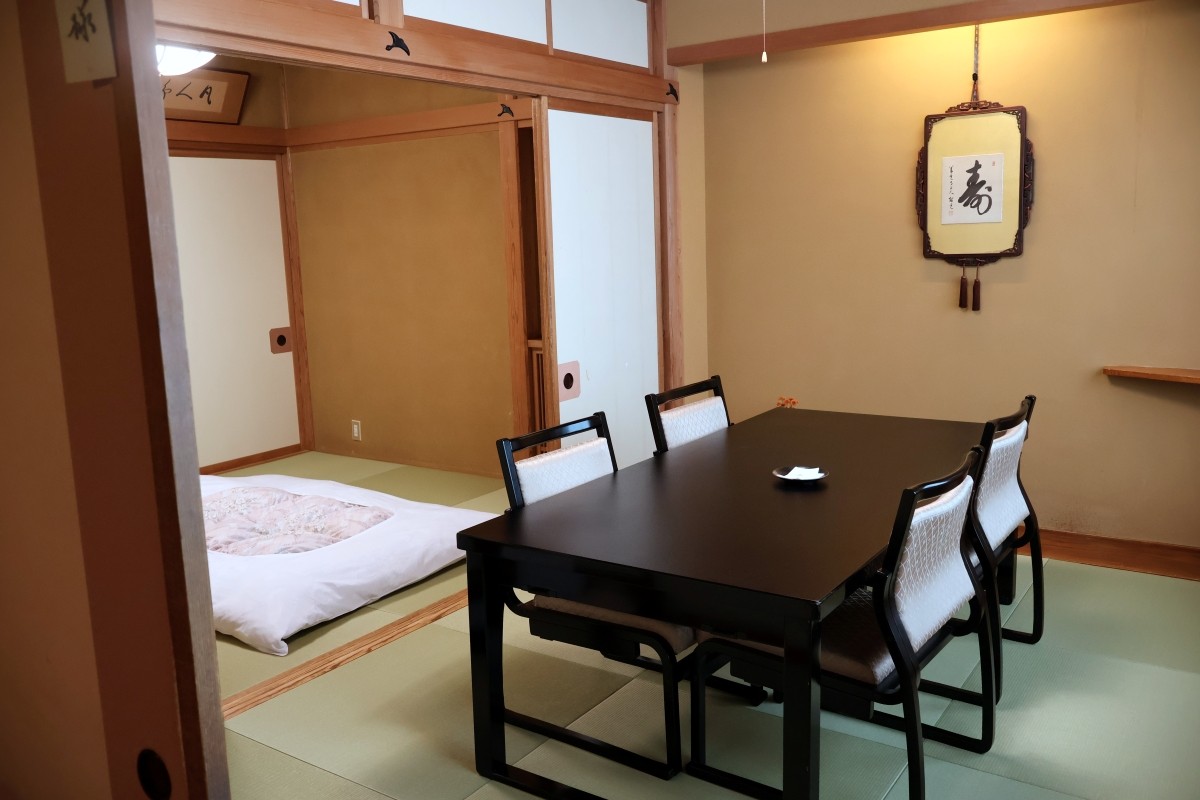
This room also has separate living and sleeping areas, providing a spacious and relaxing environment.
In addition to this, there are also relatively compact Japanese-style rooms available.
Room Amenities
- Yukata (Japanese-style robe)
- Toothbrush
- Tenugui (Japanese hand towel)
- Television
- Air Conditioner
- Kettle (with tea)
- One bottle of mineral water
The rooms are equipped with all the necessary amenities. Just like at a traditional Japanese ryokan, you can use a yukata as sleepwear.
Barrier-Free Accessibility
The facility is equipped with elevators for guests with limited mobility. For those who are not used to sleeping on tatami mats, beds can also be provided (limited availability).
Two Types of Baths Also Available for Private Use
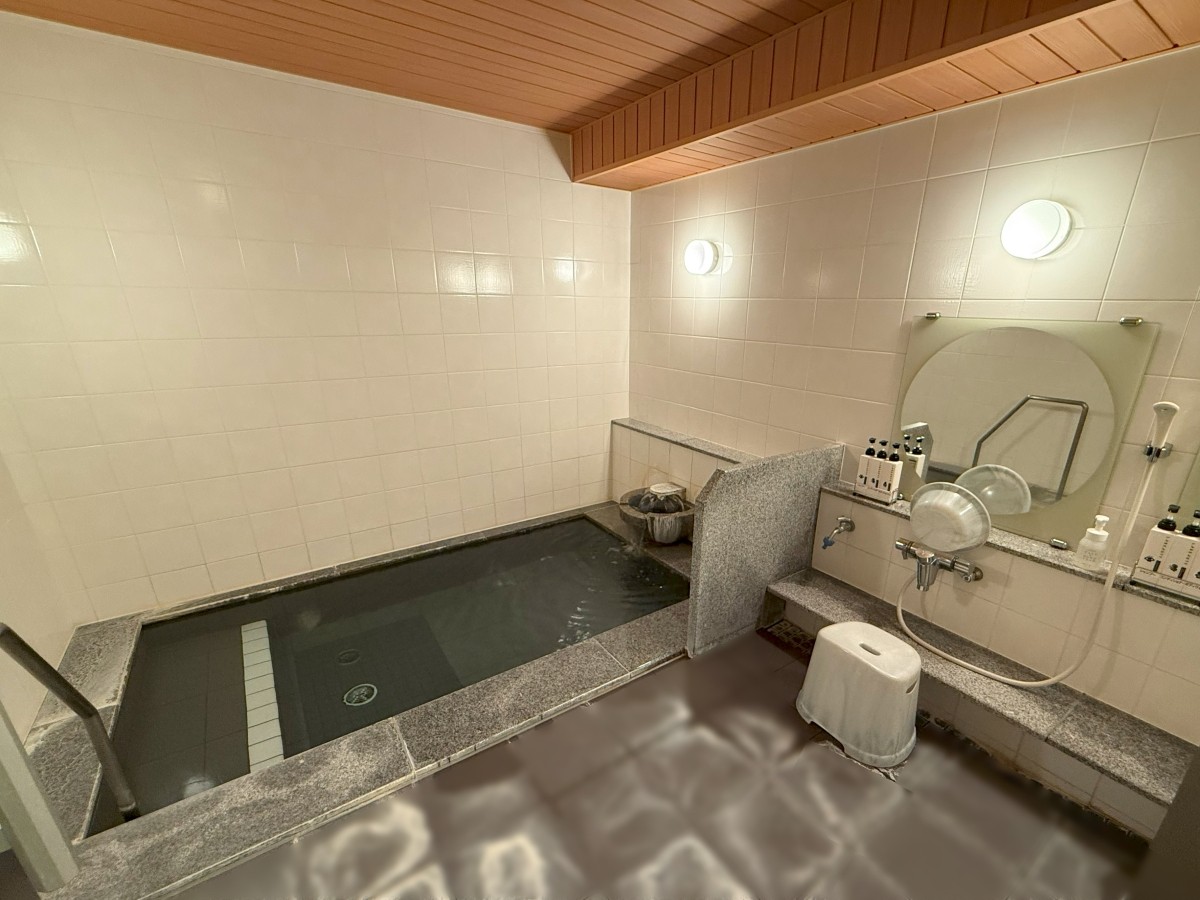
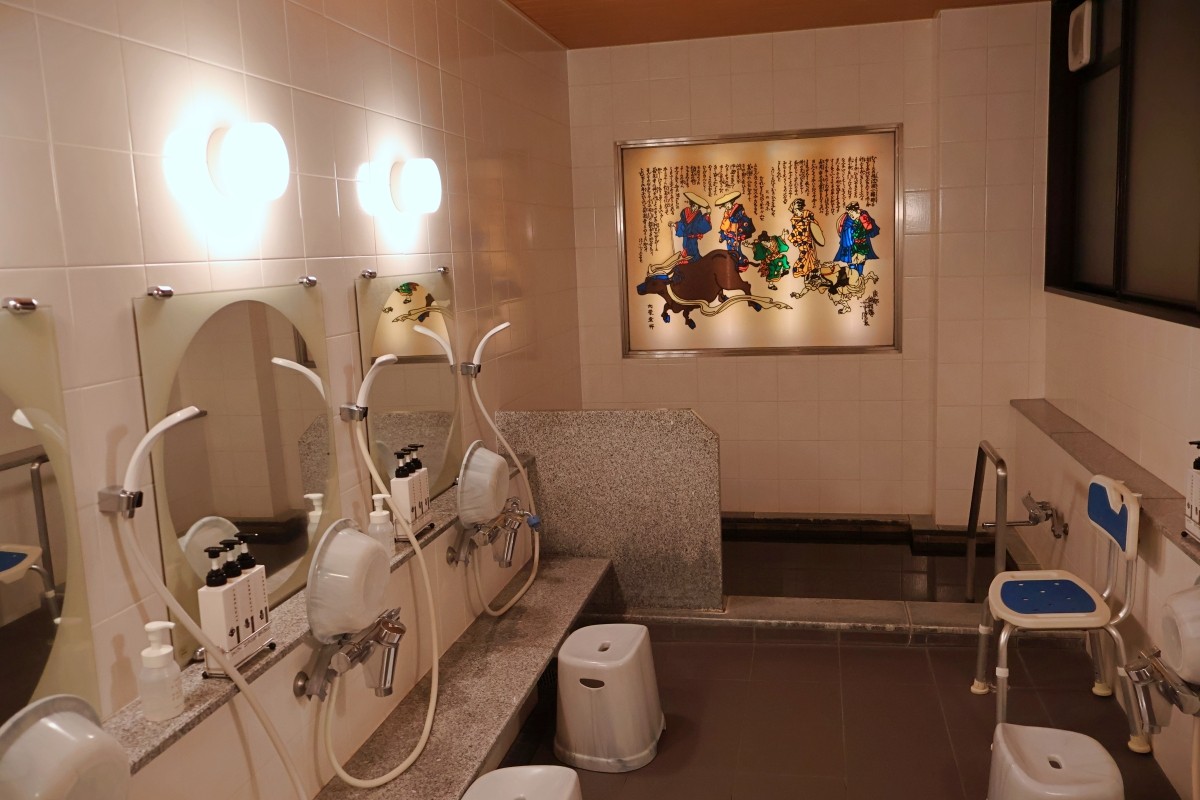
Fuchinobo has two types of baths with bathtubs featuring tourmaline and bakuhanseki stones. Their appeal lies in the smooth texture of the water which harnesses the power of natural stones, allowing you to enjoy a pleasant moment as your body warms gently from the core.
Normally, these are used as communal baths separated by gender, but private use is also OK if you consult with the staff in advance. This is well-received by international guests who prioritize privacy. Please note that guest rooms are not equipped with baths or showers.
Bath Amenities
- Body soap
- Shampoo
- Conditioner
- Facial soap
- Hair dryer
- Bath towel
- Razor
- Comb
- Shower cap
- Cotton swabs
- Tissues
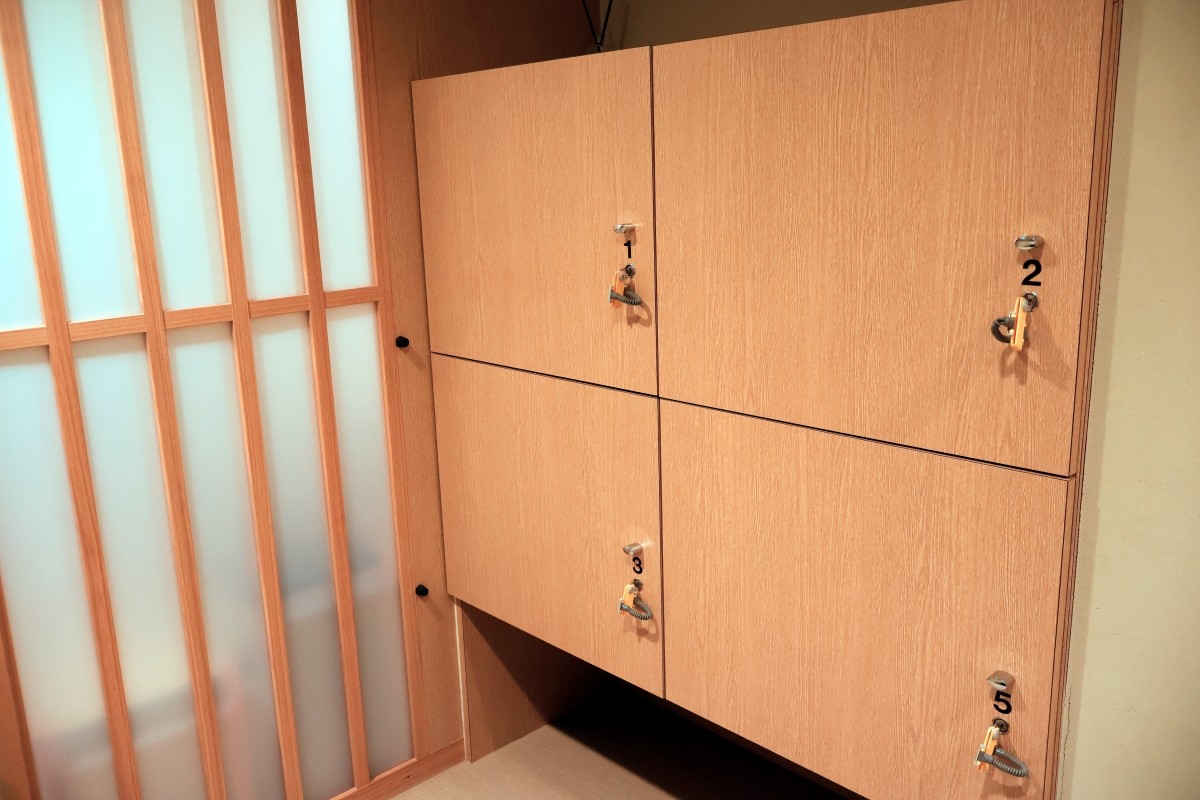
Amenities are provided in both the changing rooms and the bathing areas. The lockers in the changing rooms are equipped with locks, so you can feel secure even when sharing the facilities with other guests.
Enjoy Authentic Shojin Ryori: A Luxurious Kaiseki Featuring Seasonal Shinshu Ingredients
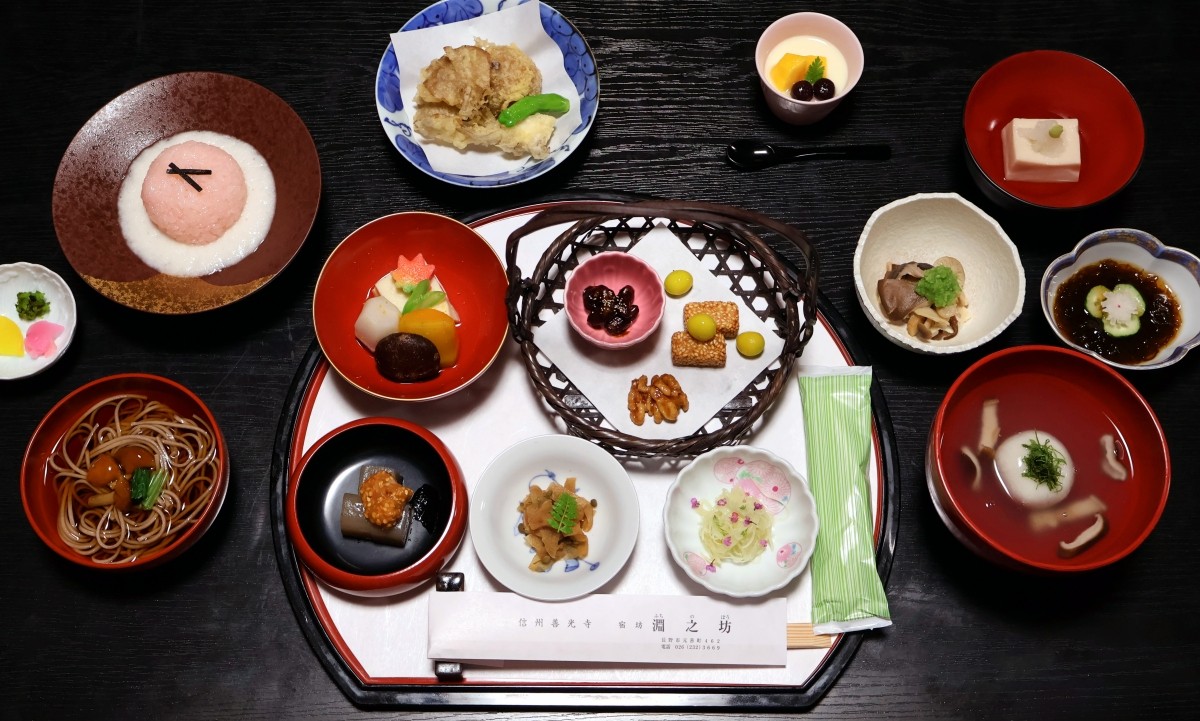
One of the highlights of staying at Fuchinobo is the Shojin Ryori, traditional Buddhist vegetarian cuisine, made with plenty of local Shinshu ingredients.
Shojin Ryori is a type of cuisine based on Buddhist precepts. It does not use meat, seafood, or the five pungent roots (garlic chives, garlic, green onions, onions, and Chinese onions), which have long been believed to arouse worldly desires. Instead, it is prepared only with plant-based ingredients such as vegetables, grains, seaweed, and beans.
The purpose is to avoid taking life and to refrain from stimulating worldly desires. Originally, it was considered a part of Buddhist training.
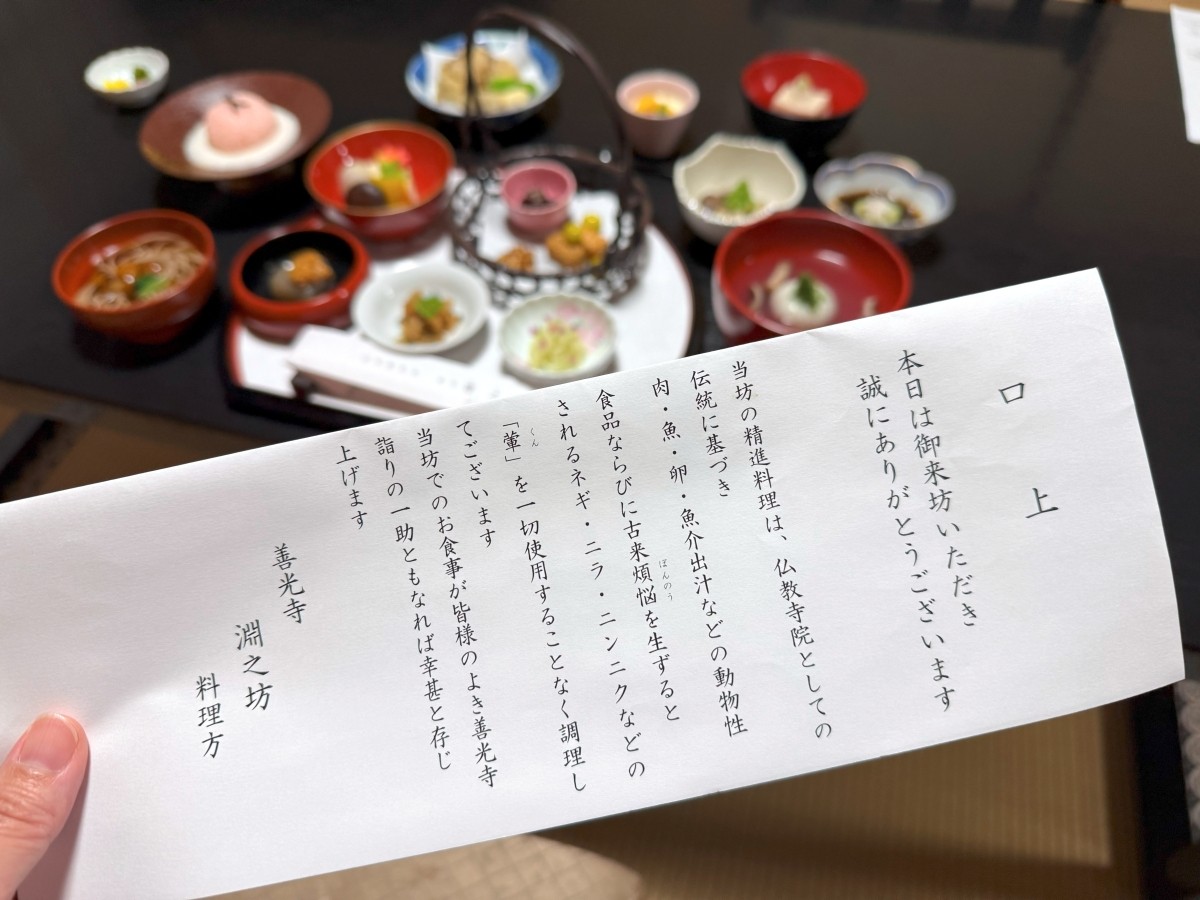
The hallmark of this cuisine is its respect for seasonal ingredients and the balance of "Gomi, Goshiki, and Goho." This refers to the five flavors (sweet, sour, spicy, bitter, and salty), the five colors (red, green/blue, yellow, white, and black), and the five preparation methods (raw, simmering, steaming, frying, and stir-frying). Another key principle is the practice of using every part of an ingredient without any waste. When you eat with these "fives" in mind, you will find a deeper appreciation for the culture behind the meal.
The Shojin Ryori at Fuchinobo is exceptionally colorful, beautiful, and healthy.
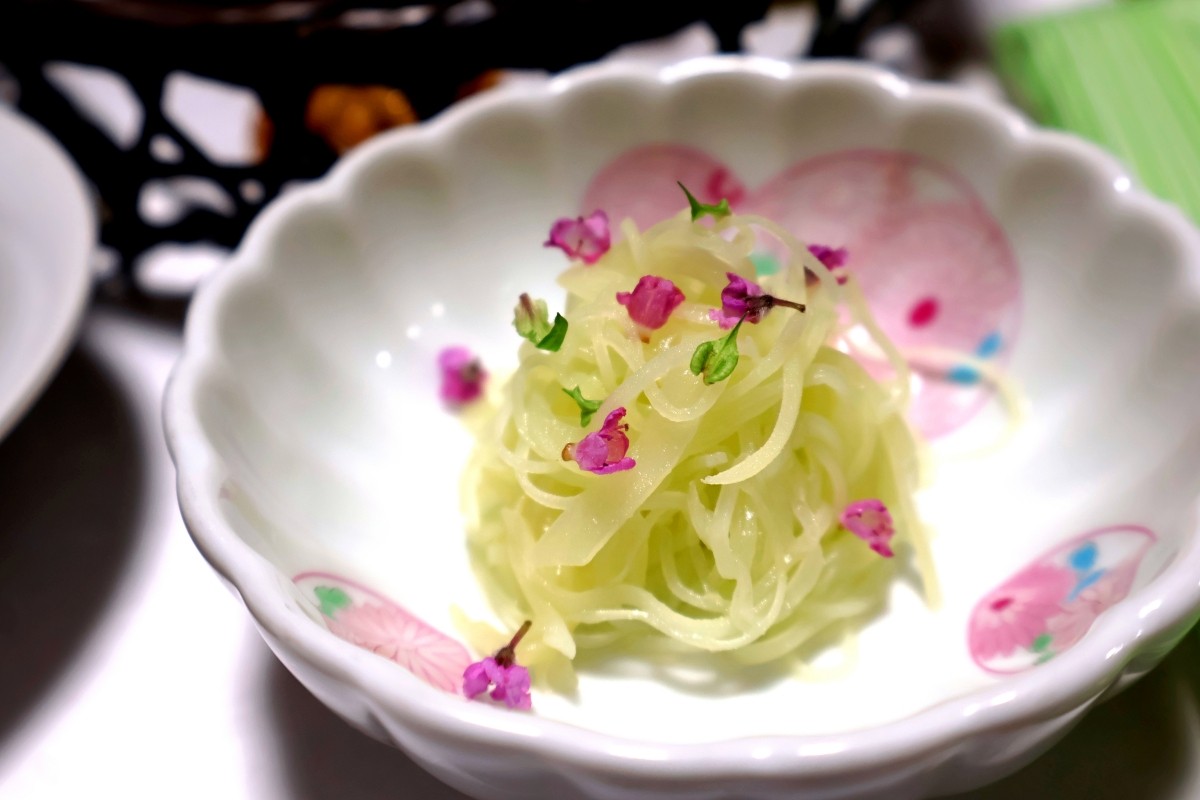
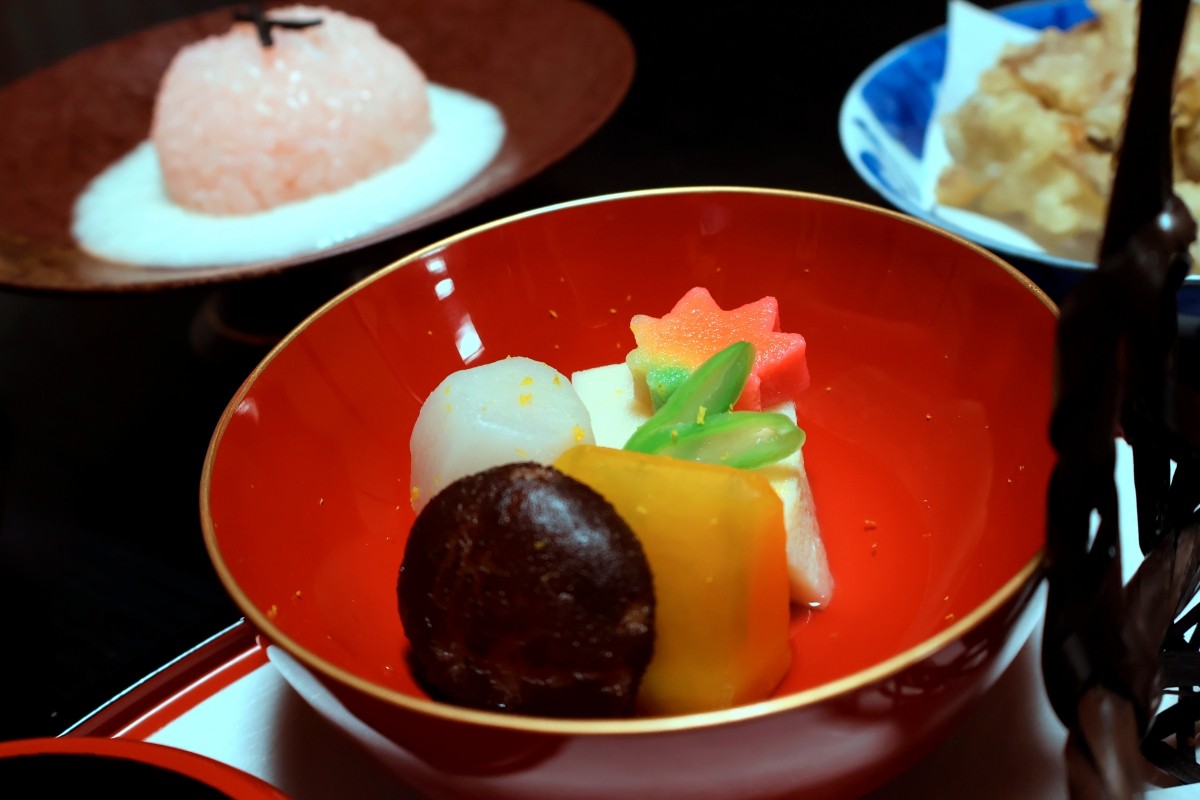
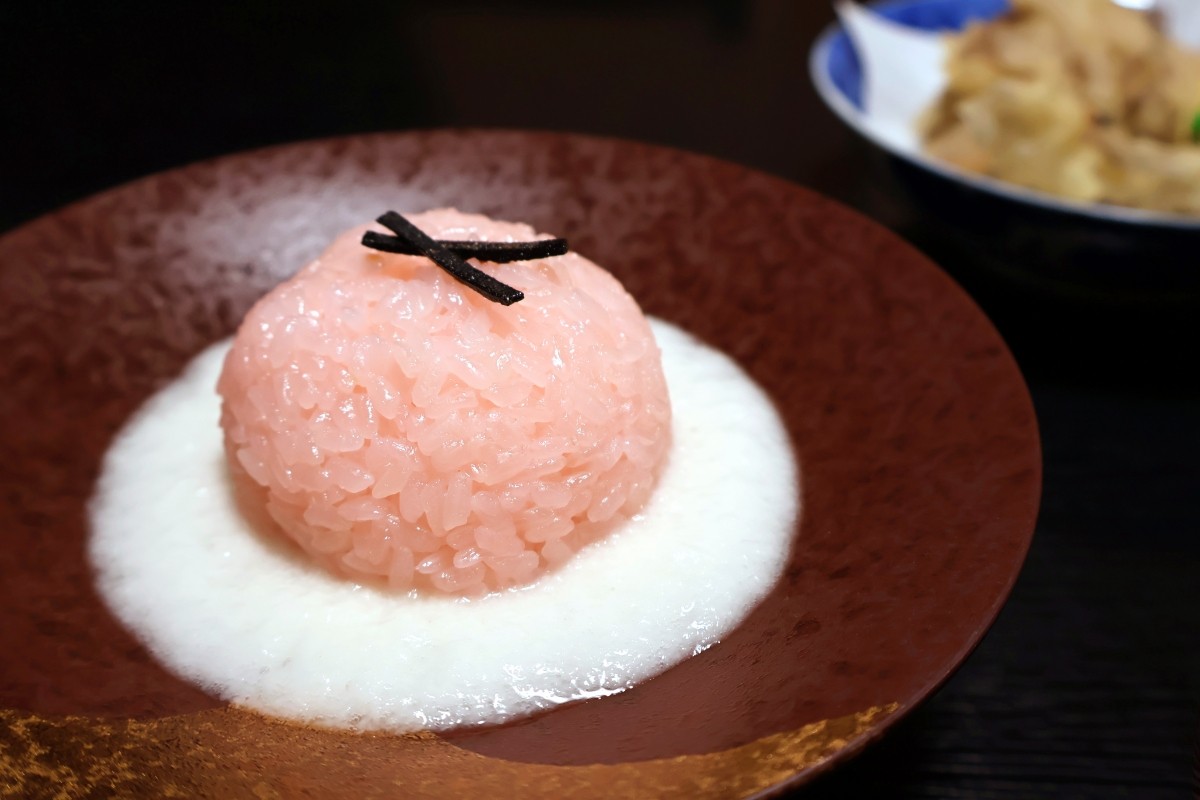
The delicate presentation, showcasing the skill of the chef, is like a work of art. Since I visited in October, the dishes were filled with the flavors and colors of autumn.
Shojin Ryori, which does not use any animal-based ingredients, is also gaining attention as the ultimate healthy cuisine. One of its attractions is that even vegans and vegetarians can enjoy a full course of traditional Japanese cuisine with peace of mind.
Additionally, the dining area is furnished with tables and chairs, so there is no need to sit in the formal seiza style for a long period. This allows you to fully savor the traditional flavors without putting any physical strain on your body.
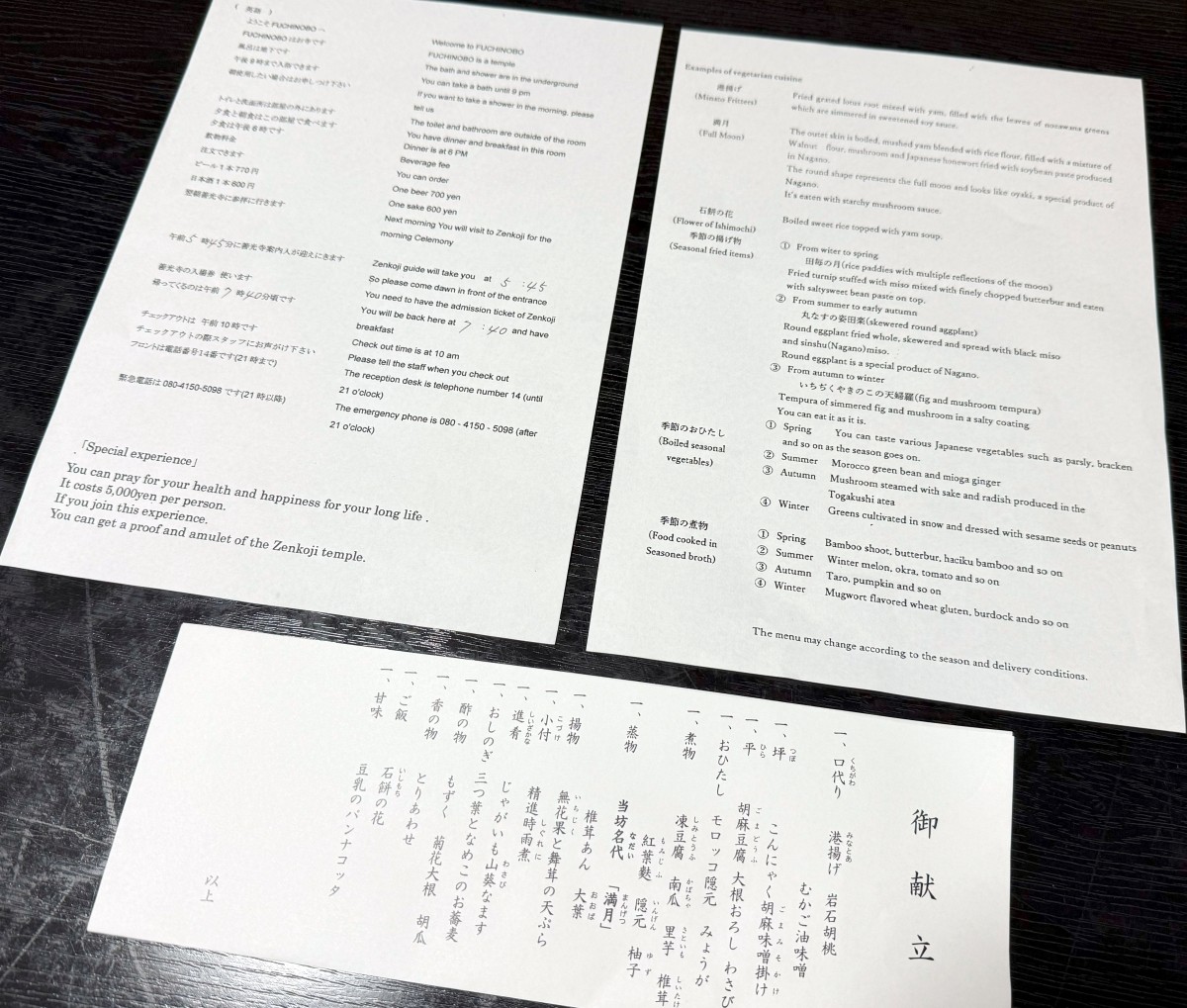
English versions of the menu and a simple guide to your stay are available.
The Ultimate Mindfulness Experience: Activities at Fuchinobo such as Sutra Copying
During your stay, we also recommend programs that allow you to deeply experience Japanese spiritual culture.
Sutra Copying and Buddha Image Tracing
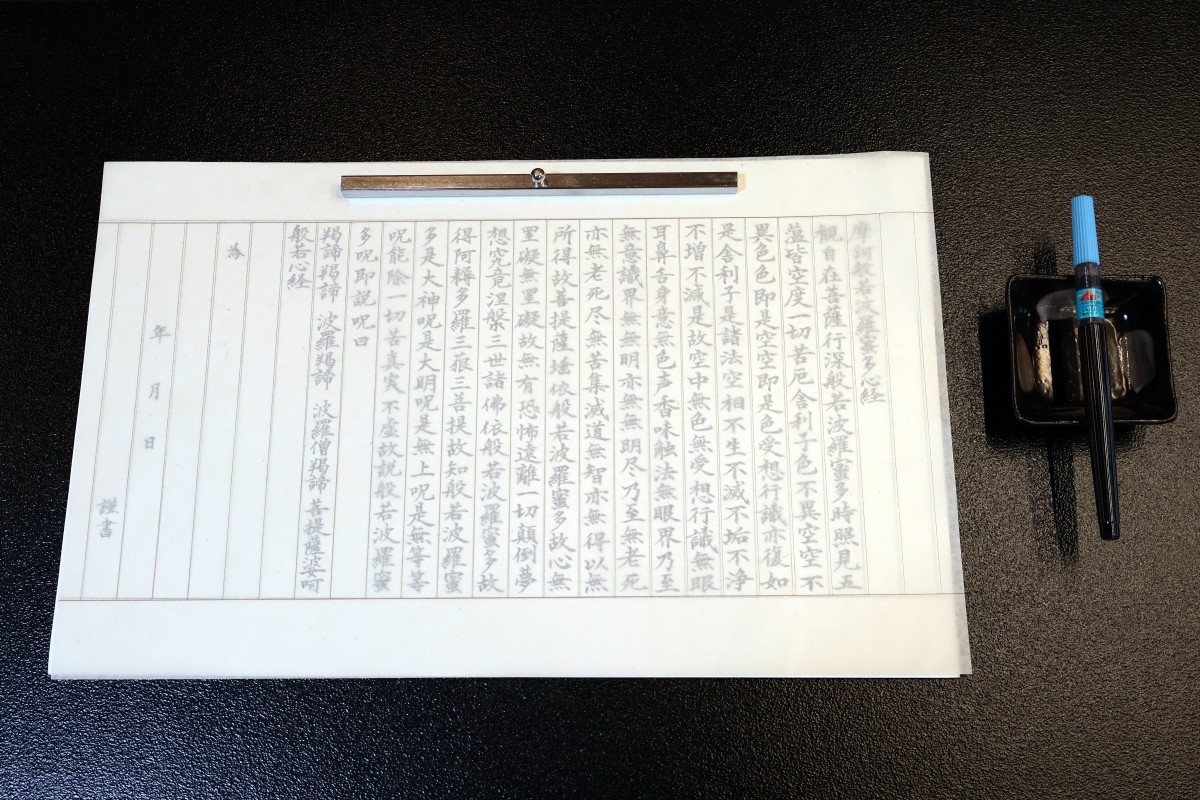
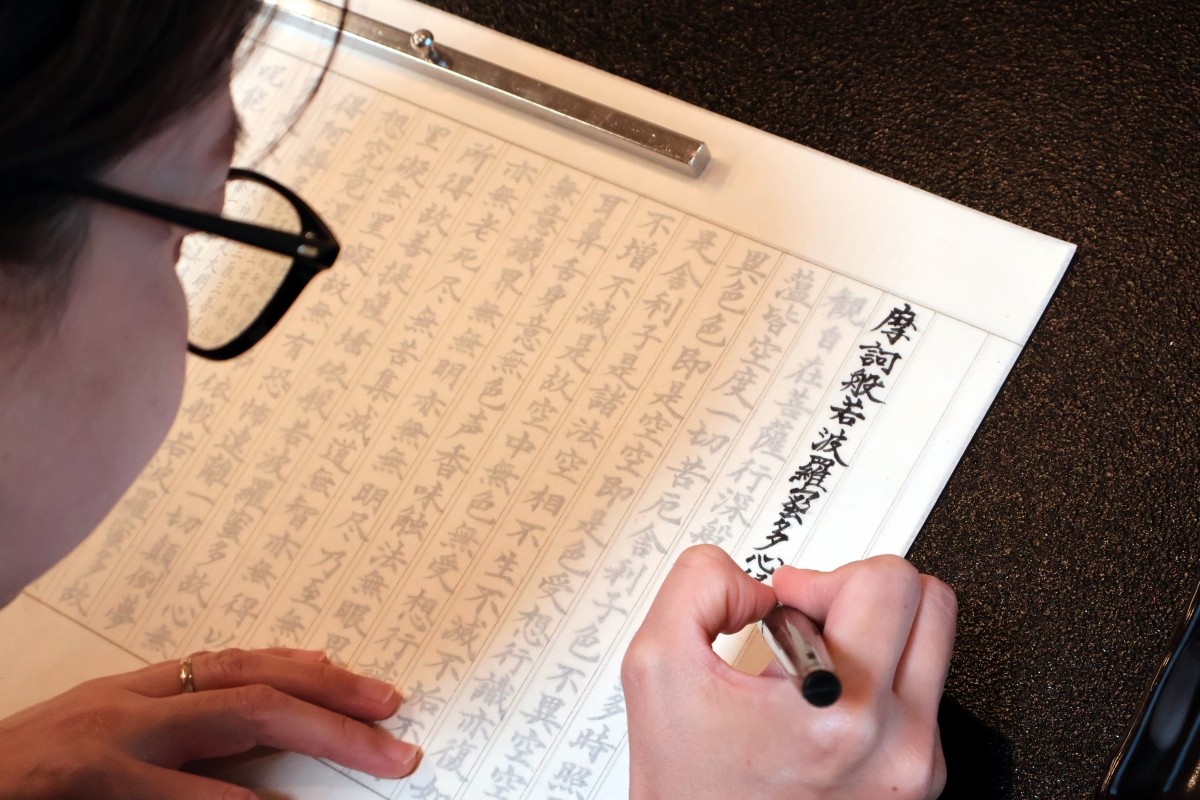
This time, the editor experienced sutra copying. A thin sheet of paper is placed over a template with the sutra written on it, and you trace over it using a brush pen. The time spent copying the sutra character by character in a state of selflessness is a form of quiet mindfulness where you can reflect on yourself. The sense of accomplishment and the mental stillness you feel after finishing is an experience that is truly irreplaceable.
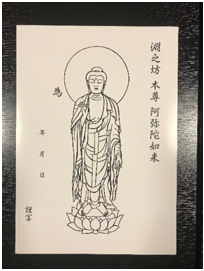
Similarly, Buddha image tracing involves placing a thin sheet of paper over a sample drawing of a Buddha and tracing the image. For those who are not comfortable with kanji, Buddha image tracing is recommended.
- Sutra Copying / Buddha Image Tracing: 2,000 yen *Available only for guests staying at Fuchinobo
Oetoki (Illustrated Buddhist Storytelling)
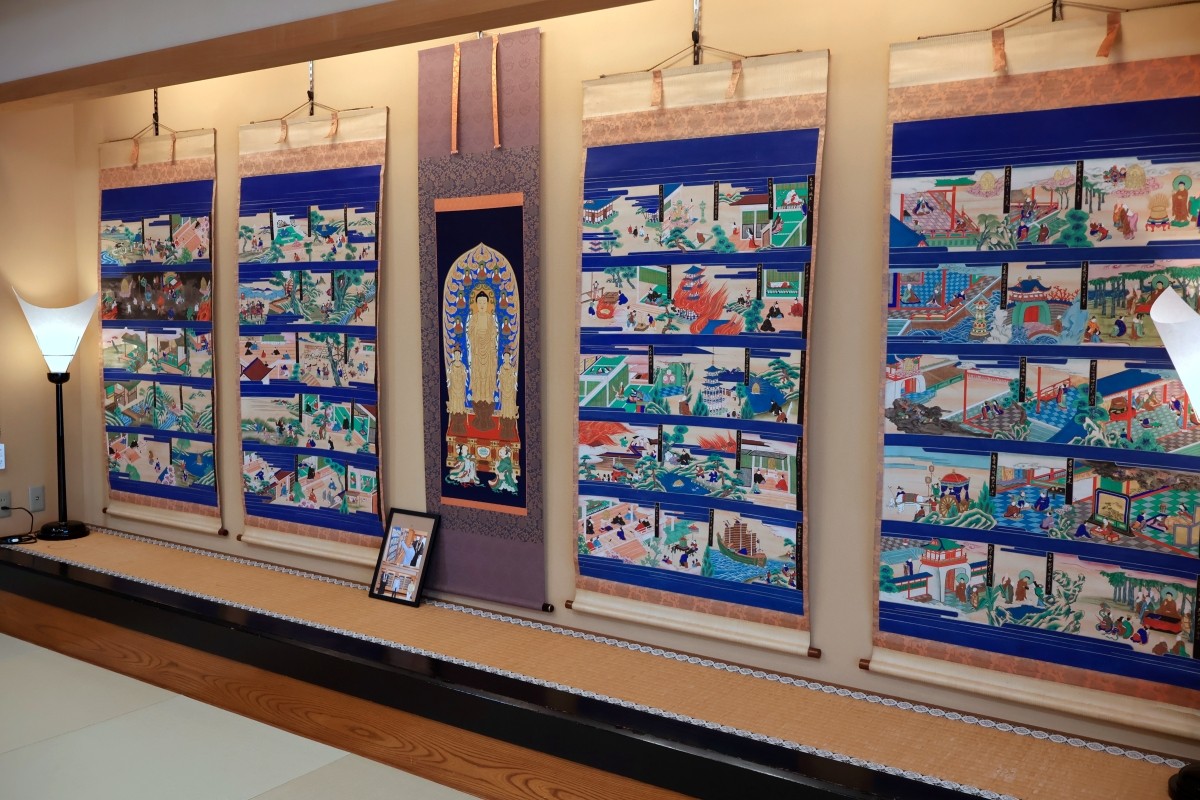
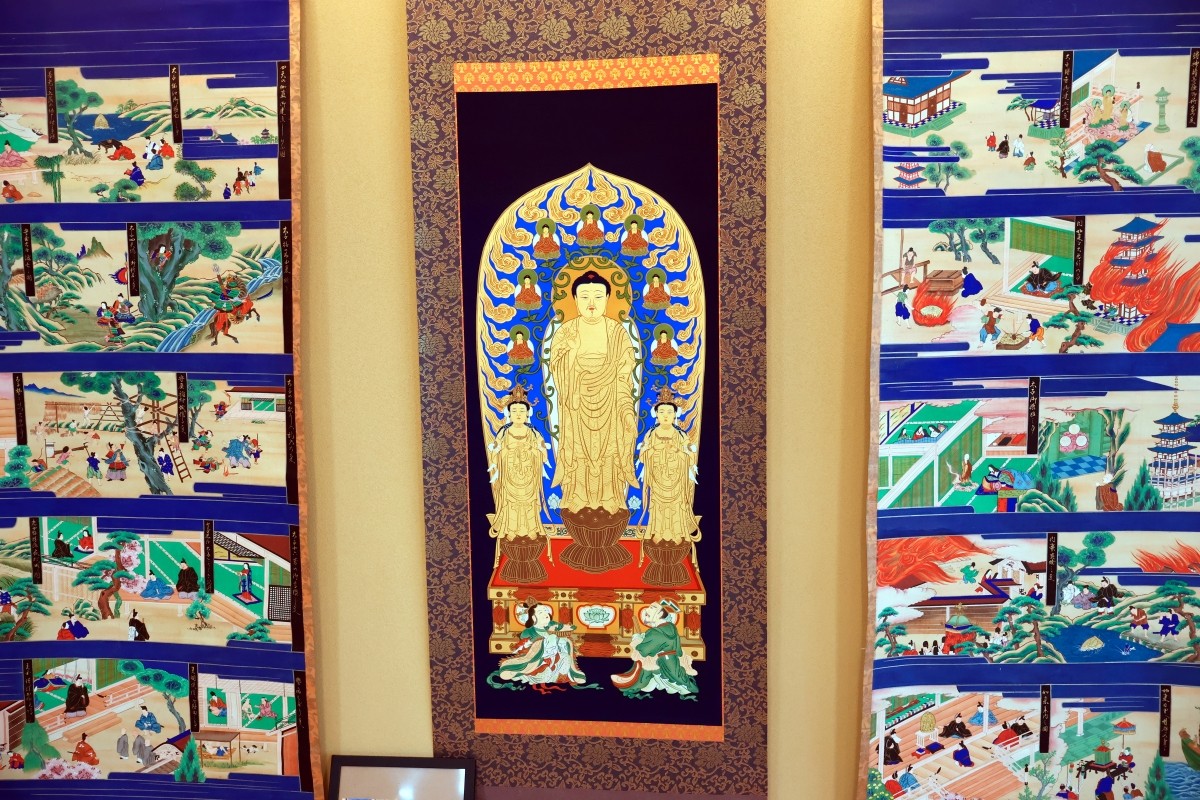
Oetoki is a traditional form of Buddhist teaching in which monks explain Buddhist stories by pointing to large illustrated scrolls. It was originally developed to convey Buddhist teachings to people who could not read.
This experience is unique to "Engido Hall." Listening to the story of how Zenkoji Temple was founded while viewing the illustrations is both educational and engaging. Please note that this program is conducted in Japanese only.
Around the principal deity of Zenkoji Temple depicted in the center, the story of how Zenkoji Temple was established in this land is drawn almost like a manga. The artwork itself dates back to the Edo period, and simply seeing its vivid colors and delicate brushwork up close is a rare and valuable experience.
- Howa Etoki (30 minutes, includes a drink): Adults 1,000 yen, Children (elementary and junior high school students) 500 yen *For groups of 5 or more. Advance reservation required. Japanese only
Attending the Morning Service (O-ASAJI)
The next morning, you can participate in the “O-asaji” morning service held every day at the Main Hall of Zenkoji Temple. “O-asaji” is a sacred morning ritual in which monks gather at sunrise to worship the Buddha. Walking through the temple grounds enveloped in tranquility before the general public arrives and listening to the sutra chanting that echoes through the Main Hall is a special privilege reserved only for those staying at the temple lodging.
O-ASAJI Schedule
Early morning, depart from Fuchinobo (5:30 in summer, 7:00 in winter) → Niomon Gate → Sanmon Gate (Ojuzu Chodai*1) → Zenkoji Main Hall (participate in O-asaji, Okaidan Meguri*2) → Return to Fuchinobo → Breakfast
- *1: The head priest of Zenkoji, representing the temple, gently touches the heads of worshippers with prayer beads, wishing for their happiness.
- *2: Zenkoji’s principal deity, the Ikko Sanzon Amida Nyorai, is a hidden Buddha and cannot be seen. Visitors walk through a dark underground corridor beneath the Main Hall and touch the “Key to Paradise,” located directly below the principal deity. This act symbolizes forming a spiritual connection with the Buddha, and it is believed that those who touch the key will be assured rebirth in the Pure Land.
Take Home Memories of Your Journey: Goshuin and Souvenirs
At Fuchinobo, you can also obtain unique goshuin (shrine&temple stamps) and souvenirs that are only available here.
Goshuin
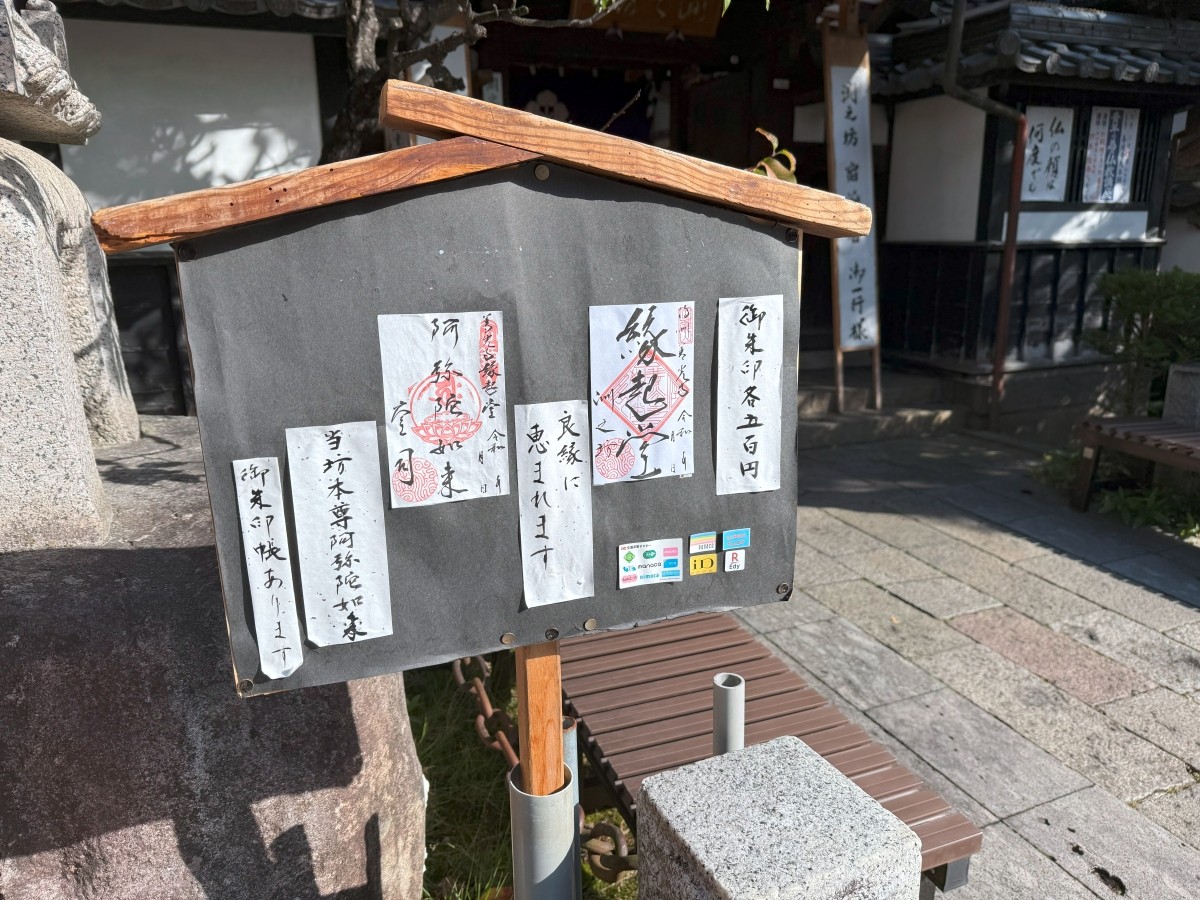
There are two types of goshuin available from Fuchinobo. In addition, you can also receive the representative goshuin of Zenkoji, making a total of three types available.
Souvenirs
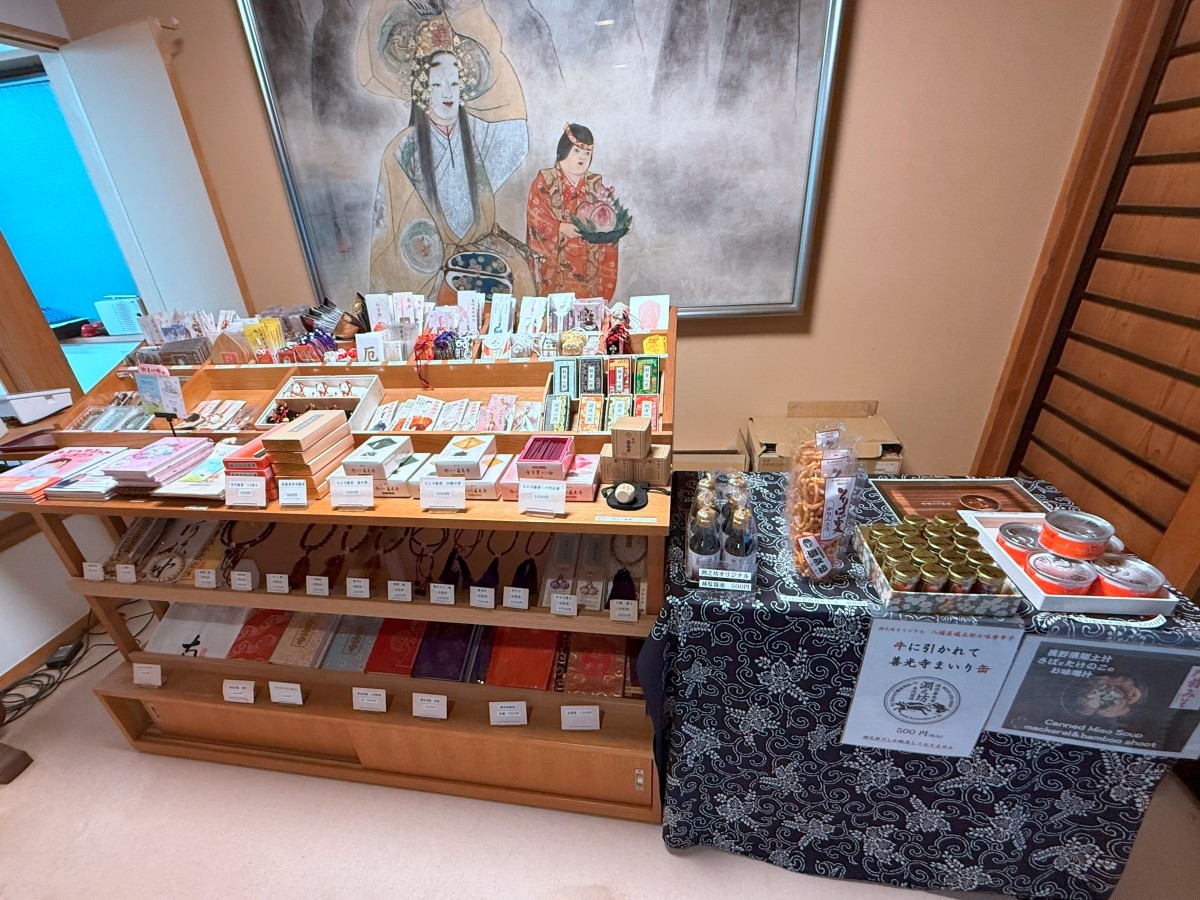
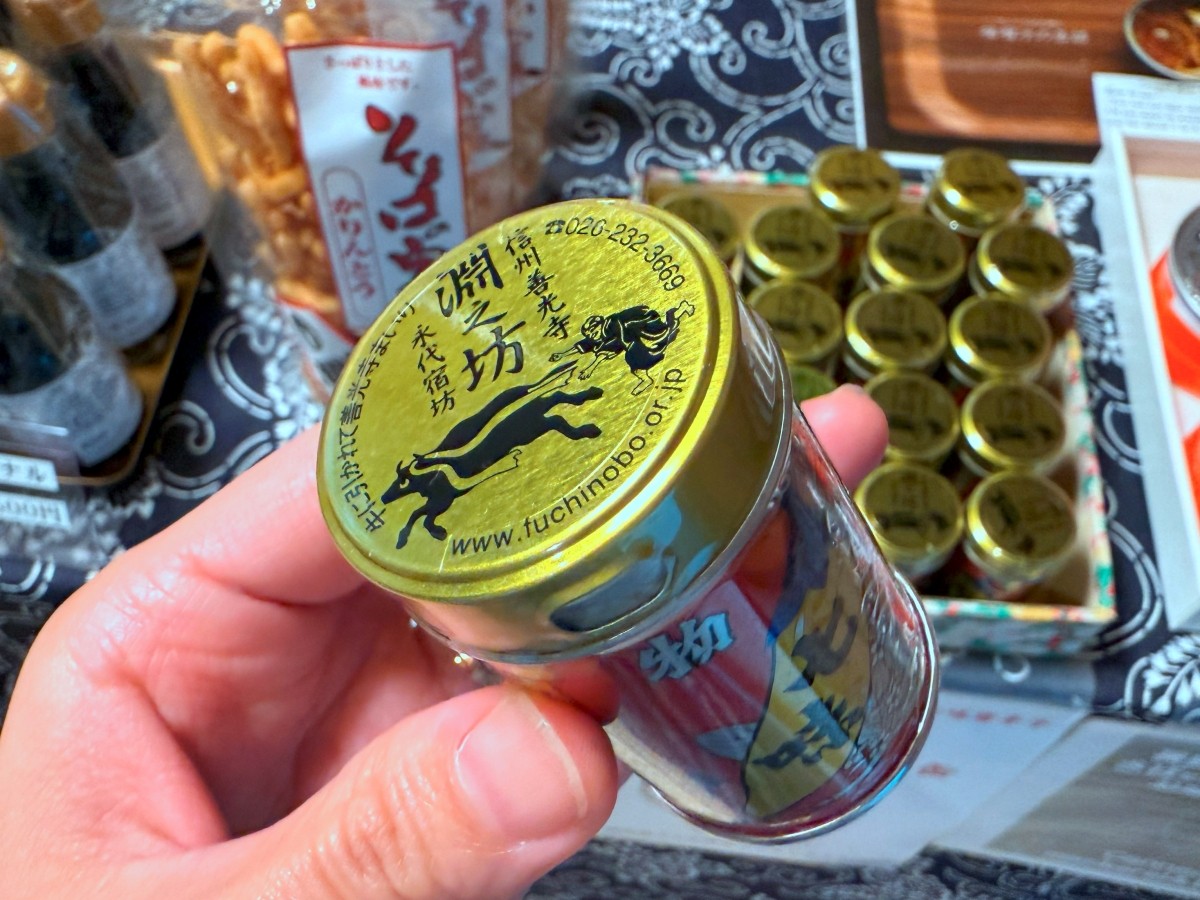
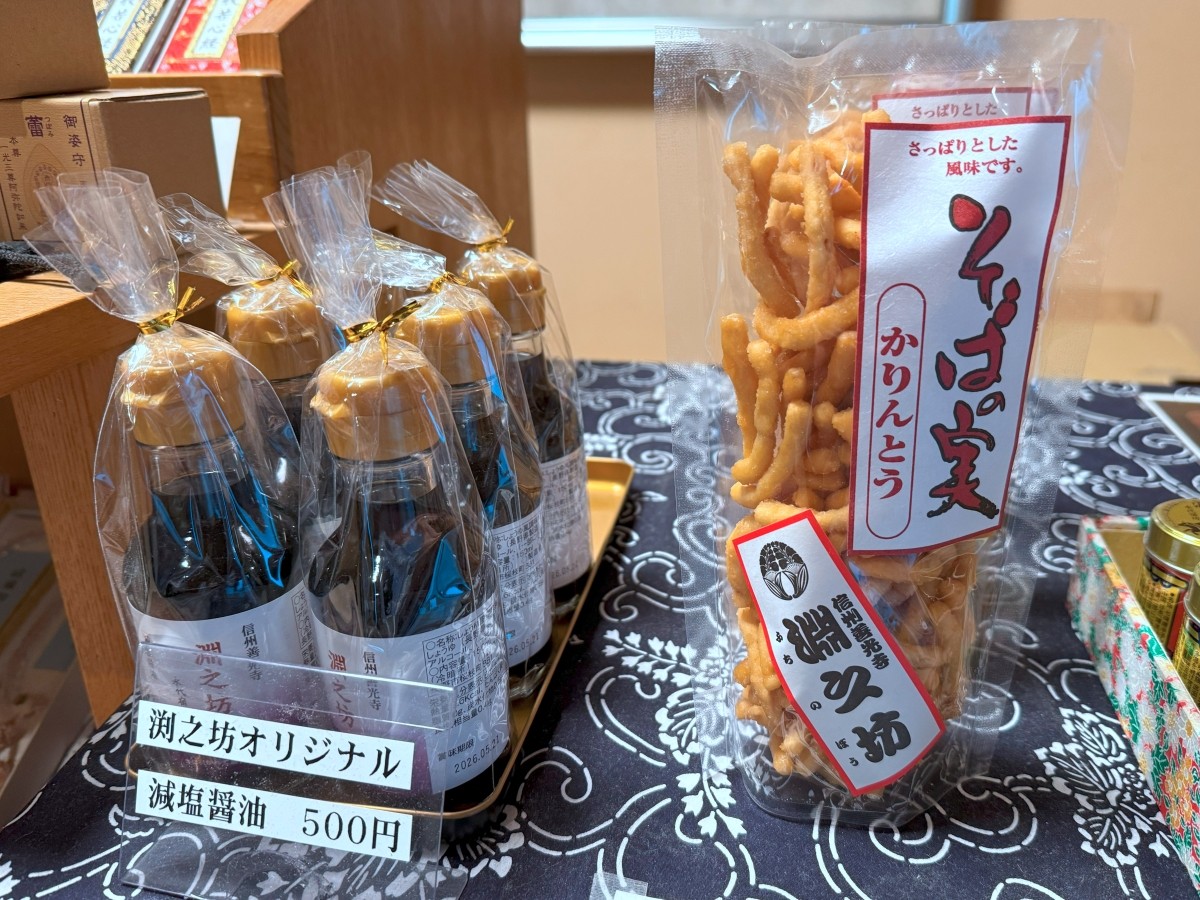
At the shop located just inside the entrance, you will find not only omamori (amulets), goshuincho (stamp books), and prayer beads, but also Fuchinobo’s original souvenirs. There is a wide selection of easy-to-purchase items such as sweets, soy sauce, and the original can of Yawataya Isogoro Shichimi Togarashi(seven-flavor chili pepper), a specialty of Nagano. These items make perfect keepsakes to remember your visit.
Enjoy a Relaxed Visit Away from the Crowds: Why “Shinshu Zenkoji” is Recommended for Travelers Now
Currently, major tourist destinations in Japan such as Kyoto are bustling with visitors, but at Shinshu Zenkoji, there are still relatively few travelers from Asia compared to those from Europe and North America, so the atmosphere remains calm and peaceful.
For savvy travelers who want to experience Japanese traditional culture at a destination like Kyoto but wish to avoid the crowds, now is the perfect time to visit Zenkoji. You can immerse yourself in authentic Japanese culture while enjoying the warm hospitality of the staff at Fuchinobo.
A Special One-Night Stay to Refresh Body and Mind
Staying at the temple lodging “Fuchinobo” at Shinshu Zenkoji is more than just accommodation—it is a journey to restore yourself. Spend a quiet night within the historic temple grounds and enjoy healthy shojin ryori (Buddhist vegetarian cuisine). On your next trip to Japan, why not take a break from the hustle and bustle and refresh your spirit?
Zenkoji Temple Lodging (Shukubo) Fuchinobo
- Address: 462 Motozencho, Nagano City, Nagano Prefecture
- Access: 10 minutes by bus from Nagano Station Zenkoji Exit (Bus Stop 1, bound for Zenkoji), 1 minute walk from Zenkoji Daimon
- Price: From 16,500 yen per night with two meals (tax included)
- Reservation: Reservations required for both accommodation and meals at least three days in advance
- Official website: https://fuchinobo.or.jp/ (Available in English, Korean, Traditional Chinese, and Simplified Chinese)

Comments