
Many people have probably experienced being captivated by a breathtaking landscape photo they happened to see on social media, thinking, "I want to visit this place someday!" At FUN! JAPAN, together with Zekkei Producer Shiho, we introduce articles featuring Japan's stunning landscapes as seen through her eyes, along with tips for capturing those moments on camera.
This time, we present a journey to five spectacular spots, including the "Doya Tanada" rice terraces in Nagasaki Prefecture. Let's take a look at the seasonal scenery of Nagasaki that Shiho says she "absolutely had to photograph," such as the golden water mirrors that appear only for a short period in April, and the train station closest to the sea.
*The word "Zekkei" is sometimes used in English to describe breathtaking sights, and Shiho has introduced it to the world as "Breathtaking sights." It refers not just to beautiful scenery, but to moments so stunning they take your breath away.
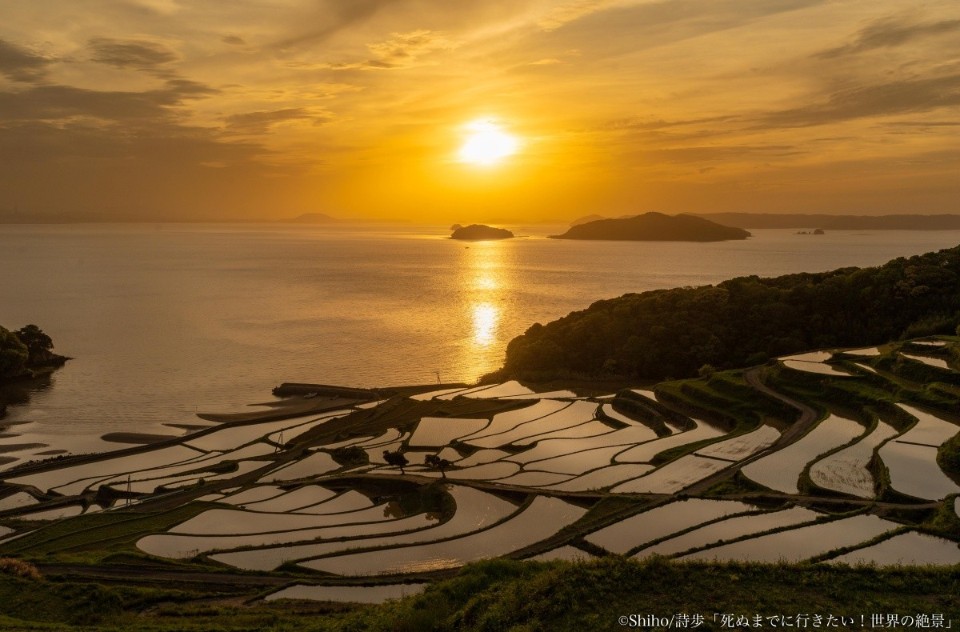
This Week's Photo: "Sunset at Doya Tanada"
400 water mirrors connecting sky and sea. Your soul will be captivated by its fleeting brilliance
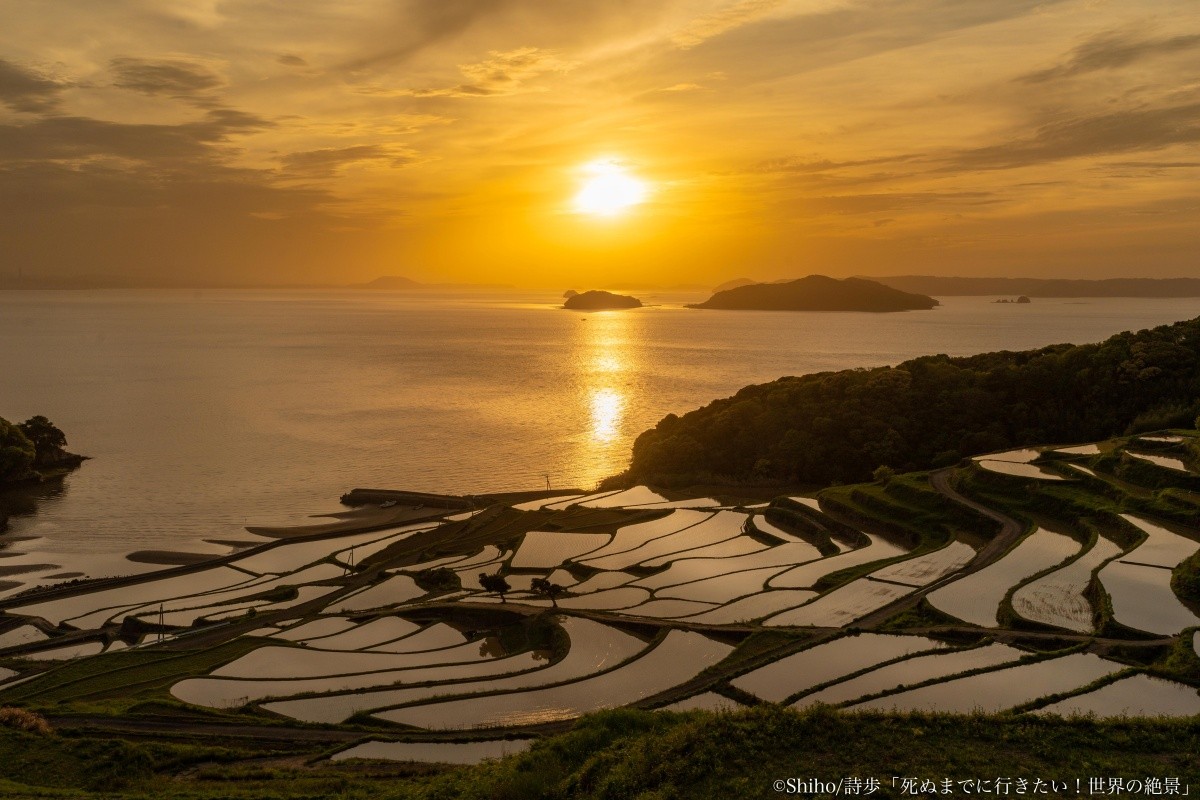
Doya Tanada, with its many curved lines, stretches along the slopes overlooking the Genkai Sea. The most dramatic transformation of the year occurs in April, just before rice planting, when water fills every corner of the terraces.
As the setting sun approaches the horizon, each of the 400 rice paddies becomes an independent mirror, reflecting the colors of the sky onto the earth. The gradation shifting from orange to deep purple dyes the water's surface, erasing even the boundary between land and sea. The crisp atmosphere and overwhelming scenery truly offer a series of breathtaking moments.
by Zekkei producer, Shiho

Producer of the book series "Sekai no Zekkei: Places to See Before You Die." Her book series has sold over 630,000 copies, and she has over 1 million followers on social media. As a tourism advisor for local governments and companies, she travels the world, sharing the allure of beautiful landscapes.
Official Instagram: @shiho_zekkei
Zekkei Producer's Picks: "Must-Visit" Breathtaking Spots in Nagasaki
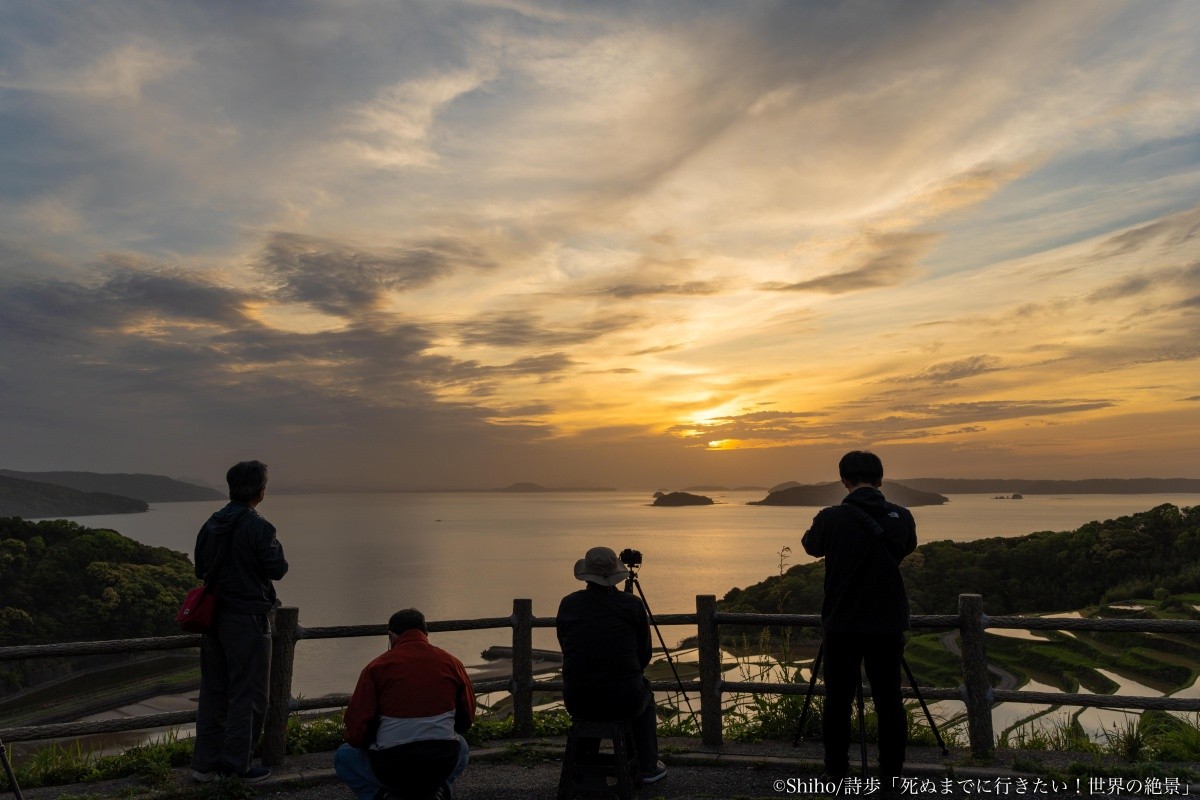
Nagasaki Prefecture has long flourished as a hub for international exchange, with a unique historical background known as "Wakaran Culture," blending Japanese, Chinese, and Western influences. After visiting Nagasaki, Shiho was especially impressed by "the fascinating terrain created by the sea and islands, and the beauty of sunsets thanks to its west-facing location."
From here, we’ll introduce a travel plan that lets you fully enjoy the breathtaking sights and charms of Nagasaki, as experienced by Shiho on her journey.
Day 1 12:00 - Sasebo Burger Museum: Enjoy Local Soul Food with a View
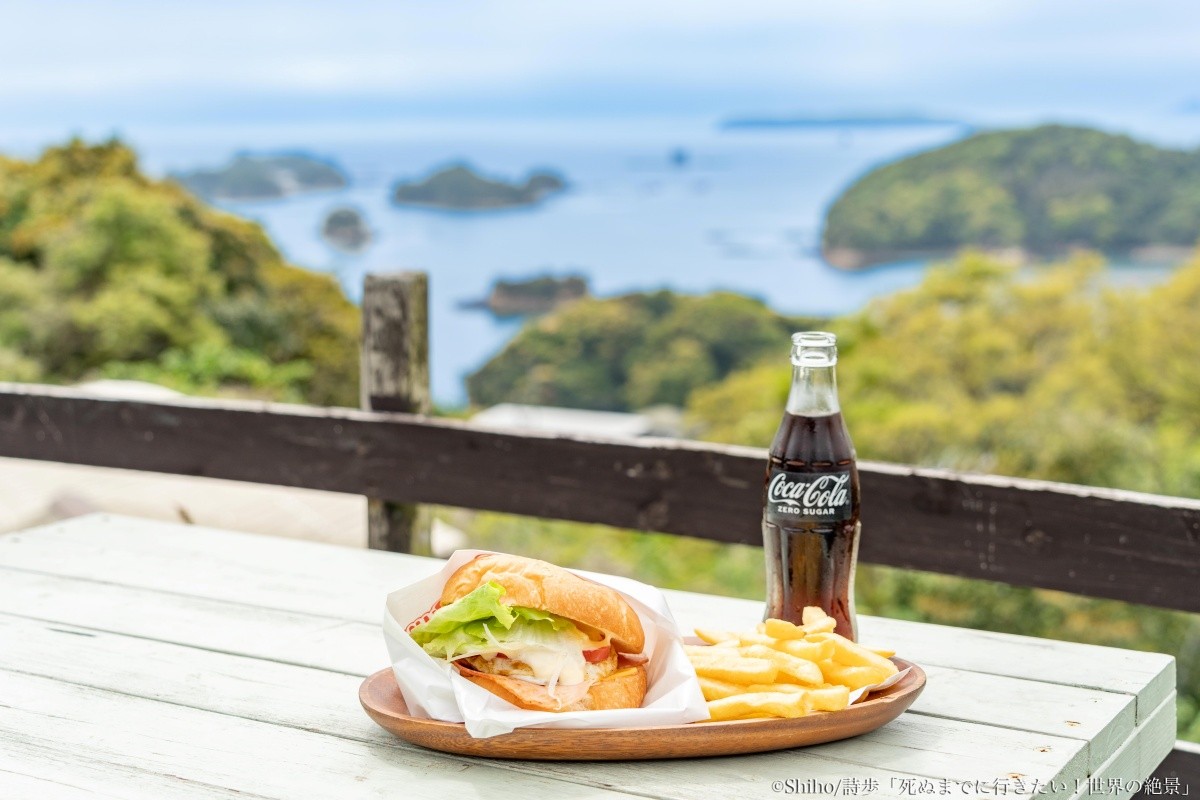
The journey begins with enjoying local gourmet food! First, let's try Nagasaki's iconic soul food, the "Sasebo Burger."
The "Sasebo Burger" is said to have originated from a recipe brought by the US Navy base around 1950. A defining rule is that each burger is made only after an order is placed. Each burger is packed with carefully selected patties and fresh vegetables.
At the Sasebo Burger Museum, you can enjoy a Sasebo Burger while taking in the breathtaking views of the Kujukushima Islands! One of the unique charms of this spot is that you can admire the sea and islands up close, from a slightly lower vantage point than usual.
Shiho says, “It’s packed with ingredients! Just one burger is enough to fill you up, and it’s very satisfying and hearty. Also, the fries at this place were incredibly delicious, so I definitely recommend trying them!” “Be careful, though—sometimes black kites swoop down from the sky aiming for your food. The window seats inside offer great views and are highly recommended.”
Sasebo Burger Museum
- Access: About 15 minutes by car from JR Sasebo Station
- Website: https://saseboburger-mus.com/
Day 1 15:00 - Kujukushima Visitor Park: Experience the Ultimate Sense of Freedom with a Panoramic View of the Islands
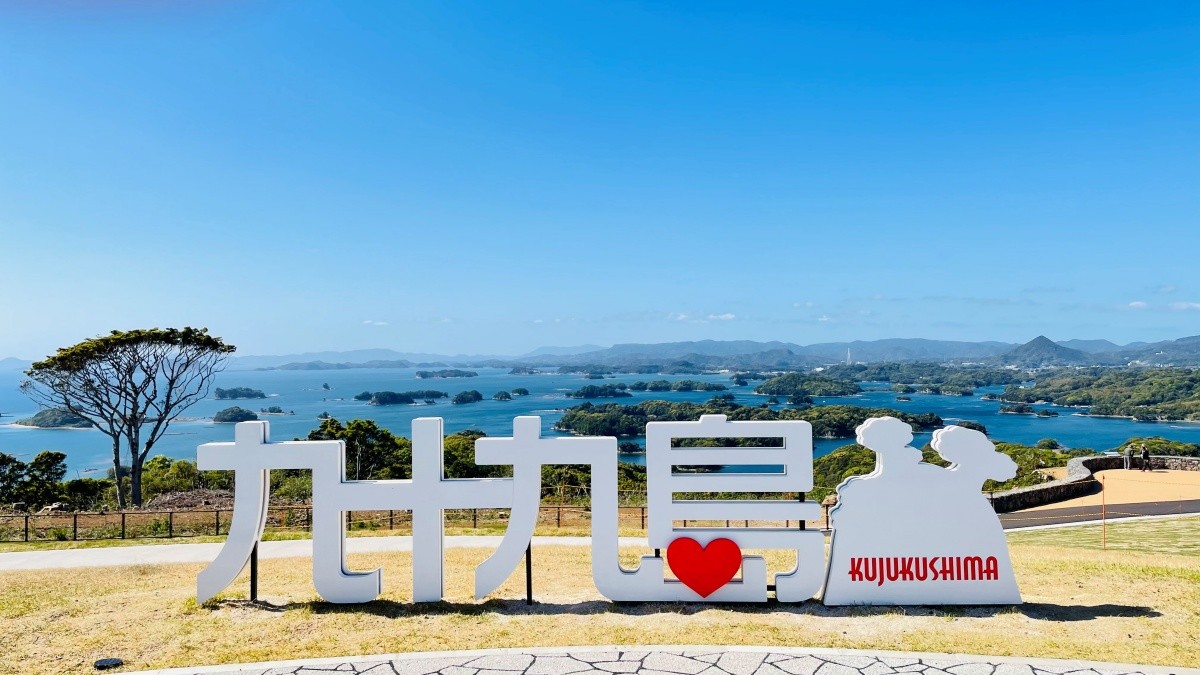
Once we had satisfied our hunger, we set off on a “scenic lookout tour” to fully enjoy the spectacular views of Kujukushima. Our first stop was Kujukushima Visitor Park, one of the area’s top scenic spots.
This newly developed park features a vast 4.7-hectare lawn area, offering an overwhelming sense of openness with nothing to block your view! From the “Hill of Views” within the park, you can gaze out over the panoramic scenery of Kujukushima from the south. During the day, you can enjoy the dynamic beauty of the islands, and at dusk, you can witness the beautiful sunset sinking into the sea, depending on the season.
There’s also a monument shaped like the characters for “Kujukushima” within the park grounds, which is a popular photo spot. It’s the perfect place to capture a memorable shot that clearly shows where you’ve been.
Kujukushima Visitor Park
- Access: Take the Seihi Bus bound for “Kujukushima Visitor Park (Tenkaiho)” from JR Sasebo Station, get off at “Kujukushima Visitor Park,” and it’s right there
- Website: https://www.nagasaki-tabinet.com/guide/101122
Day 1 18:00 - Tsuchiya Terraced Rice Fields: A Golden Water Mirror Created by Sunset and Rice Paddies
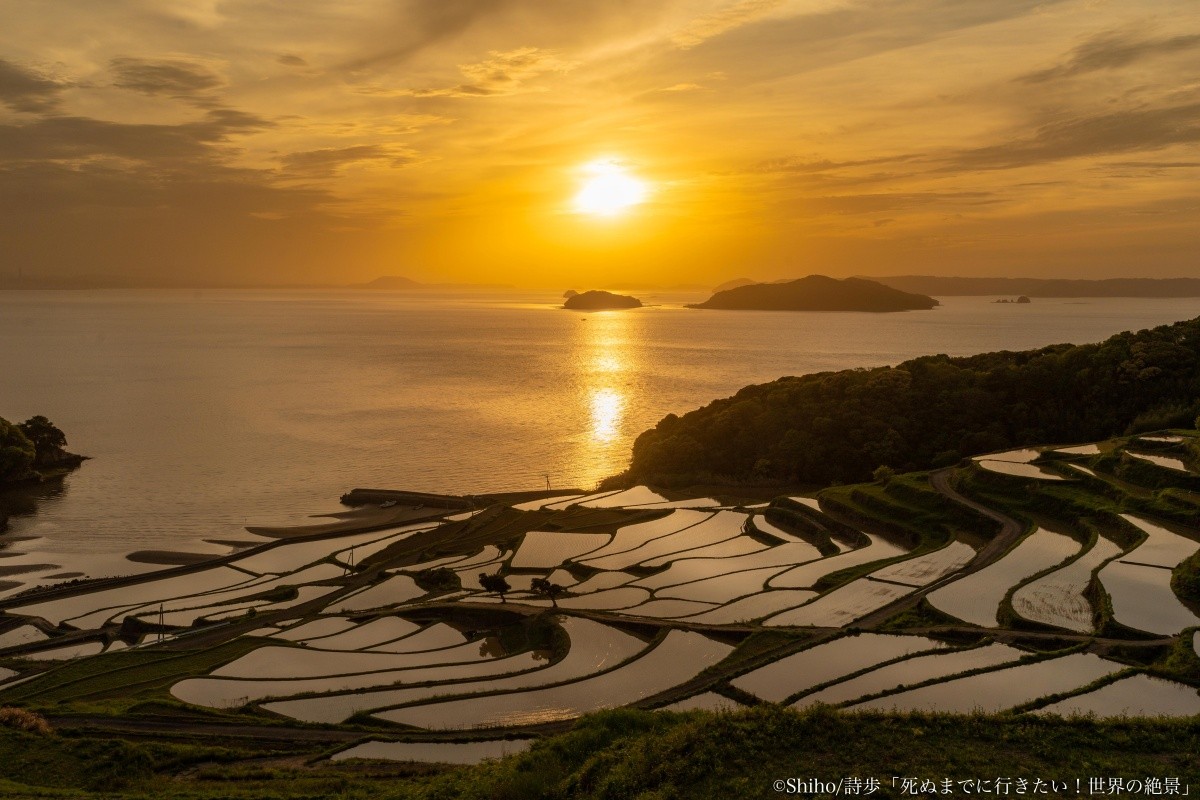
In the evening, we headed from Sasebo to Matsuura City. Here, you can enjoy the stunning scenery of Tsuchiya Terraced Rice Fields, which have been selected as one of the “100 Best Terraced Rice Fields in Japan.” Symbolizing a traditional rural landscape shaped by generations of tireless effort, each terrace holds its own history and story, reflecting the hard work of local farmers.
The best time to see the “water-filled rice terraces” is from mid-April to early May, just before rice planting begins. However, if the temperature is too high or there are too many dry days, the paddies may not be fully filled with water, so it’s important to check the conditions. To capture the perfect moment, be sure to check the weather forecast and sunset time in advance. (On the day of our visit, sunset was around 18:45–18:50.)
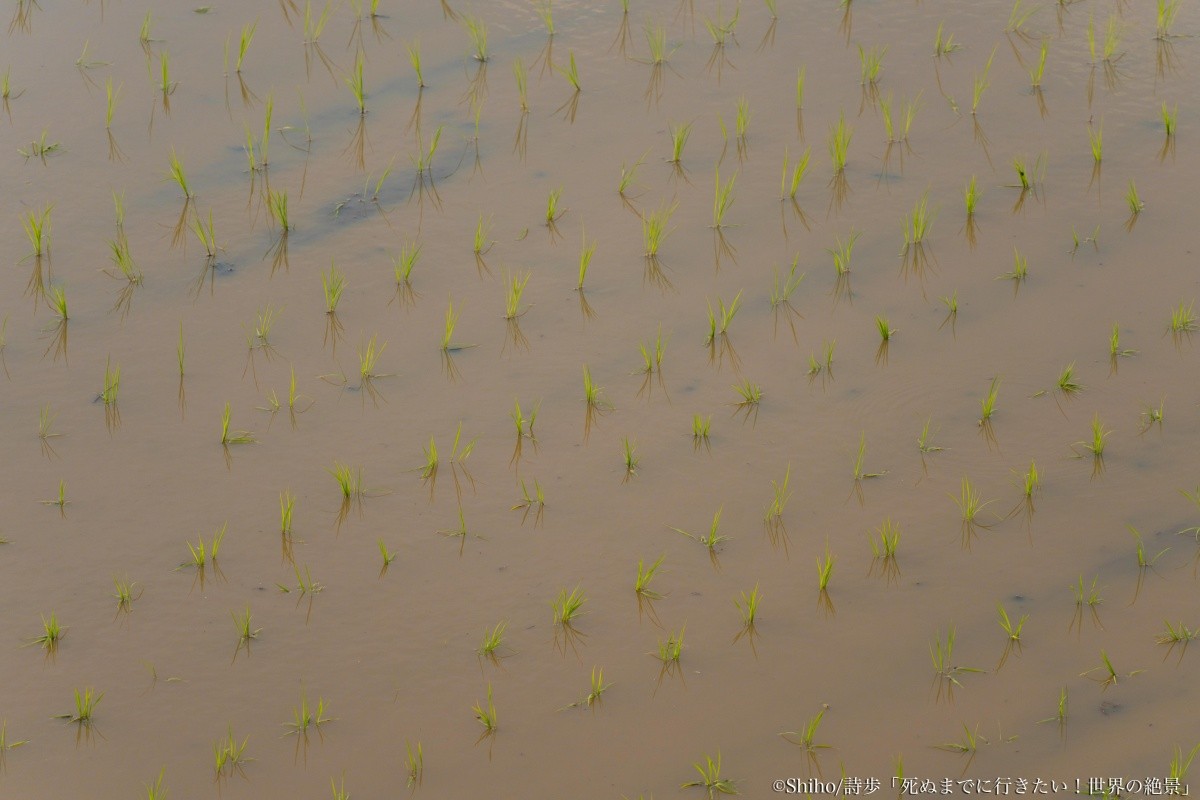
“I was amazed by how vast the terraced rice fields were—much more than I expected. Since they face west, the view of the sunset right in front of you is also spectacular,” she shared. In addition, during the “Tsuchiya Terraced Rice Fields Fire Festival” held in October, you can witness a magical scene illuminated by lights, offering a different kind of beauty from the water-filled paddies.
Tips for Capturing Breathtaking Views
When taking photos with your smartphone, if you tap on the sun, the rice fields will become too dark; if you tap on the rice fields, the sky will become overexposed and turn white. The trick is to tap on the sun to make the rice fields a bit darker, then adjust the brightness later. Shooting video rather than photos is also recommended◎
Tsuchiya Terraced Rice Fields
- Access: About 40 minutes by car from Imari Station
- Website: https://www.nagasaki-tabinet.com/guide/625
Day 1 20:30 - Yumihari-no-Oka Hotel: A Southern European-Style Resort with Stunning Night Views of Sasebo
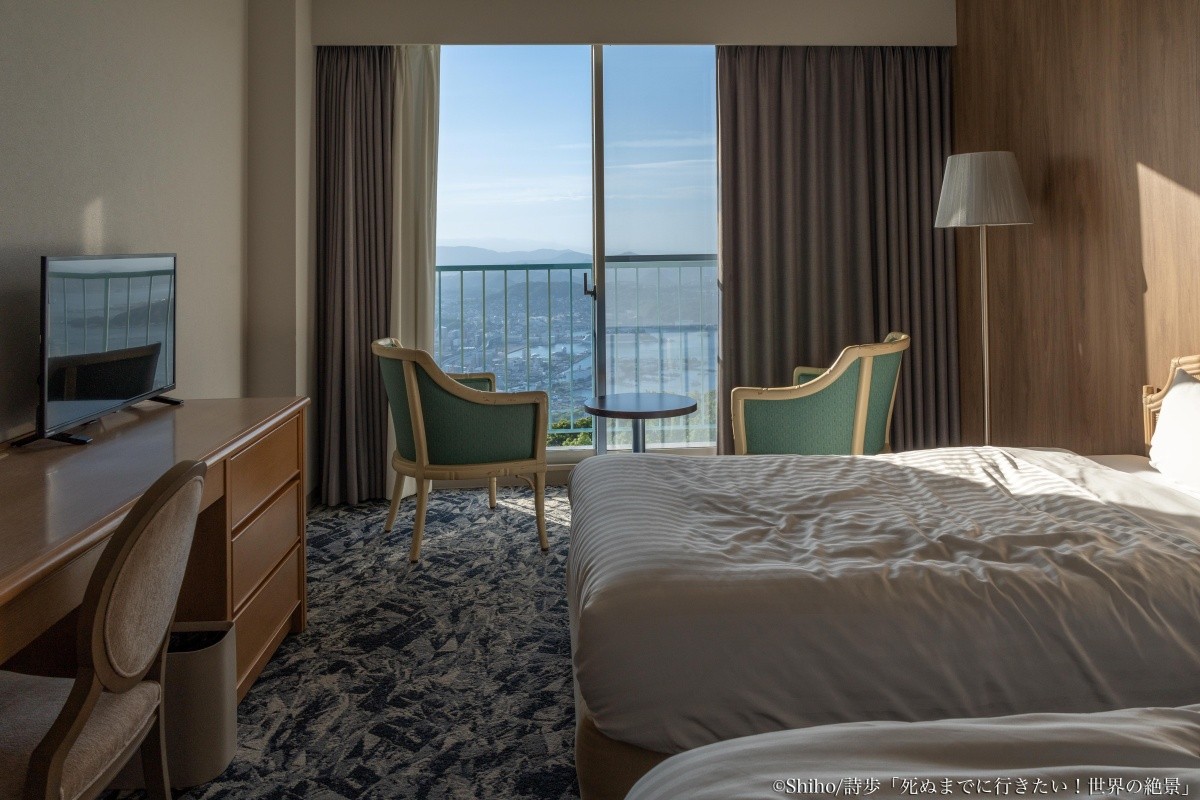
To wrap up the first day, we head to Yumihari-no-Oka Hotel, a breathtaking hotel highly recommended by travel professionals at JTB. This Southern European-style resort hotel is perched atop a hill within Saikai National Park, boasting the best location for panoramic views of Sasebo city and the sea from the highest vantage point.
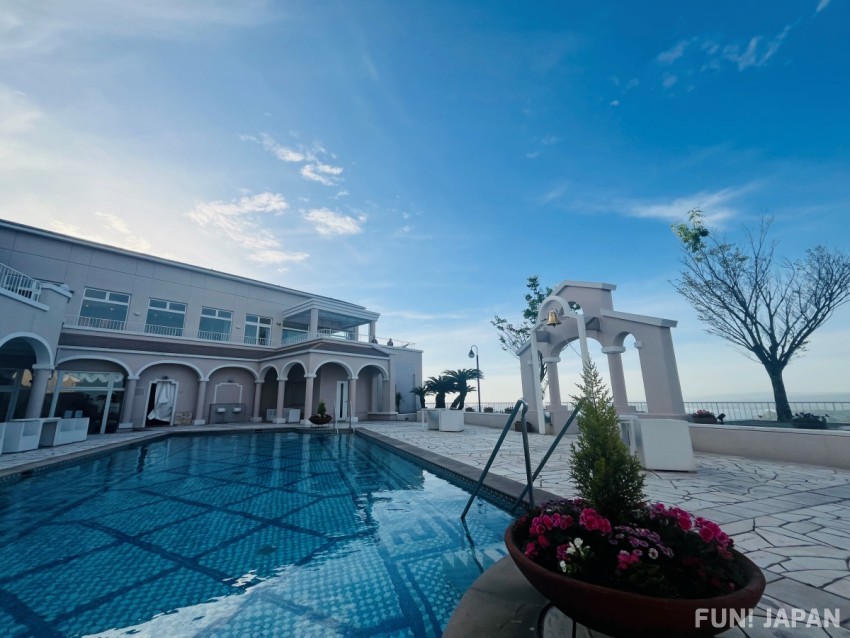
From dusk into the night, you can fully enjoy the dazzling night view of Sasebo city—recognized as part of the “Japan Night View Heritage”—right from your room. The next morning, a panoramic view unfolds before your eyes in the crisp morning air, promising a refreshing start to your day.
Another highlight is the beautiful scenery visible from the hotel’s restaurant and lounge. At the buffet, you’ll find a wide variety of dishes, including Sasebo’s famous Lemon Steak, as well as fresh Nagasaki seafood such as sashimi and sushi. Both your appetite and your heart are sure to be satisfied!
Yumihari-no-Oka Hotel
- Access: About 20 minutes by car from Sasebo Station (Free shuttle bus available from Sasebo Station East Exit)
- Website: https://www.yumihari.com/
- Reservation site: https://www.japanican.com/hotel/japan/sasebo/yumihari-no-oka-hotel?utm_source=fjc
Day 2 09:00 - Ishidake Observatory: The Setting of “The Last Samurai”! An Overwhelming Panorama of the Kujukushima Islands
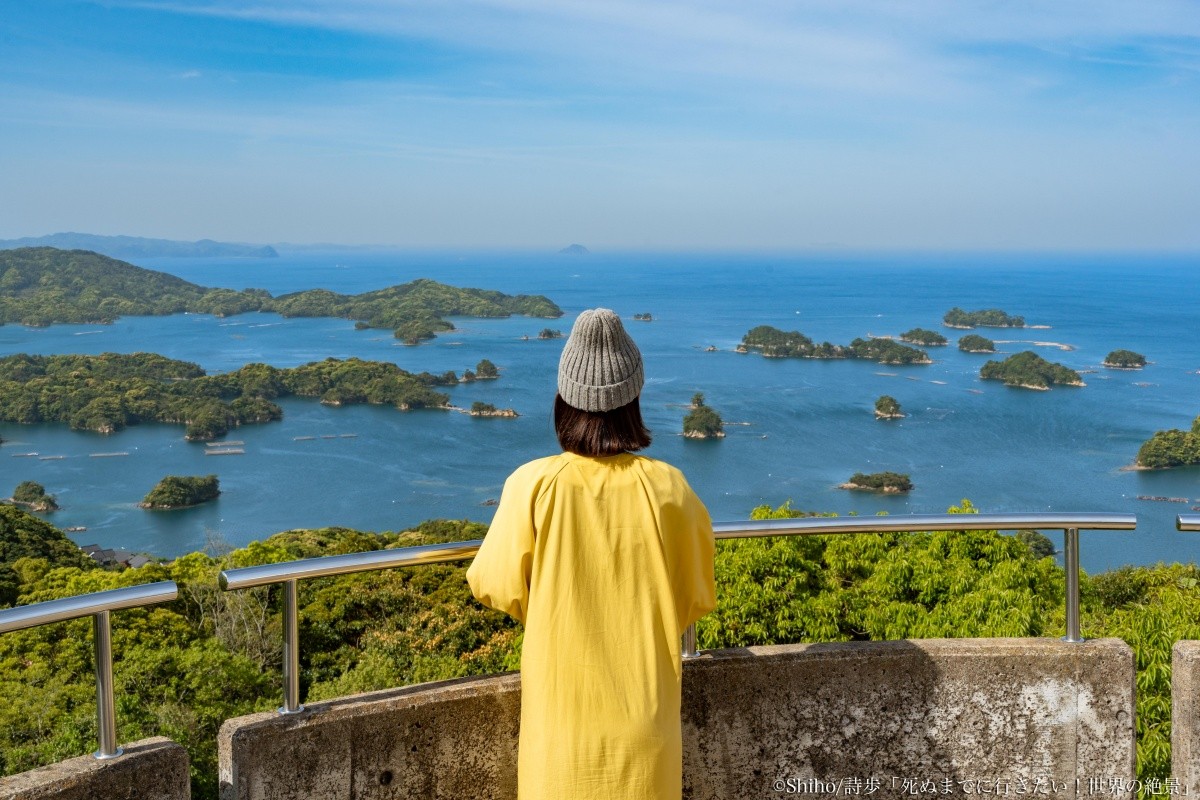
The weather was perfect for the second day! So, we headed to Ishidake Observatory, located at the 191-meter-high summit of Mt. Ishidake in Sasebo City.
Below, you’ll see a seascape dotted with more than 200 islands—far more than the name “Kujukushima” (meaning “ninety-nine”) suggests—spread out in a breathtaking 360-degree panorama. This spot was also the model for the opening scene of the movie “The Last Samurai,” attracting both professional and amateur photographers seeking to capture this once-in-a-lifetime view.
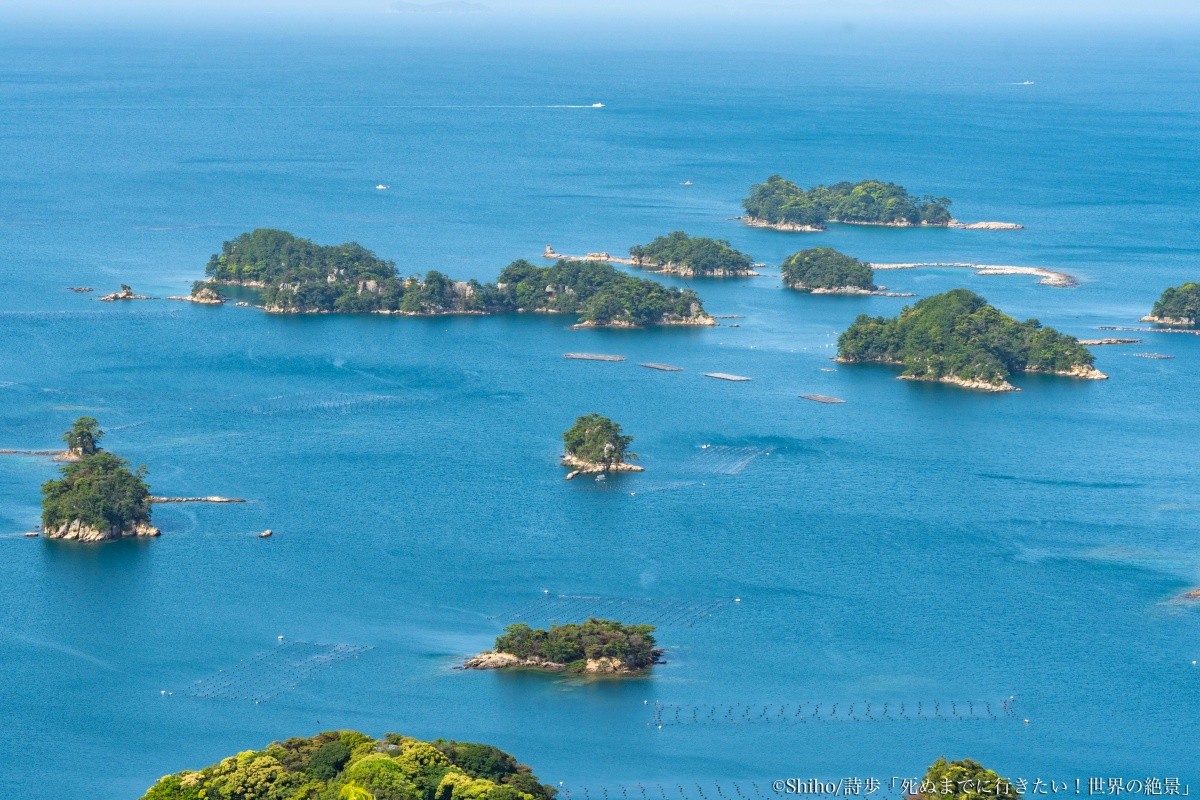
Shiho scouted several observatories in the area to capture this spectacular view. “Among them, Ishidake Observatory stands out for its height. You can look down on the islands from above, allowing you to capture even the smallest island silhouettes—making it the best spot for photography,” she shared, revealing her top recommendation for shooting locations.
Tips for Capturing Breathtaking Views
Keeping the horizon straight is a basic yet crucial technique in photography. Your subject doesn’t always have to be centered, so feel free to be flexible with your composition. First, focus on keeping the horizon level.
Tips for Enjoying Your Trip Even More
In addition to Ishidake Observatory, Kujukushima is dotted with other attractive viewpoints such as Kujukushima Visitor Park and Funakoshi Observatory. If you have the time and energy, you might want to try a “viewpoint tour” like Shiho did, and enjoy the ever-changing scenery of the islands from different heights and angles.
Ishidake Observatory
- Access: About 15 minutes by car from JR Sasebo Station
- Website: https://www.nagasaki-tabinet.com/guide/273
Day 2 11:48 - Oomisaeki Station: Yellow Handkerchiefs and Local Trains Set Against the Blue of the Ariake Sea
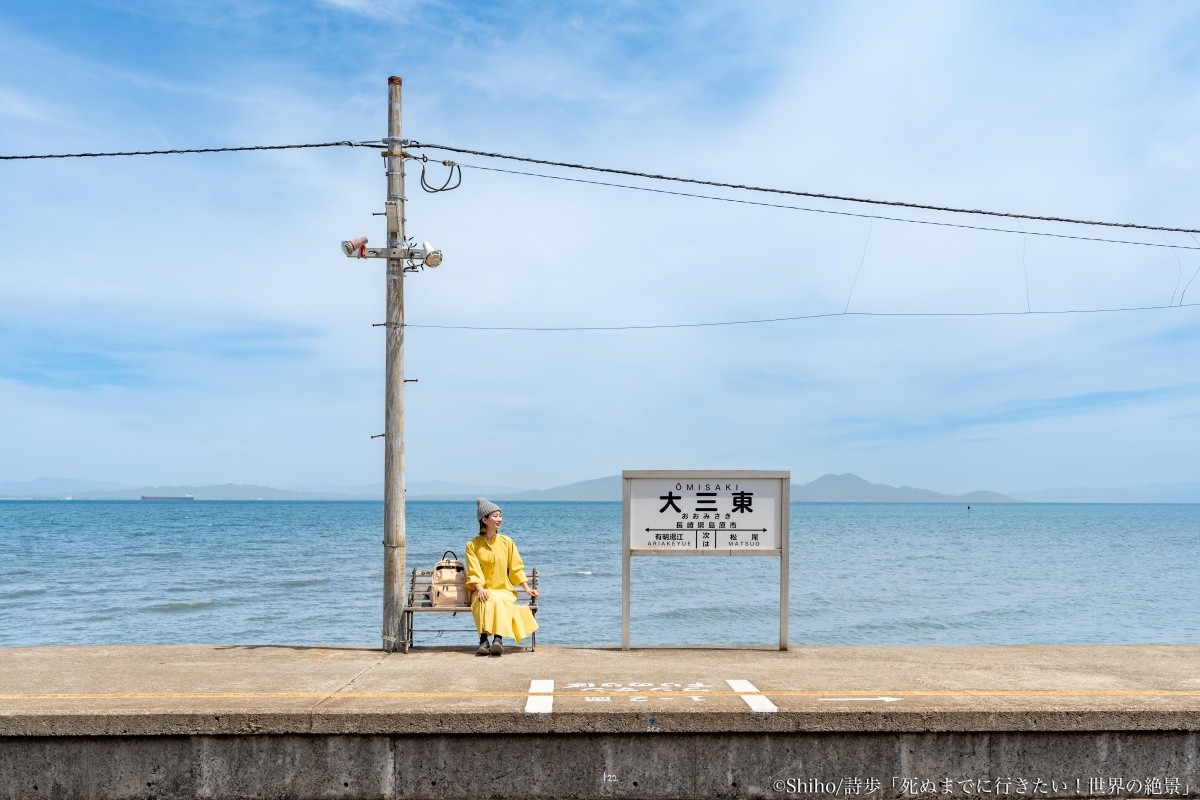
Heading south from Sasebo to the Shimabara Peninsula, we take the Shimabara Railway to our next destination.
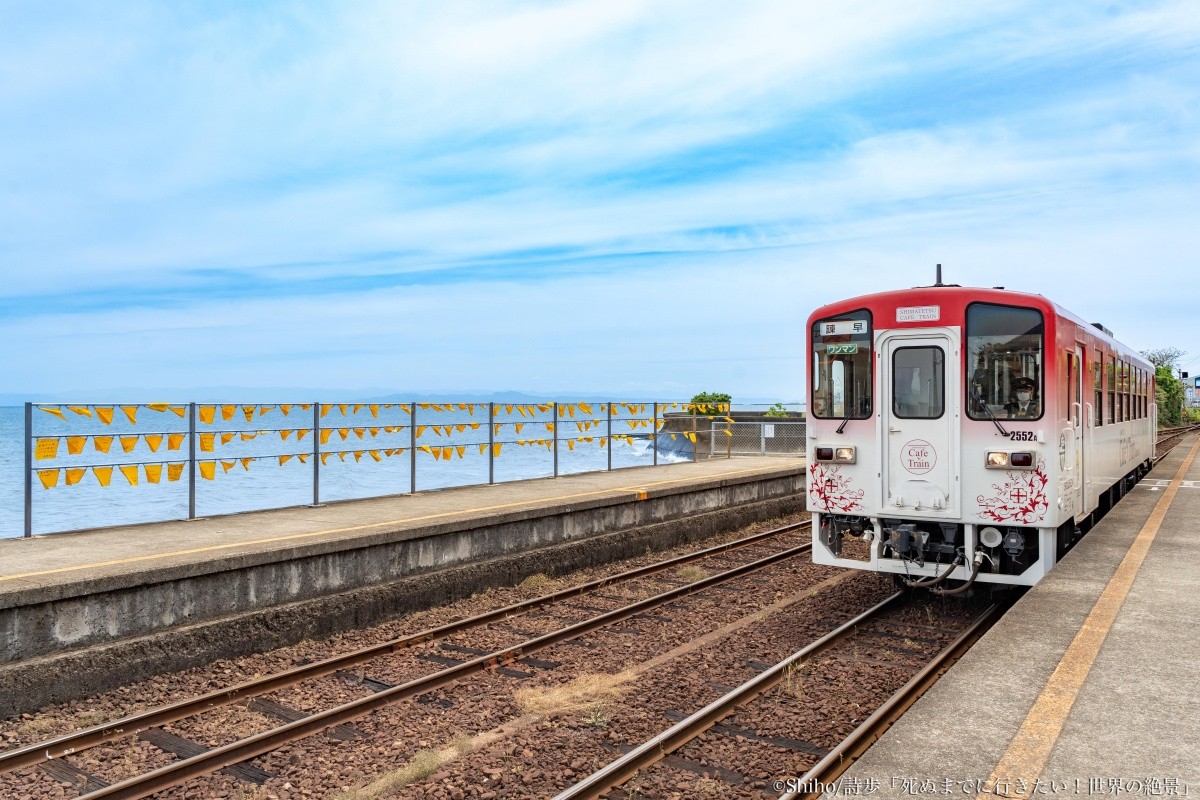
The Shimabara Railway is a local train line beloved by residents, running along the northern coast of the Shimabara Peninsula. Part of its route follows the gentle shoreline of the Ariake Sea, and one of its most popular destinations is Ōmisaki Station, said to be the closest unmanned station to the sea in Japan.
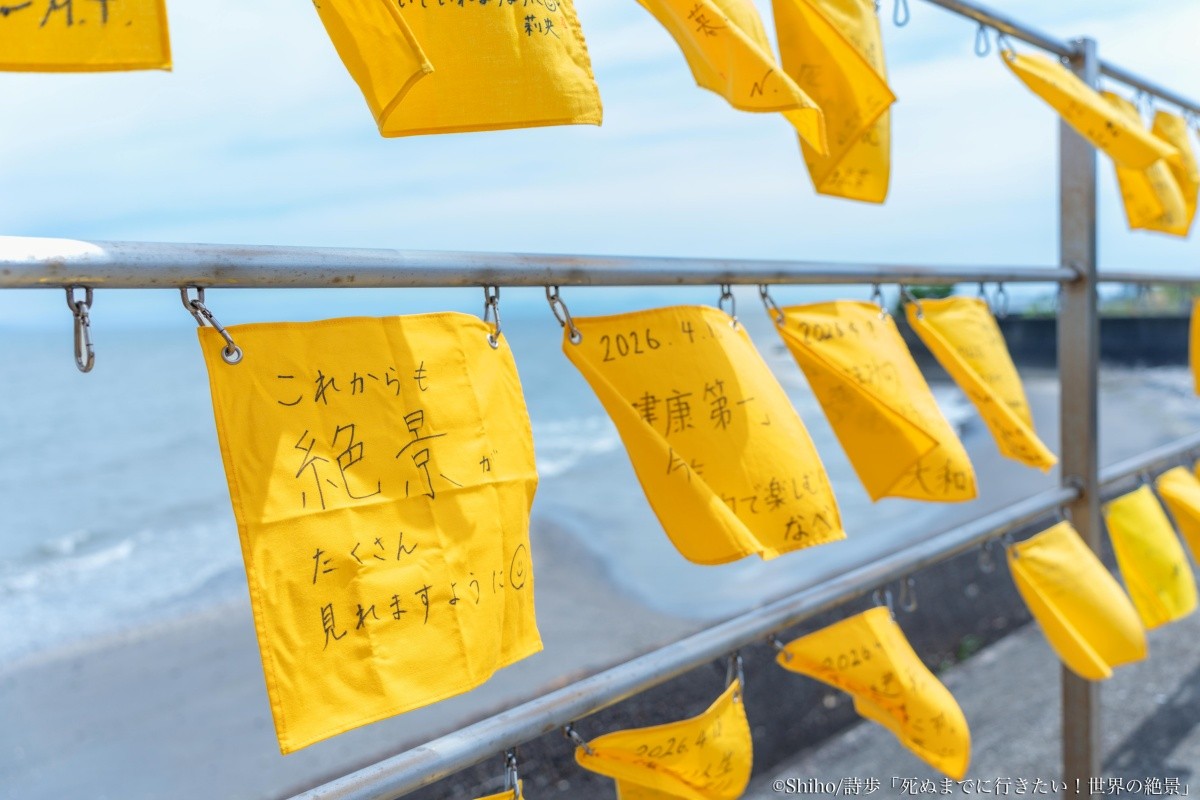
With the deep blue Ariake Sea and sky stretching out before you, the vivid “Yellow Handkerchiefs of Happiness” displayed on the platform, and the retro local train, you’ll experience a beautifully nostalgic moment.
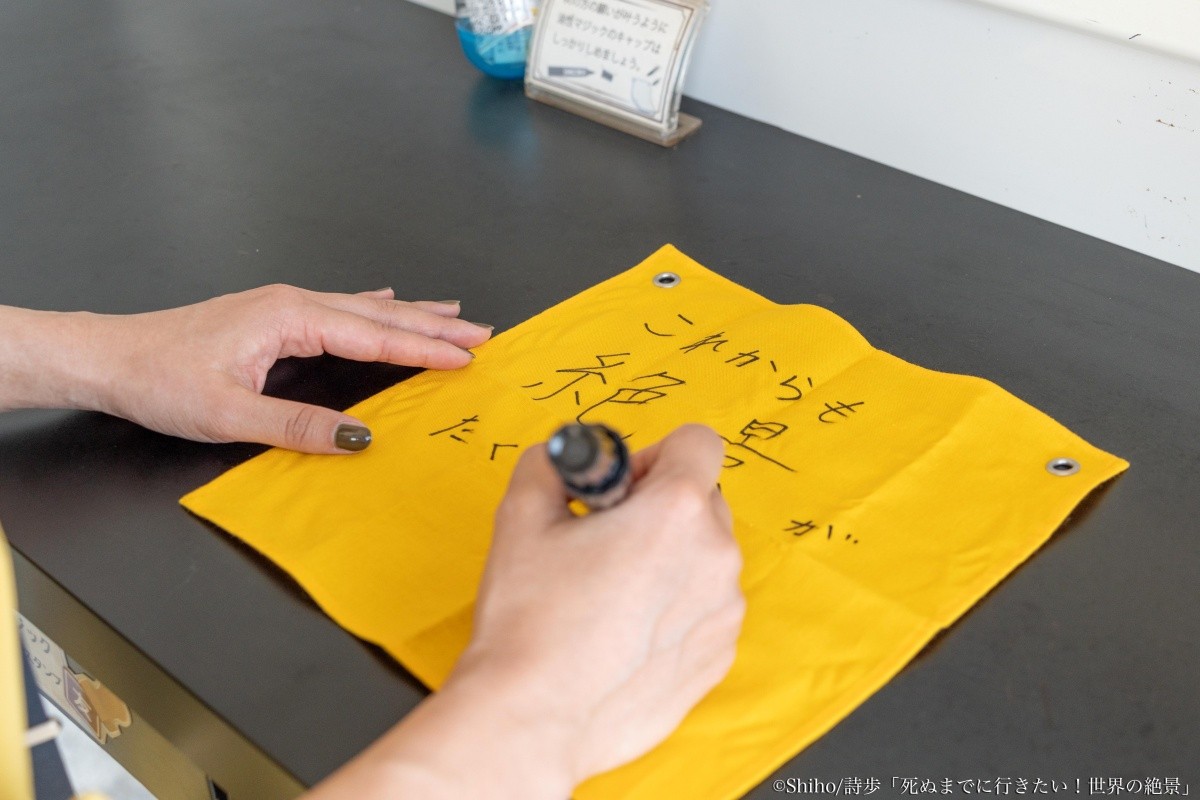
There is a capsule toy machine at the station where you can purchase a handkerchief, write your wish on it, and hang it up. Shiho also bought a handkerchief and left her message. “Seeing the yellow handkerchiefs, filled with travelers’ wishes, fluttering in the wind feels so happy. It’s easy to see why this place, which has even been used as a commercial filming location, is so beloved by many.”
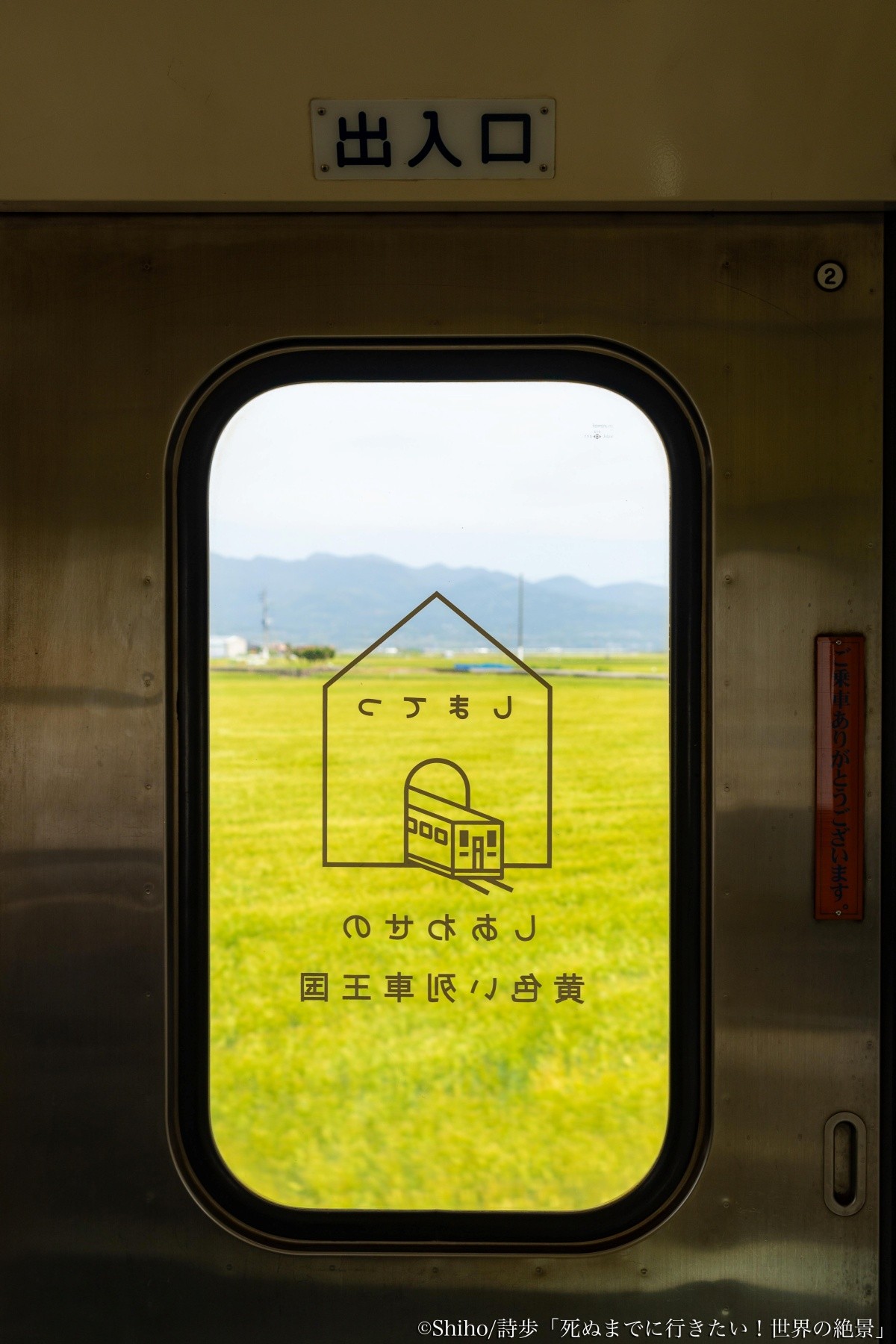
Tips for Capturing Breathtaking Views
We recommend incorporating “yellow,” the theme color of this spot, into your outfit. There are two types of trains—yellow and red—but for a unified look with the “Yellow Handkerchiefs of Happiness” fluttering on the platform, it’s best to wait for the yellow train to arrive.
Tips for Enjoying Your Trip Even More
When you visit this station, first buy a lemon squash from the station’s vending machine and enjoy it while gazing out at the sea. If you’re visiting after May, be sure to check out the soft serve ice cream at the nearby café—a seasonal treat you won’t want to miss.
Oomisaeki Station
- Access: Right outside Ōmisaki Station on the Shimabara Railway
- Website: https://www.shimatetsu.co.jp/
- Ōmisaki Station Timetable: https://www.shimatetsu.co.jp/area/detail/?id=7
Day 2 13:00 - Shimabara Specialties: Guzouni & Nyūmen– Local Cuisine Loved by the People of the Shimabara Peninsula
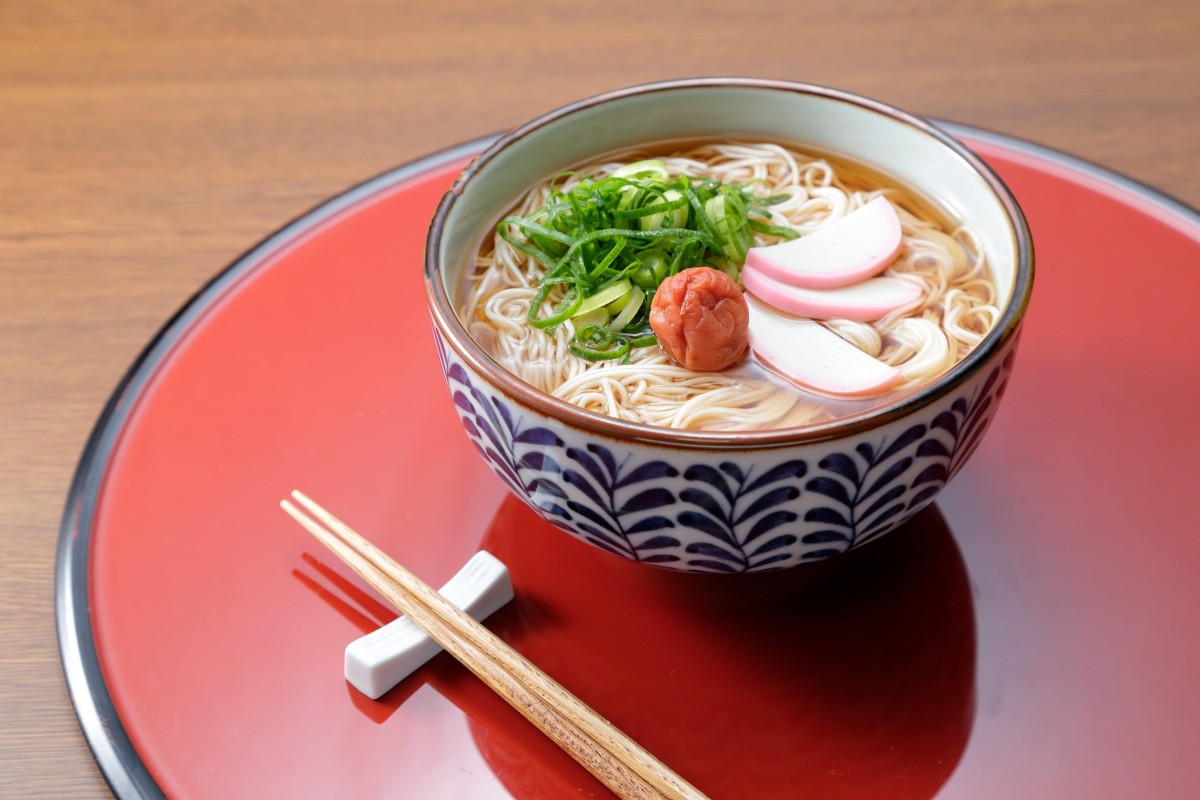
The breathtaking journey is finally nearing its end! Here, JTB, the travel professionals, highly recommend you try two local specialties from the Shimabara region: “Guzōni” and “Nyūmen.”
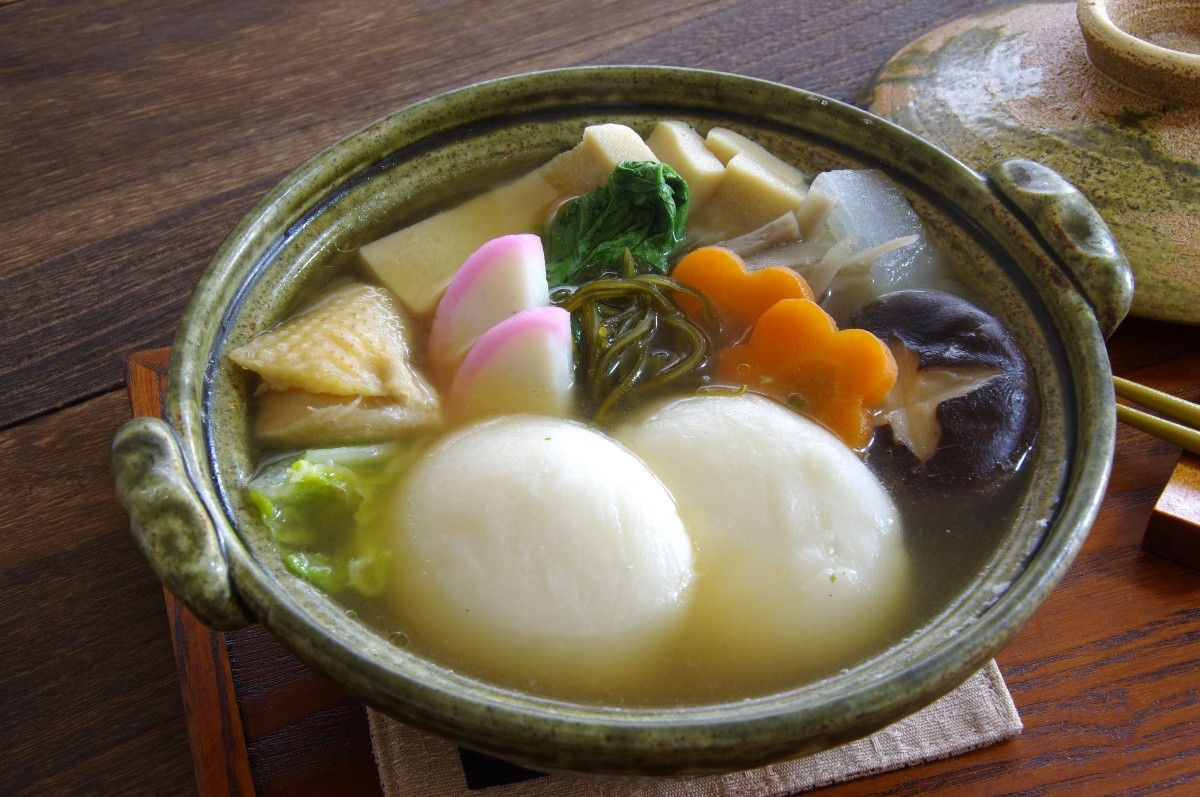
Guzōni is a traditional dish with a long history, said to have originated during the Shimabara Rebellion in 1637, when the commander Amakusa Shirō had his troops gather mochi and local ingredients from the mountains and sea to make this hearty meal. Nyumen is a warm dish made with Shimabara’s traditional hand-stretched somen noodles. The flavorful broth, infused with ingredients like chicken, kamaboko (fish cake), aburaage (fried tofu), carrots, and dried shiitake mushrooms, is a perfect match for the noodles.
For most Japanese people, ozoni is associated with New Year’s celebrations, but in Shimabara, it’s enjoyed all year round. “I was surprised to hear that people here eat ozoni anytime. The broth is rich and healthy, making it especially appealing for women,” Shiho commented, clearly delighted by the taste.
Day 2 14:00 - Glass Beach: Just Minutes from the Airport! A Sunlit, Rainbow-Colored Shore
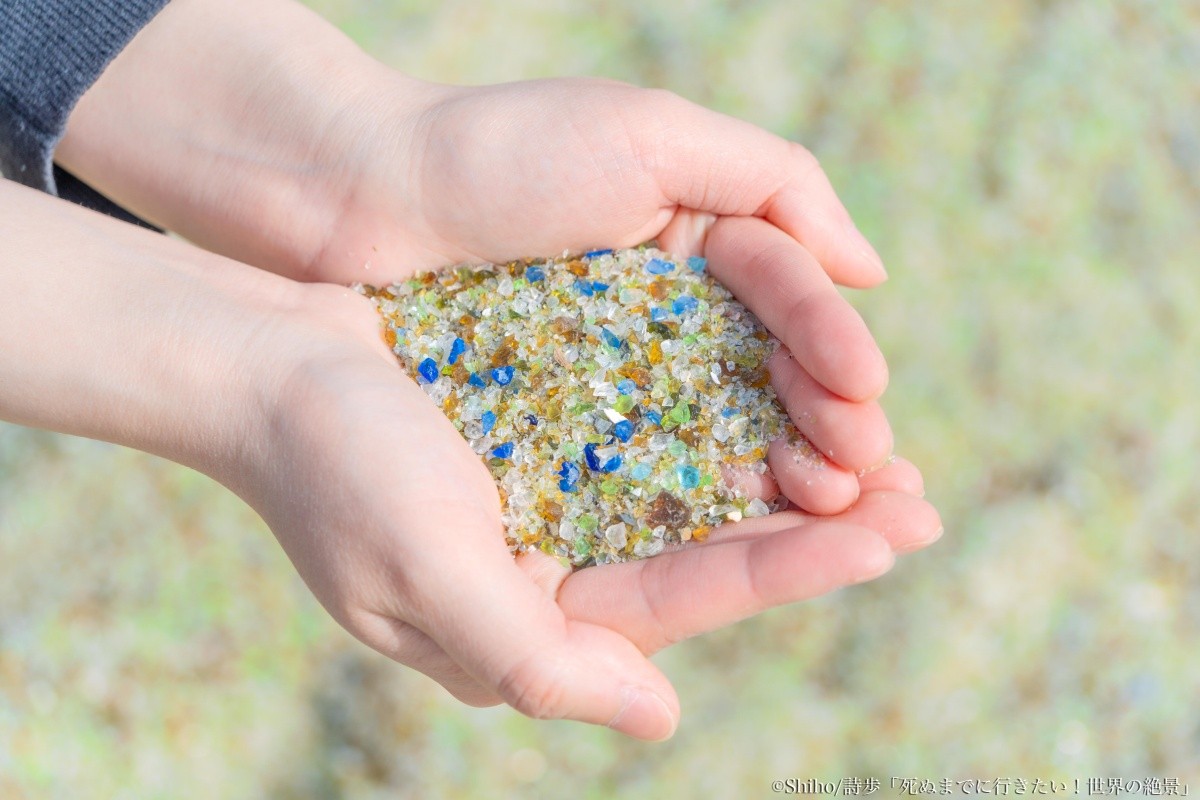
The final stop is an artificial beach next to Morisono Park, facing Omura Bay, created by recycling waste glass. The colorful glass pebbles, smoothed by the waves, sparkle like jewels in the sunlight, making this a photogenic spot that’s become popular on social media. It’s just a 5-minute drive from Nagasaki Airport, so it’s easy to stop by on your way home. (Please note: For your safety, do not enter the beach barefoot.)
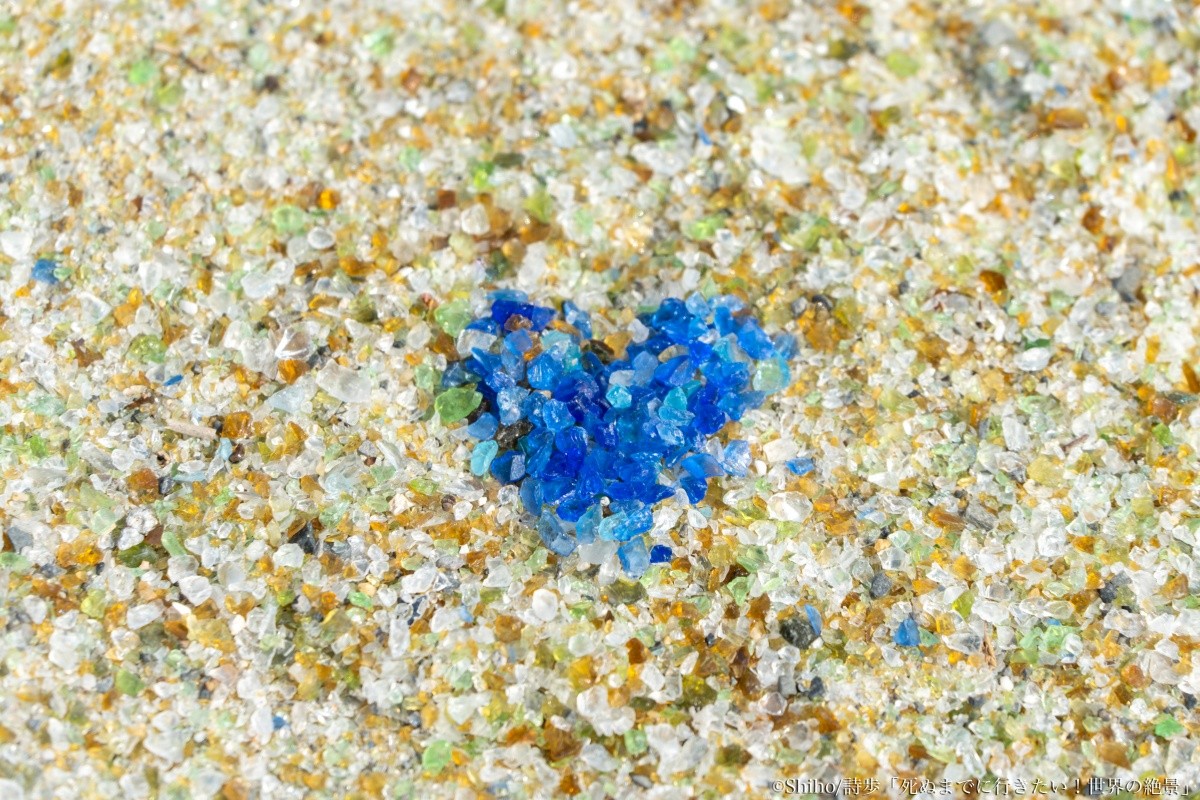
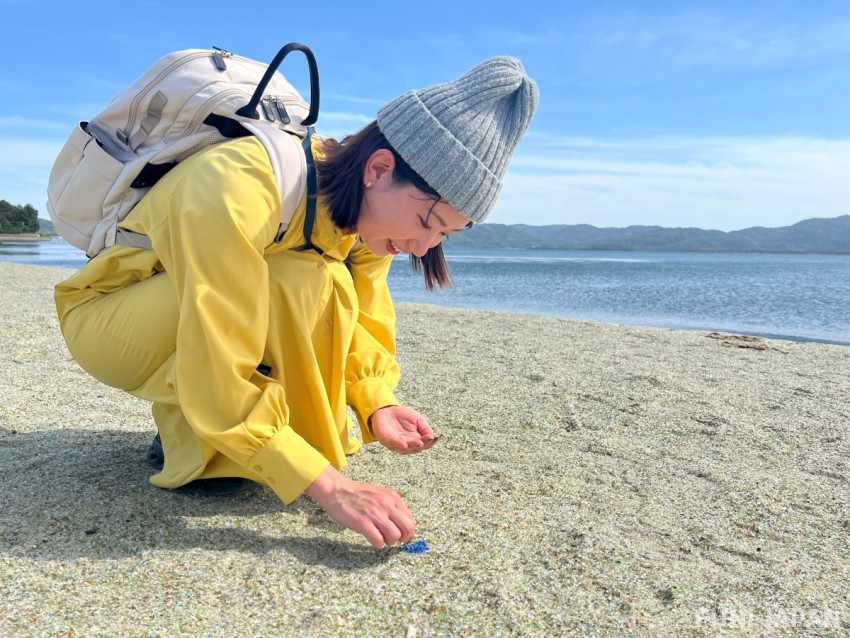
“I’ve seen this place on social media for a long time and always wanted to visit,” said Shiho. During this shoot, she gathered lots of blue glass pieces and arranged them into a heart shape. “With the sparkling beach as a backdrop, I was able to take some really cute photos.” Rather than just capturing the scenery as it is, Shiho’s style is to use what’s around her to create her own arrangements and bring out new charms in each location.
Tips for Capturing Breathtaking Views
Instead of simply taking pictures of the scenery, try creating your own patterns or motifs. Gather glass pieces in your favorite colors and arrange them into shapes like hearts on the sand, then include your hands or small items in the shot for an even more eye-catching photo.
Glass Beach
- Access: 5 minutes by car from Nagasaki Airport
- Website: https://www.nagasaki-tabinet.com/guide/100774
Access to Nagasaki
Getting to Nagasaki Prefecture is easy, with smooth connections by plane or Shinkansen from various locations.
International Flights to Nagasaki Airport
- Seoul (Incheon): About 1 hour 30 minutes (operates on Tue, Thu, and Sat only)
- Hong Kong: Currently suspended
Domestic Flights to Nagasaki Airport
- Haneda/Narita Airport: About 1 hour 50 minutes
- Itami/Kansai/Kobe Airport: About 1 hour 15 minutes
- Chubu Centrair International Airport: About 1 hour 30 minutes
*From the airport to Nagasaki Station, it takes about 40 minutes by limousine bus.
By Train to Nagasaki Station
- Hakata Station (Fukuoka): About 1 hour 20 minutes to Nagasaki Station via the Nishi Kyushu Shinkansen “Kamome”
- Hakata Station (Fukuoka): About 1 hour 34 minutes to Sasebo Station via the Limited Express “Midori”
HP: https://www.nagasaki-tabinet.com/access
The Allure of Nagasaki as Told by Zekkei Producer Shiho
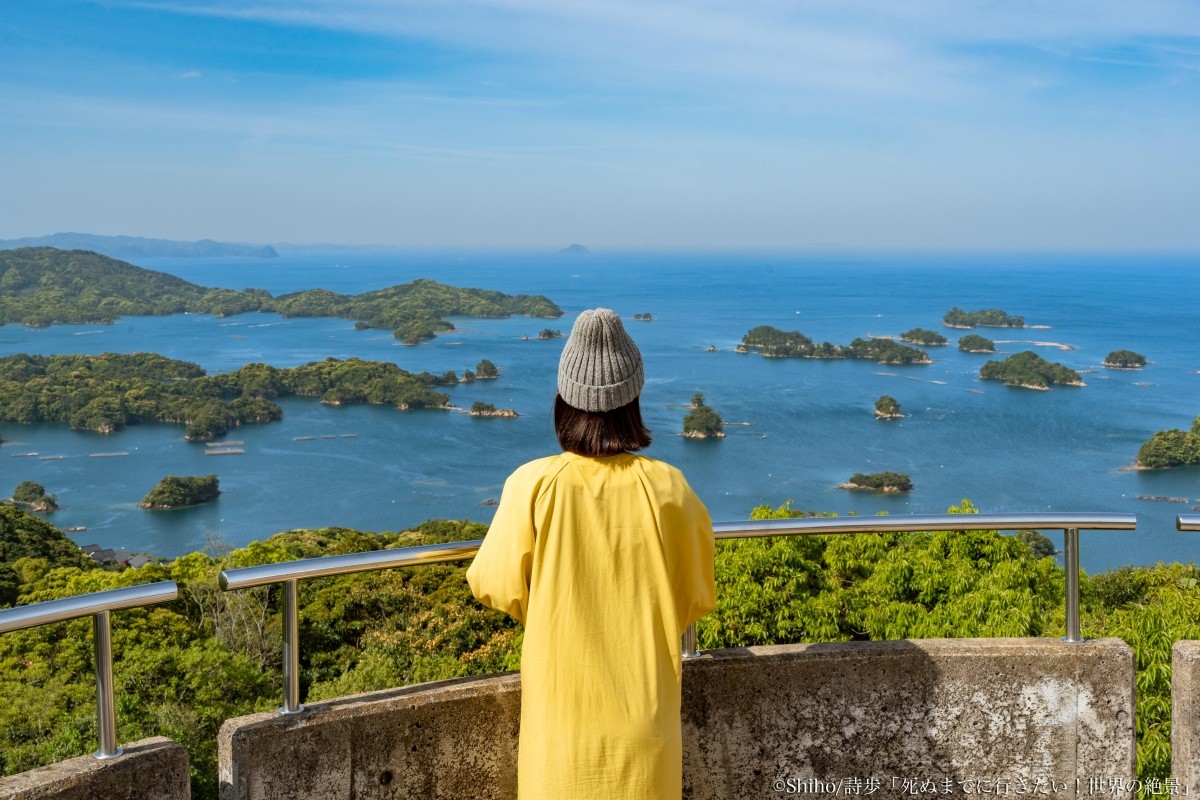
Through this journey, Shiho describes the charm of Nagasaki as "the beauty of the sea and islands woven by the intricate coastline and countless islands, and the dramatic sunsets unique to this westernmost region," she says.
"The appeal of Kujukushima lies in the fact that, in the blue sea, there are not just ninety-nine, but even more tiny islands scattered all around. The sight of countless small islands dotting the beautiful blue sea is truly a breathtaking view worthy of being called a spectacular landscape."
"At Ōmisaki Station, the platform has a station sign and a small station building, and a single-car local train passes through—it's a scene that feels like something out of a story. The blue sky and blue sea, and the yellow handkerchiefs carrying travelers' wishes fluttering in the wind... All of these elements come together to make this a special place that captures the hearts of those who visit."
Nagasaki's scenic spots, which stimulate all five senses, are sure to offer us breathtakingly beautiful views and unforgettable, once-in-a-lifetime emotions.
Other Recommended Scenic and Sightseeing Spots in Nagasaki
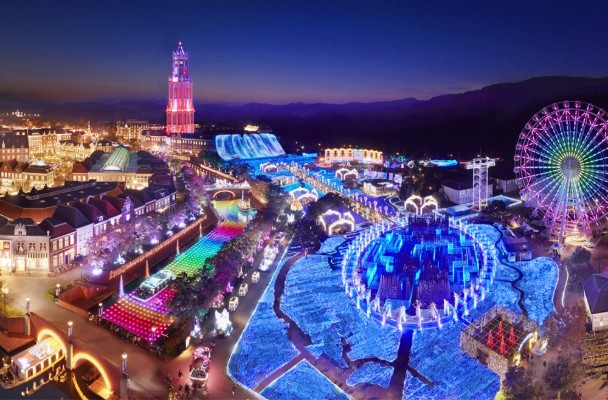
In addition to the spots introduced here, Nagasaki Prefecture is home to many other breathtaking sights that captivate visitors, such as Huis Ten Bosch and Gunkanjima (Battleship Island). FUN! JAPAN also features many more recommended spots in our articles, so please check them out for more inspiration.
🏨Book your stay with JAPANiCAN! 👉Click Here

Comments