
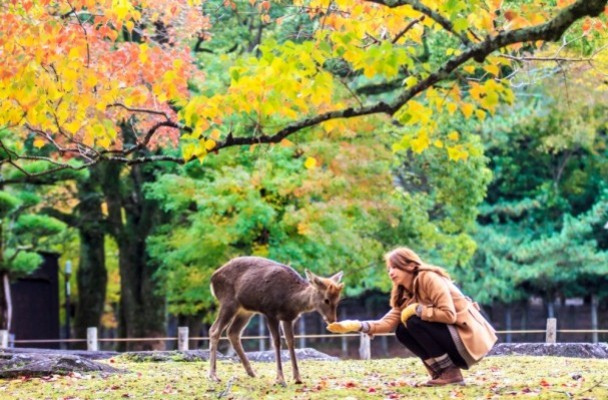
Horyu-ji Temple in Nara is known for having the oldest wooden construction in the world. Other than the buildings, there are also culturally significant statues and artwork that convey the 7th century Asuka culture, as well as many national treasures and important cultural properties. There are 220 Buddha statues alone, and the temple is often called the "Treasure House of Cultural Assets".
About Horyu-ji Temple
Horyu-ji Temple was founded at the beginning of the 7th century by Empress Suiko and Prince Shotoku during the Asuka Period (592AD-710AD). In 1993, Horyu-ji was the first Japanese temple to be registered as a world heritage site, for having the oldest existing wooden construction in the world. The temple grounds are spacious, and are divided into two areas: the Sai-in Temple in the west with the Nandaimon Gate and 5-story pagoda, and the To-in Temple in the east with the Yumedono Hall.
Because the temple was never exposed to war like Todai-ji Temple or Kofuku-ji, not only the buildings, but many Buddhist artifacts from the various eras also survive, including 150 national treasures, and over 3000 important cultural artifacts. Ikaruga, where Horyu-ji Temple is located, is bustling in front of the temple gates, but the surrounding area is very idyllic with rural scenery. We recommend taking a stroll through this area.
Highlights of Horyu-ji Temple
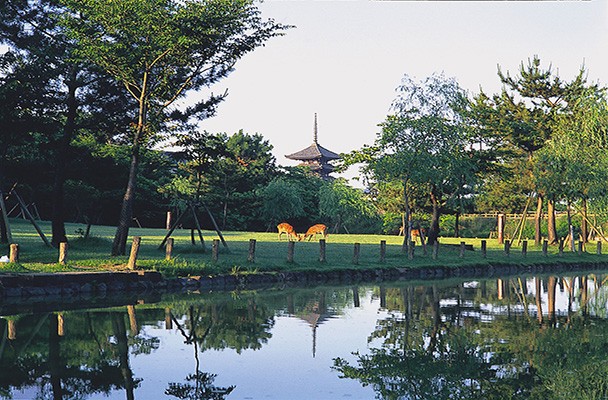
The five-storey pagoda, the most recognized symbol of Horyu-ji Temple, is the oldest existent wooden building in the world. It stands at 34 meters tall, and the roof area gets smaller with each story, making it a very stable building. Inside the first story of the pagoda is a mural that depicts the death of the Buddha called the "Shaka Nyumetsu".
The second highlight at Horyu-ji Temple is the statues of the Buddha Triad. They were constructed in 623 as an offering to pray for the soul of Prince Shotoku in the afterlife. They are the oldest Buddha statues in Japan, and we suggest paying close attention to their expressions. The eyes are long and slanted, and if you look carefully at their expressions from the front, you can see that only their mouths are smiling, making them look mysterious.
Other must-sees are the "Guze Kannon" Hidden Buddha (on view only during spring and autumn) which is considered to be a portrait of Prince Shotoku, and the tall and slim "Kudara Kannon" statue which is rare for a Japanese Buddha statue, whose smile is gentle and pleasant.
Access to Horyu-ji Temple
The temple is about a 20 minute walk from JR Horyu-ji Station. You can also take the Nara Kotsu Bus labeled "Horyu-ji Sando-yuki" and get off at the "Horyu-ji Sando" bus stop after about 10 minutes, then walk about 5 minutes to the temple.
From JR Oji Station's North Gate, take the Nara Kotsu labeled "Kokudo Yokota/ Sharp-mae/ Horyu-ji-mae-yuki" for about 15 minutes, then get off at the "Horyu-ji-mae" bus stop and walk about 5 minutes to the temple.
From Kintetsu Tsutsui Station, take the Nara Kotsu bus labeled "JR Oji Eki-yuki" for about 15 minutes and get off at the "Horyu-ji-mae" bus stop and walk about 5 minutes to the temple.
Spot Information
- Spot name: Horyu-ji Temple
- Street Address: 1 No 1, Horyu-ji Sannai, Ikaruga-cho, Ikoma-gun, Nara Prefecture 〒636-0115
- Access: About 20 minutes on foot from JR Horyu-ji Station
- Language: Official website available in English
- Ticket: 1,500 yen (Sai-in entrance, Treasure Hall, and To-in entrance included)
- Business Hours:
- February 22 ~ November 2rd: 8:00-17:00
- November 4th ~ February 21st: 8:00-16:30
- Holidays: Open year round
Comments