
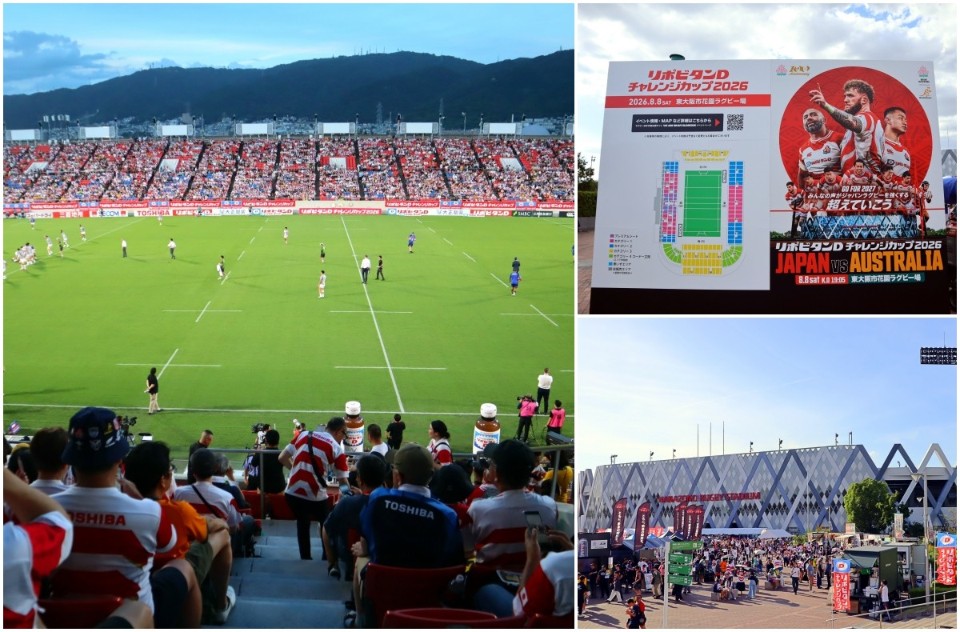
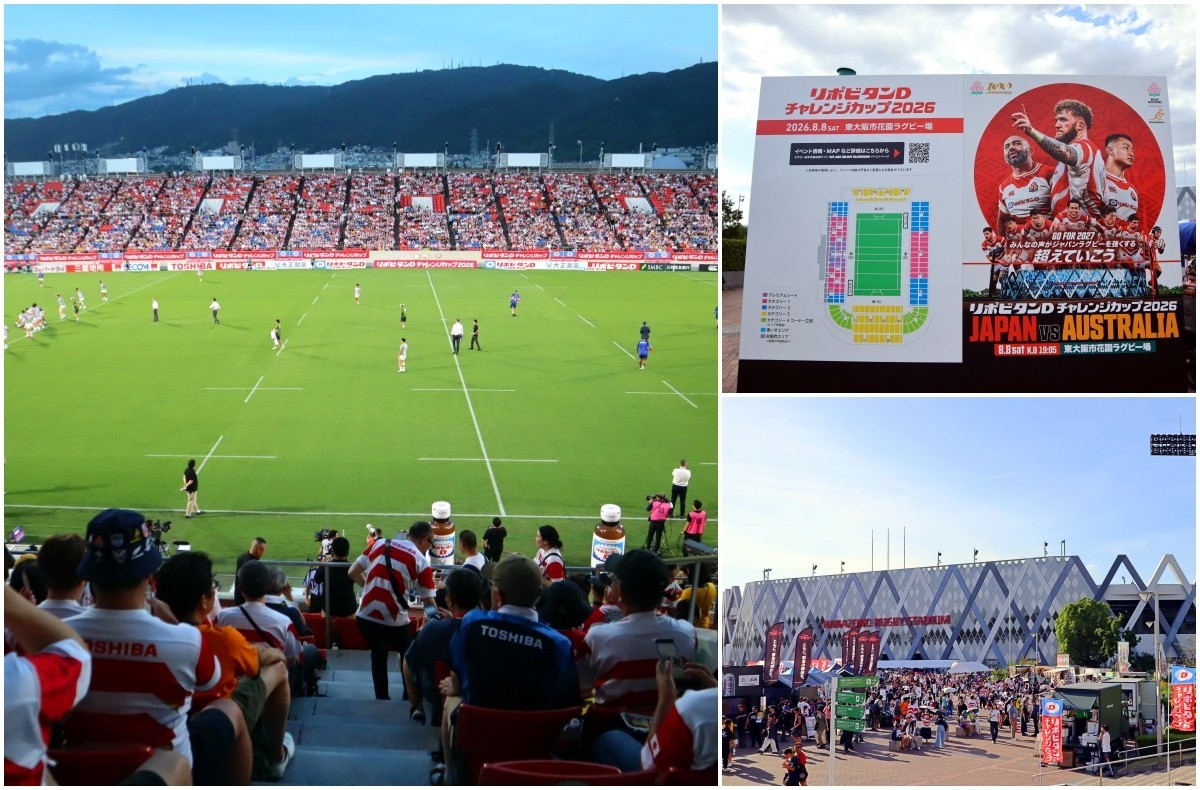
On August 8, 2026, our editorial team covered the “Lipovitan D Challenge Cup 2026” match between Japan and Australia, held at the sacred ground of rugby, Hanazono Rugby Stadium in Higashiosaka City! The match was a fierce battle with the outcome undecided until the very end. The stadium was filled with thunderous cheers and powerful plays, creating an electrifying atmosphere that could captivate even rugby beginners in an instant. For those who are “interested in watching rugby but don’t know the rules” or “want to enjoy watching sports while traveling in Japan,” we’ll clearly explain everything from the super-basic rules you can understand in 30 seconds, to how to enjoy the stadium, how to buy tickets, and access information, all with on-site reporting!
🚅Book your Shinkansen ticket with NAVITIME Travel! 👉 Click here
🛫Book your flight ticket with NAVITIME Travel! 👉 Click here
😄Enjoy a more convenient trip to Japan with NAVITIME eSIM!👉Click here
👉Book Hotels & Ryokan on JAPANiCAN🏨

Enjoy Even as a First-Timer! Super Basic Rugby Rules
[Understand in 30 Seconds] How Many Players and How Long Is a Rugby Match? “15 vs 15” and “40 Minutes Each Half” Basic Knowledge

How Many Players Are on a Team?
Rugby is a sport where each team has 15 players on the field. The positions are broadly divided into “Forwards (FW)” and “Backs (BK),” allowing both players who excel in powerful plays and those who use speed as their weapon to shine in their respective roles. One of rugby’s charms is that differences in physique and physical ability become unique strengths for each player.
How Long Is a Match?
A match consists of two halves of 40 minutes each, for a total of 80 minutes. Halftime is 15 minutes, so the entire event takes about 2 hours. The clock keeps running during play, but may temporarily stop for injury treatment or video review.
How Is the Winner Decided?
The team that scores more points within the time limit wins. If the score is tied, the match ends in a draw (although extra time may be played in some cases). Ways to score include “Try = 5 points,” “Conversion = 2 points,” “Penalty Goal = 3 points,” and “Drop Goal = 3 points.”
All 15 Players United! Score Points with “Tries” and “Kicks”
There are five ways to score in rugby. The most important is the Try = 5 points, which is awarded when you firmly ground the ball in the opponent’s goal area (in-goal). If the goal kick after a try (conversion) = 2 points is successful, you get a total of 7 points. Additionally, a Penalty Try = 7 points may be awarded if the referee judges that a try would have been scored but for an opponent’s foul. Exceptionally, a penalty try automatically includes both the try (5 points) and a successful conversion (2 points). You can also score by kicking: a Penalty Goal = 3 points is awarded for a successful goal kick after an opponent’s foul, and a Drop Goal = 3 points is scored by kicking the ball through the posts during open play. For beginners, just remembering that you score with tries and kicks is enough to enjoy the game.
Just Remember These! The Three Basic Rules
Forward Pass
The fundamental rule in rugby is that you cannot throw the ball forward. Players advance by passing the ball backward or sideways, which creates the unique excitement of teammates running forward while passing the ball backward to each other. Passing the ball forward results in a “forward pass” infringement.
Knock-On
A “knock-on” occurs when a player fails to catch the ball and drops it forward, resulting in a scrum. Play stops and resumes with a scrum, which can change the flow of the match. Since this is a common penalty, knowing about it will make watching the game much easier.
Offside
In rugby, there are specific positions from which players are allowed to play. If a player moves ahead of this line and participates in play, it’s an offside penalty. If the defending team moves too far forward, it leads to a penalty, making this an important rule that greatly affects the tactics of attack and defense.
Highlights of the Scrum and Lineout

The most thrilling scenes unique to rugby are the “scrum” and the “lineout.” A scrum is a set play to restart the game, where two packs of eight players each lock together and battle for the ball with power and technique—a true spectacle of strength and skill. On the other hand, a lineout is used to restart play when the ball goes out of bounds along the touchline, featuring an aerial contest where players are lifted to compete for the ball. For beginners, remembering “scrum = battle of strength” and “lineout = aerial contest” will make watching the game much more enjoyable.
[On-site Report] The Intense Atmosphere of “Japan vs Australia” at Hanazono Rugby Stadium
Fierce Battle 32-35! Japan’s “Brave Blossoms” Challenge the Mighty Australia (Wallabies)
From here, let’s dive into the match day experience. As the players entered, the stadium lights dimmed and a light show using smartphones began. By scanning the QR code displayed in the venue, fans’ lights automatically turned on, creating a slow-moving wave of light throughout the stands. This became a glowing cheer for the players heading to the pitch, and the excitement in the stadium soared.
Once the match began, the excitement at Higashiosaka Hanazono Rugby Stadium rose even higher. With every play, huge roars and cheers erupted, filling the stands with a palpable energy. The first try was scored by Japan’s Ryunosuke Ito! The moment the scoreboard showed “5-0,” the stadium exploded with cheers. Every time the Brave Blossoms had the ball, powerful shouts of “You can do it! Go!” echoed, pushing the players forward. The intensity of the tackles, the split-second tactics, and the exhilarating speed are the true joys of watching rugby live. After a fierce back-and-forth, the final score was 32-35. Although Japan narrowly lost, the crowd continued to warmly applaud the players for their hard-fought effort.



Cross-Border Fan Interaction and the Spirit of “No Side”
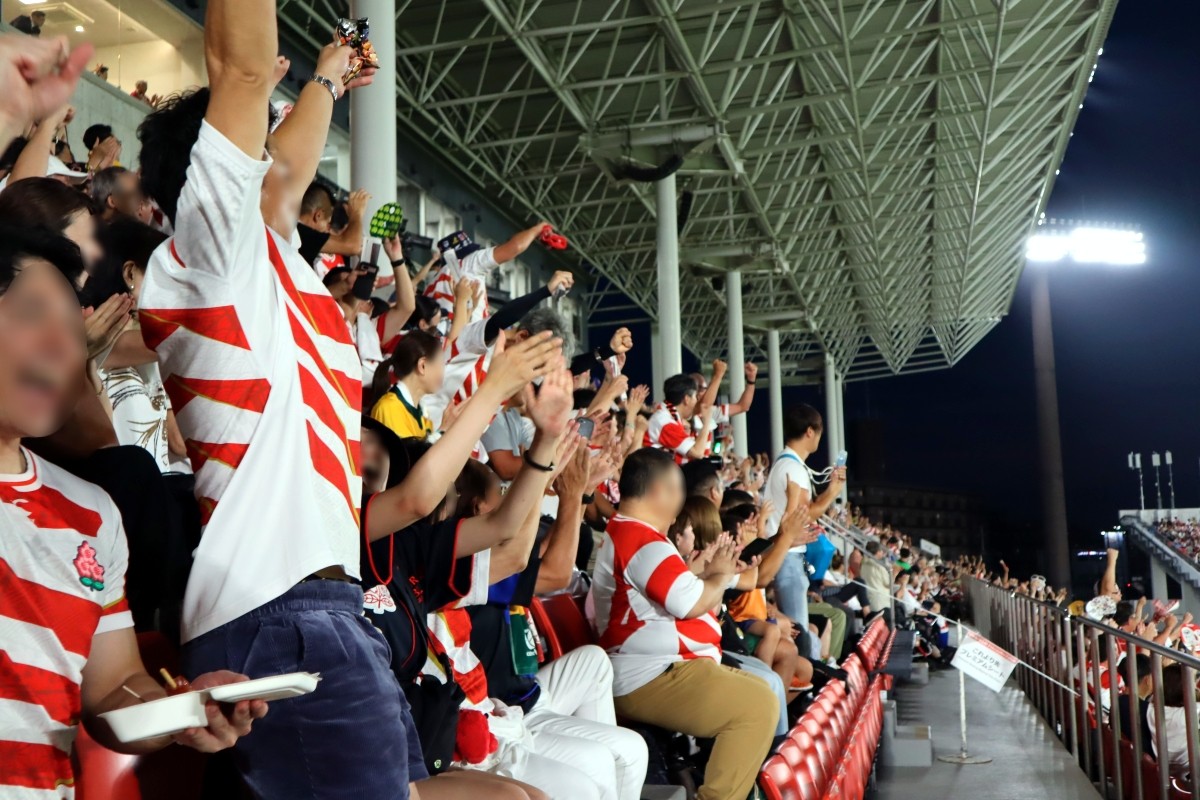
On this midsummer night at Hanazono, Japan faced the Wallabies. Although Japan aimed for their first win against this formidable opponent after seven straight losses, they fell just three points short. Still, when the final whistle blew, the players congratulated each other on a hard-fought match, and the stands filled with warm applause that transcended the outcome. Japanese and Australian supporters exchanged smiles, clapped for each other, and took photos together. This spirit of “No Side”—celebrating both teams regardless of the result—is one of the reasons rugby is loved around the world.
Enjoy the Stadium to the Fullest! Recommended Supporter Goods & Local Culture
A Must for Supporters! Plenty of Fun at the Outdoor Booths!
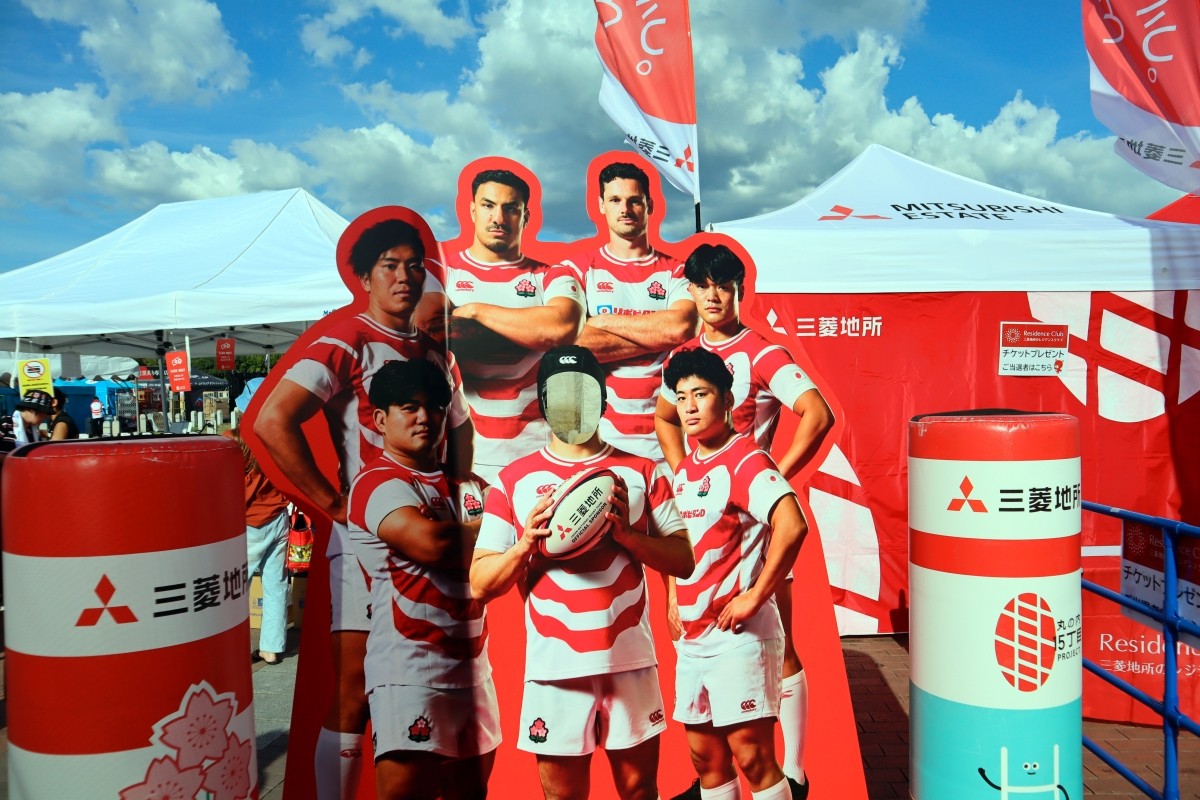
The booths outside the stadium opened at 4:00 p.m., and the venue was bustling even before the match began. Long lines quickly formed at the Japan National Team Official Store and the Players’ Goods Store, with fans eager to get their hands on popular player merchandise and limited-edition items, creating a lively atmosphere. There were also about ten unique corporate booths, including the “Asahi Super Dry Booth” where you could enjoy ice-cold beer, as well as mini-games and interactive experiences. The festive mood before the match made even first-time visitors feel excited and welcome.

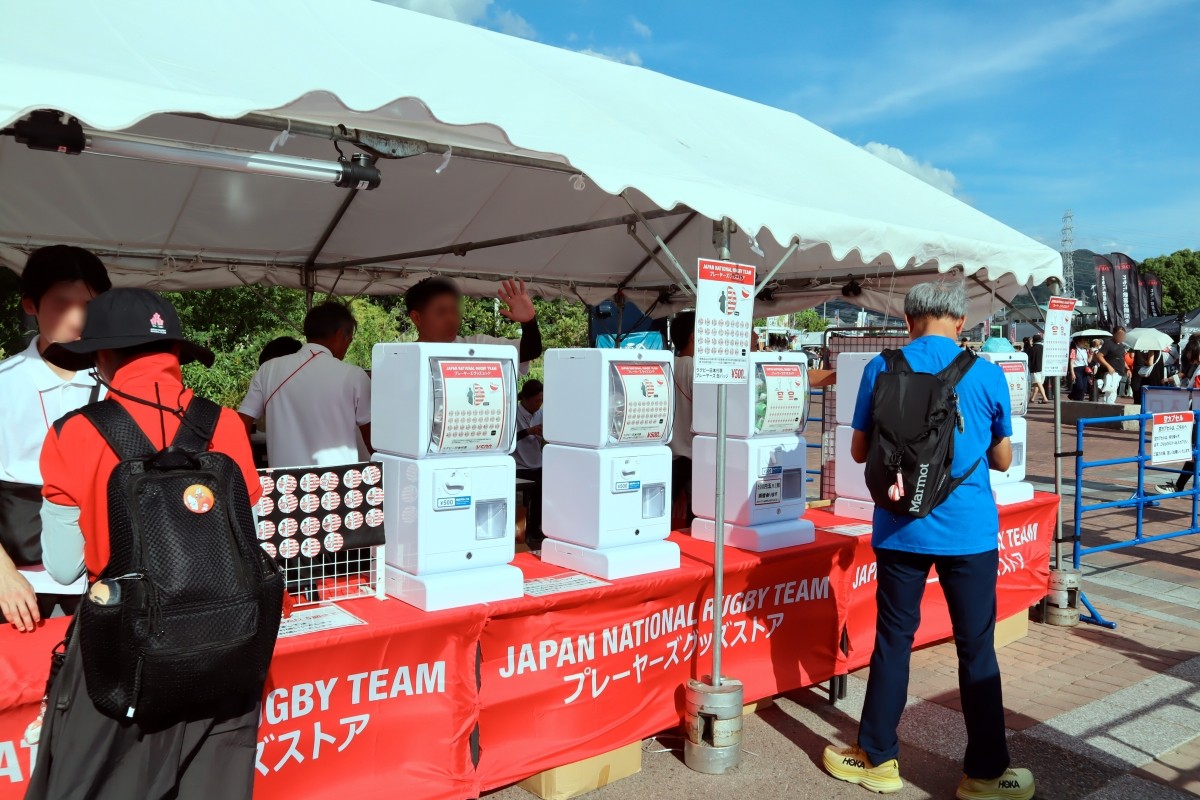
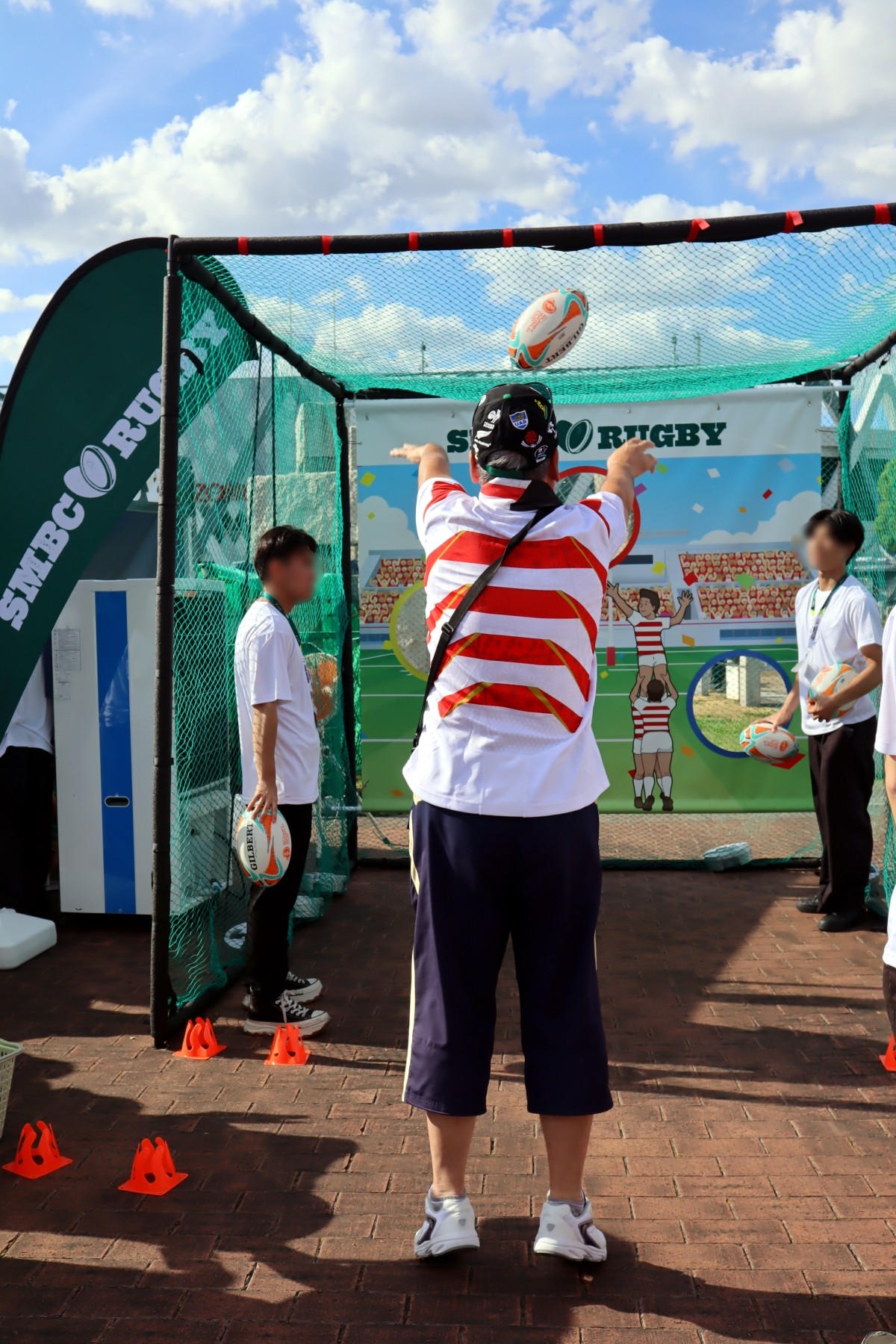

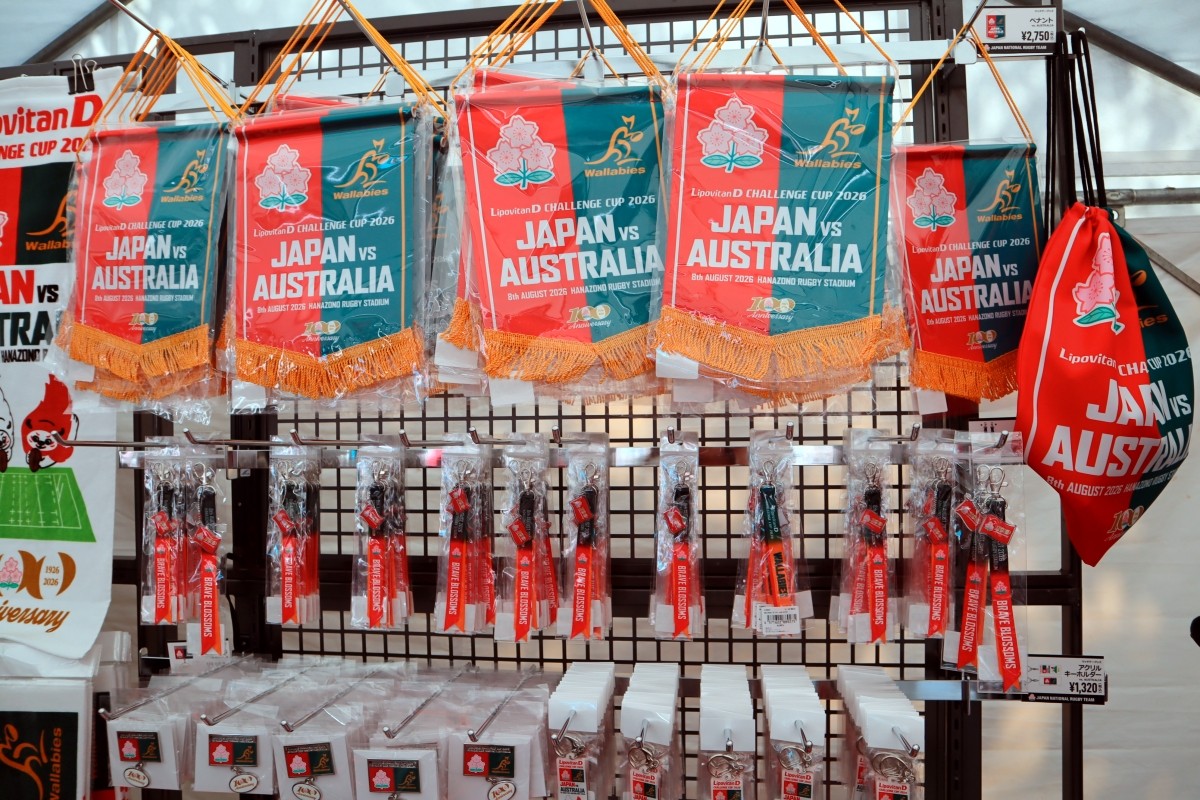
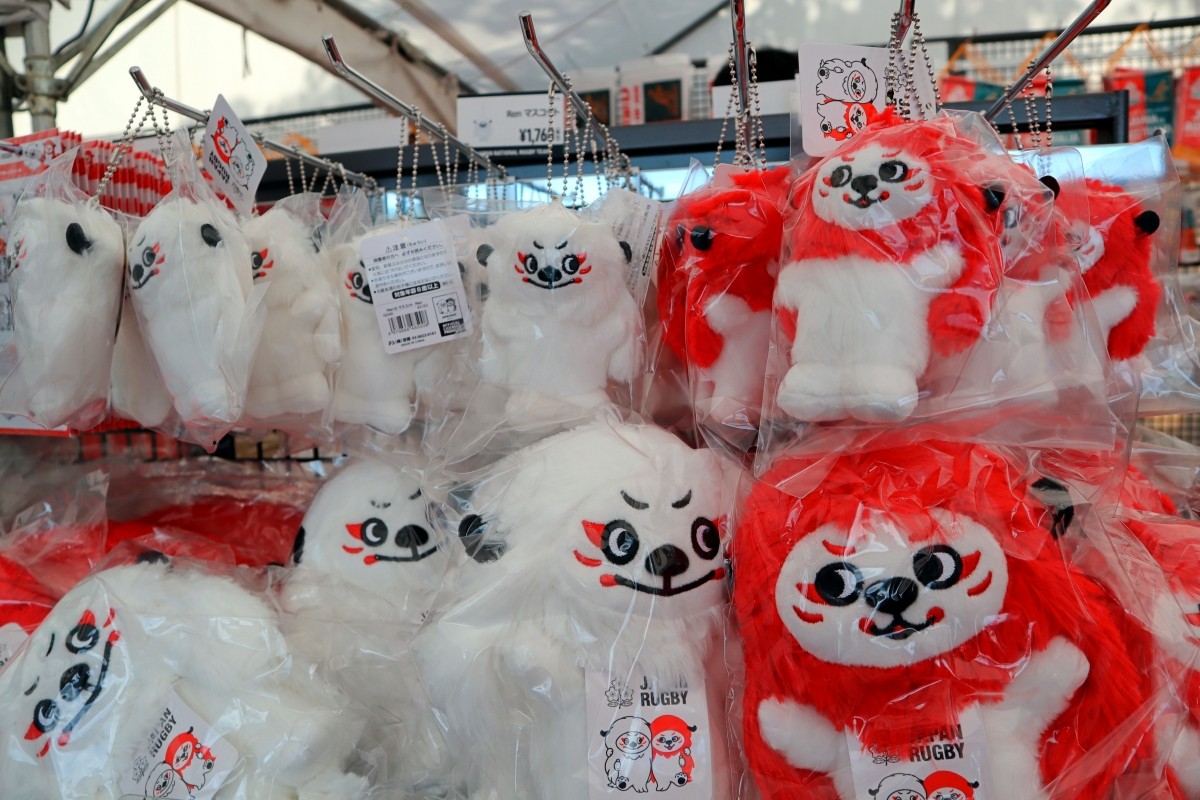
If you are attending for the first time or celebrating your birthday, you can receive a commemorative sticker of the official mascot of the Japan Rugby Football Union, "Ren-G," at the reception.

Experience the “History of Japanese Rugby” at the Hanazono Museum
The Hanazono Museum, located inside the stadium, is a must-visit spot before the match and is free of charge. The museum displays uniforms of past Japan national teams and photos of memorable moments, allowing you to feel up close the journey of the Brave Blossoms. There are also exhibits of Rugby World Cup jerseys since 1999 and photo spots, making it a space where not only fans but also first-time visitors can immerse themselves in the “story of Japanese rugby.” Visiting here before the match will surely heighten your anticipation for the upcoming 80 minutes.


💡Tips for Getting Food Around the Stadium
While there are food trucks inside the stadium, they tend to get crowded. Many local fans prefer to buy takeout from shops near the nearest station (such as McDonald's or convenience stores) and bring it with them. Inside the stadium, you can enjoy cold draft beer and limited-edition supporter goods, while getting ready for the match!
For International Visitors: How to Get Tickets and Access Guide
If you want to enjoy watching rugby in Japan, it’s best to first check how to get tickets and how to access the stadium. Hanazono Rugby Stadium is easily accessible from central Osaka, so even first-time travelers can visit without getting lost.
How to Purchase Rugby Tickets in Japan
Tickets for Japan national team matches can be purchased through the official ticket site “JAPAN RUGBY TICKET,” which offers an English-language version. Simply select the match you want to attend from the list, choose your seat category, and complete the payment. Credit card payment is accepted, and after purchase, you will receive an electronic ticket by email, making the process smooth. Popular matches may sell out early, so advance reservations are recommended.
- Ticket RUGBY|チケットラグビー【Official】 (Japanese)
- For English, click here 👉 https://en.rugby-japan.jp/
Access to Higashiosaka Hanazono Rugby Stadium
The most convenient way to get to Higashiosaka Hanazono Rugby Stadium from Namba Station in central Osaka is to take the Kintetsu Nara Line. It takes about 20–30 minutes from Namba Station to “Higashi-Hanazono Station”. After getting off the train, it’s about a 10-minute walk to the stadium. Along the way, you’ll find signs and many fans wearing team jerseys, so even first-time visitors can find their way easily. On match days, there is a steady flow of people from the station to the stadium, and just walking along gives you a sense of excitement and atmosphere unique to Hanazono, the sacred ground of rugby. There are also convenience stores and drink stands nearby, so you won’t have any trouble preparing before the match.
The Next Excitement Awaits in 2027! Enjoy Japanese Rugby Ahead of the “International Tournament”
The international tournament will be held in Australia from October 1 to November 13, 2027. The Japan national team, the “Brave Blossoms,” currently ranked 12th in the world, is steadily gaining strength as they aim for a higher ranking. After a fierce battle with powerhouse Australia, excitement is building for the main tournament in 2027. Coming up soon are notable test matches, such as the match against Canada on September 5 (Niigata, Denka Big Swan Stadium) and the match against the USA on September 12 (Hanazono Rugby Stadium). If you’re in Japan, be sure to visit the stadium and experience the excitement and the moving “No Side” spirit firsthand!
JTB supports the Japan National Rugby Team.
🚅Book your Shinkansen ticket with NAVITIME Travel! 👉 Click here
🛫Book your flight ticket with NAVITIME Travel! 👉 Click here
😄Enjoy a more convenient trip to Japan with NAVITIME eSIM!👉Click here
👉Book Hotels & Ryokan on JAPANiCAN🏨






Comments