
The Japan National Baseball Team, known as "Samurai Japan," has achieved numerous successes in international tournaments. It is also the only team to have won all major competitions, including the Olympics. Looking ahead to the tournament in March 2026 that will determine the world’s baseball champion, Samurai Japan will make its long-awaited return in 2025. What is the strength and appeal of Samurai Japan, the team that excites fans around the world? Once you visit the stadium, you are sure to become a fan!
🔥 Experience WBC 2026 live and in person! 🔥
The must‑see matchup on Sat, Mar 7: Japan vs. Korea — now with a hassle‑free game ticket + hotel package!
“This is the year I’m seeing it live!”
Then this special plan is perfect for you.
👉Details here
*By purchasing or reserving products introduced in this article, a portion of the sales may be returned to FUN! JAPAN.
Understanding the Basics of Samurai Japan: Its History and Position
What is "Samurai Japan"? More Than Just a National Team
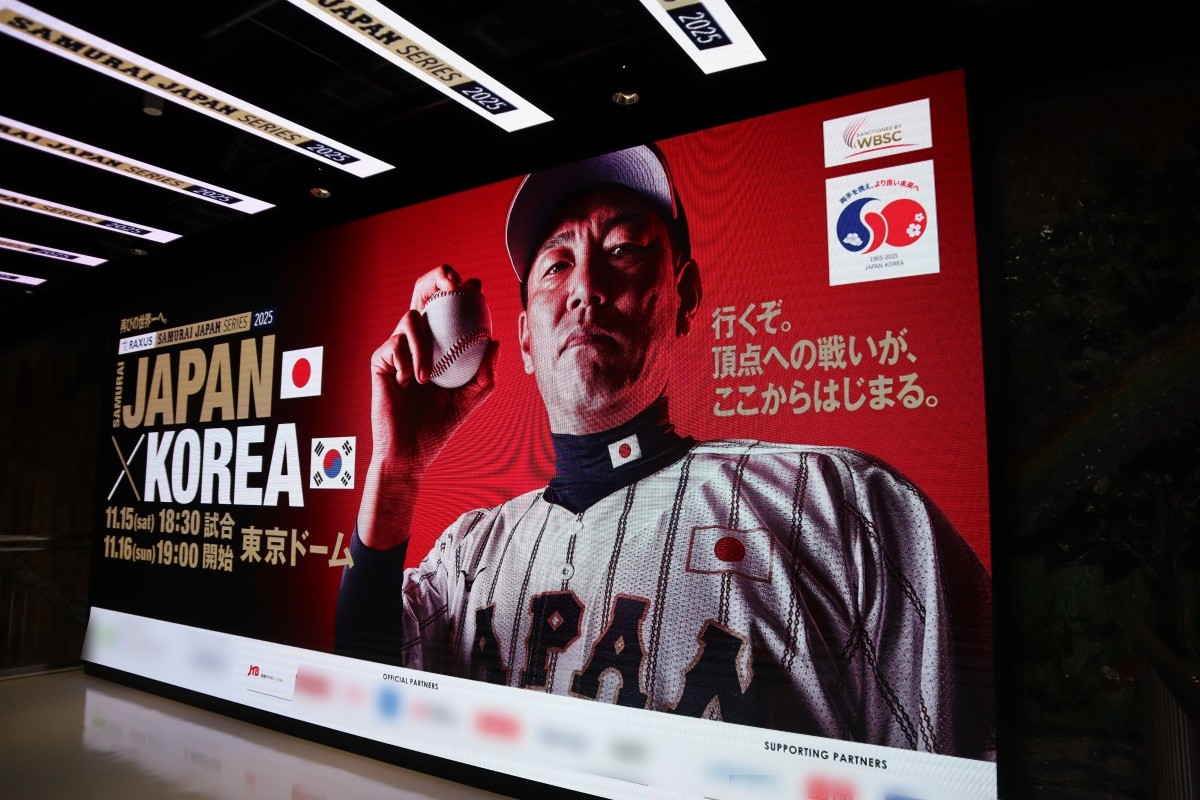
"Samurai Japan" is the collective name for all generations of Japan’s national baseball teams, with the top team at the pinnacle, as well as the adult, U-23, university, U-18, U-15, U-12, and women’s national teams. All generations wear the same uniform and compete with the goal of becoming the "strongest in the world" at every level. The word "samurai" refers to warriors who lived through turbulent times in Japanese history. It signifies not only physical strength but also mental fortitude and morality. "Samurai Japan" embodies this spirit, serving as a nickname that represents the spirit of Japanese baseball. In 2023, Hirokazu Ibata, a former professional baseball player, succeeded Hideki Kuriyama as manager of the top team. You can watch games in Japan, and details on how to get tickets will be explained in a later section.
The World’s Highest Stage: A Glorious History in International Tournaments

The first world championship tournament in baseball, where top players from around the globe including active Major Leaguers could participate, was held in 2006. Since it takes place before the start of the baseball season, star players from each country are able to join, making for the highest level of international competition. Sixteen countries participated in the inaugural event, and Samurai Japan claimed victory. The tournament is held every four years. Samurai Japan also won the second tournament in 2009 and the fifth in 2023, boasting three championships so far. Currently ranked number one in the world, the team aims for consecutive victories at the sixth tournament scheduled for March 2026. Additionally, they won the gold medal at the international tournament held in Tokyo in 2020.
Featuring Star Players Active on the World Stage: Player Highlights
At the 2023 world tournament, current Major Leaguers such as Shohei Ohtani, Yu Darvish, Yoshinobu Yamamoto (then with the Orix Buffaloes), and Roki Sasaki (then with the Chiba Lotte Marines) participated as members of Samurai Japan, drawing significant attention. In the previous 2023 tournament, Shohei Ohtani was named MVP for his overwhelming performance both as a pitcher and a hitter.
Ohtani has already announced his intention to participate in the 2026 tournament. Expectations are also high for other Japanese players active in Major League Baseball to join. In addition, Kazuma Okamoto (Yomiuri Giants) and Munetaka Murakami (Tokyo Yakult Swallows), who both experienced the world championship in 2023 and have declared their intention to challenge Major League Baseball this offseason, as well as Shugo Maki (Yokohama DeNA BayStars), who is known for his cheerful personality and has served as Samurai Japan’s captain, are all popular and highly anticipated players. Furthermore, young rookies making their mark in Japanese professional baseball, such as Misho Nishikawa (Chiba Lotte Marines) and Kaito Kozono (Hiroshima Toyo Carp), are also expected to shine.
Enjoy Your First Game 100 Times More: Samurai Japan Spectator Guide
A Super Simple Explanation of Baseball’s Basic Rules
Let’s review the basics: baseball is a sport played between two teams of nine players each. One team is on offense while the other is on defense. The batter from the offensive team steps into either the right or left batter’s box and tries to hit the ball with a bat to score runs. The basic rule is to hit the ball into the designated area, run, and advance around the bases placed on the field.
The pitcher’s throws are counted as strikes or balls. Three strikes result in an out, while four balls allow the batter to advance to first base. Players advance to first, second, and third base, and if they return to home plate, their team scores a run. When the offensive team gets three outs, the teams switch offense and defense. The game starts with the top and bottom of the first inning and continues through the top and bottom of the ninth inning (if the team batting in the top of the ninth is losing, there is no bottom of the ninth). If the score is still tied after the bottom of the ninth, the game goes into extra innings.
Excitement in the Stadium! Japan’s Unique Cheering Culture
In Japanese baseball, it’s common for each player to have their own cheer song. Just by listening to the cheer song, you can immediately tell which player is being cheered for. Fans join in with the cheering squad’s trumpets and drums, singing, clapping, and raising their fists to support the players. Most of the rhythms and lyrics are easy to remember, so even beginners can join in. The entire stadium singing in unison and sending loud cheers is a unique and thrilling part of watching baseball in Japan!
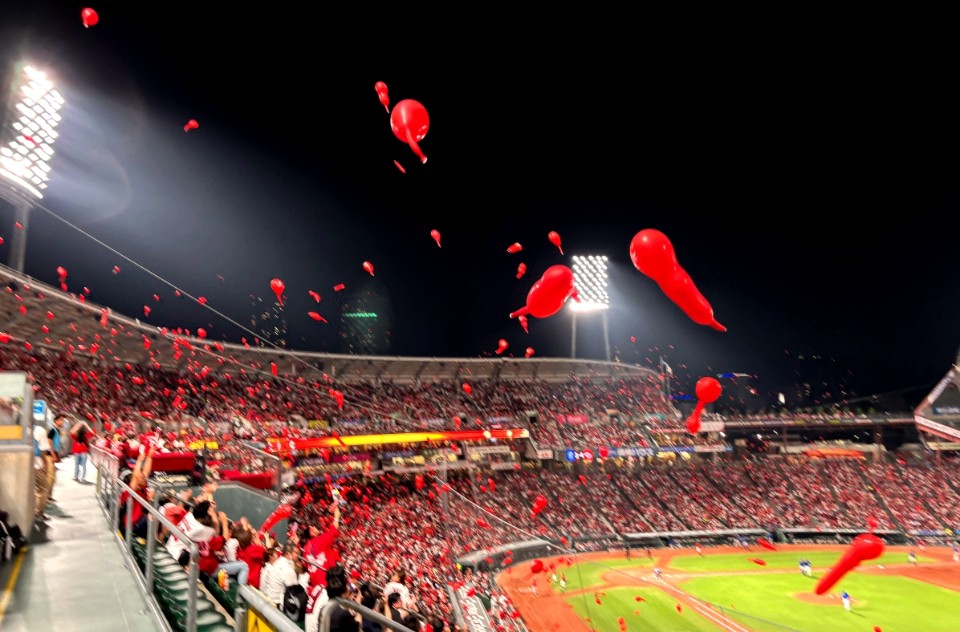
When the team is in a tough spot, the cheers support the defense, and when there’s a chance to score, the cheers encourage the offense, adapting to the situation. Classic cheering goods like megaphones, towels, and noise makers are also popular. Using these items helps everyone in the stadium feel united. During the “Lucky Seventh” (the team’s seventh inning at bat), special cheers are performed, such as the team’s cheer song, jet balloon releases, or famous dances—though this varies by stadium.
Experience the Excitement with Koreans! A Report on the Japan-Korea Game and Asia’s Passion
“Samurai Japan” made its comeback in 2025. After autumn training camp in Miyazaki Prefecture from November 6 to 12, the “Luxas Samurai Japan Series 2025: Japan vs. Korea” was held at Tokyo Dome on November 15 and 16 as a tune-up game aiming for another world championship. Over 40,000 fans from both Japan and Korea gathered each day, showing just how much attention “Samurai Japan” receives. Here’s a report from the first day, filled with incredible energy and excitement.
A Japanese Writer’s View: The Passion of “Samurai Japan”
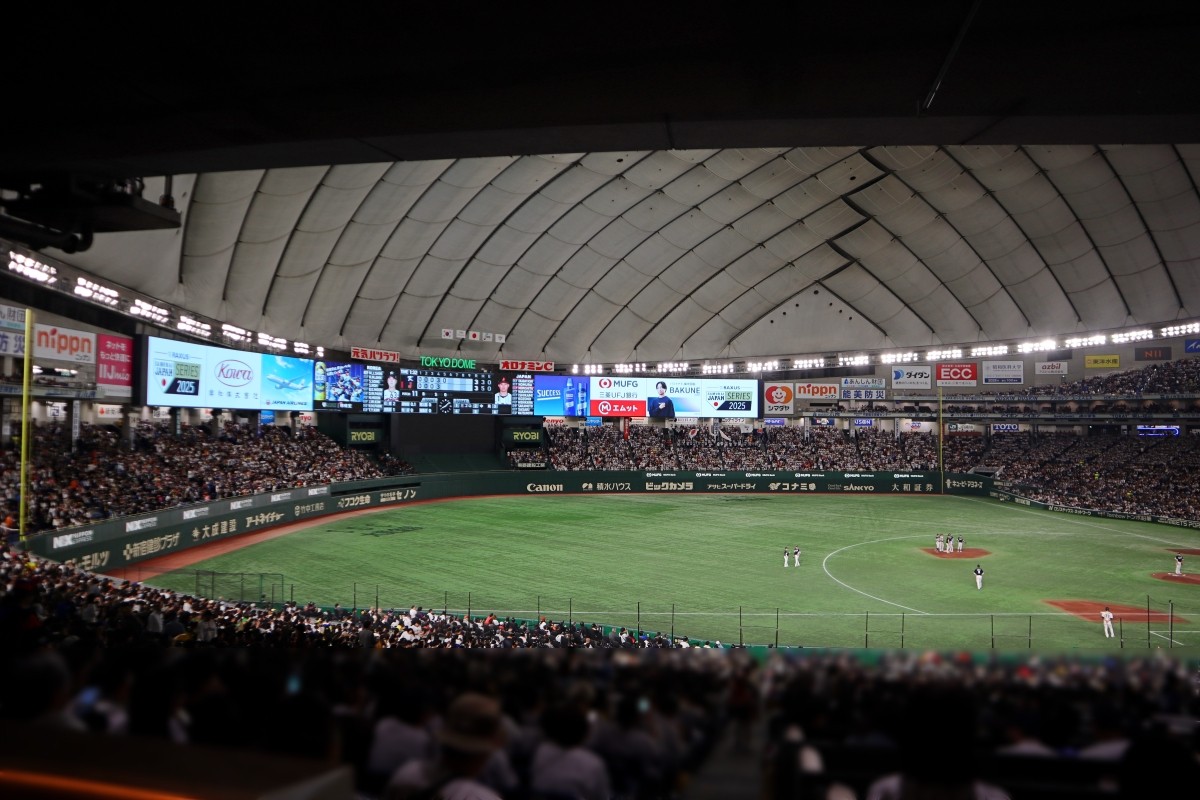
Around 4:00 p.m., two and a half hours before the game started, people wearing Samurai Japan uniforms were already gathering around Tokyo Dome, the venue for the game. Since it was the classic rivalry against Korea, there were also many Korean team fans! You could see players practicing on the field, and the excitement among the crowd was already rising. Cheering goods and Samurai Japan limited-edition food were on sale, and the shops and restaurants were bustling with activity.
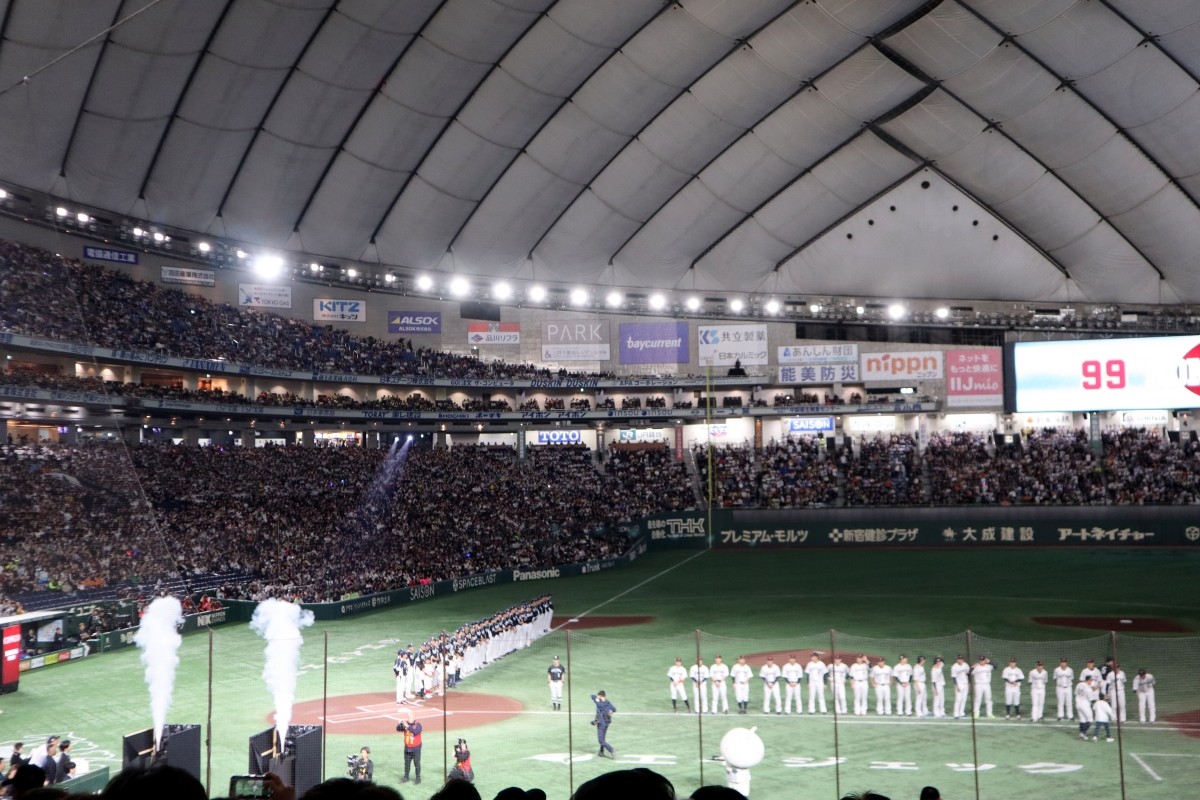
As the game time approached, most of the spectators took their seats. There were cheer dance events and popular K-pop music played. The entire stadium suddenly went dark, and spotlights shone on the field. When the starting lineups were announced, the stadium erupted in applause and cheers. Both teams lined up for their national anthems. The determination of the Japanese national team, playing for their country, was truly moving.
The game began with a stunning performance by starting pitcher Ryuhei Sotani (Orix Buffaloes). From the first inning, he threw fastballs over 150 km/h and didn’t allow a single runner, keeping Korea scoreless through three innings. The game’s turning point came in the fourth inning.
From this inning, Daisuke Moriura (Hiroshima Toyo Carp) took the mound and allowed the team’s first hit. Hyun-min Ahn (KT Wiz) then hit a two-run home run, followed by Sung-moon Song (Kiwoom Heroes) who also hit a home run, giving up three runs and allowing the opponents to take the lead. However, Samurai Japan immediately fought back in the bottom of the inning. With a walk and a double, they created a one-out, runners on second and third situation. Shugo Maki (Yokohama DeNA BayStars) hit a single through the left side, bringing in one run. Then, with a double from Misho Nishikawa (Chiba Lotte Marines), the game was tied! The cheers from the crowd grew even louder.
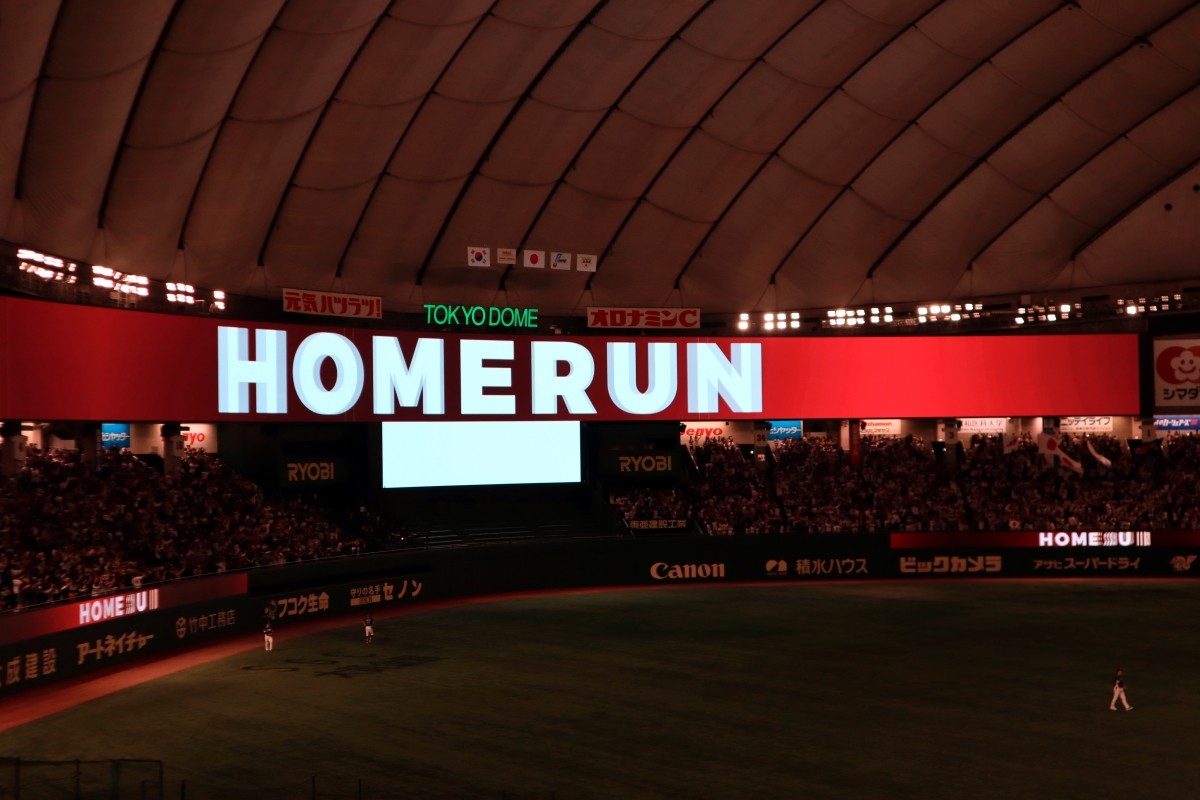
Then, in the fifth inning, a big inning arrived! Pinch hitter Yukihiro Kishida (Yomiuri Giants) hit a home run into the left-center stands, putting the team ahead by three runs. The word “Home Run” lit up on the scoreboard, and the stadium erupted in excitement, with everyone on their feet, fists raised in the air. The unique sense of unity between the players and the fans is one of the true thrills of watching a game live. Samurai Japan’s momentum did not stop, and the final result was a resounding 11-4 victory for Samurai Japan.
A Korean Friend Shares: “They’re Rivals, But I Was Moved!” Honest Impressions from a Fan’s Perspective
We also spoke with two groups of Korean friends who came to watch the game.
The first group was a parent and child, attending their first baseball game. The father was cheering for the Korean team, while the child was supporting Samurai Japan. “The atmosphere in the stadium is just incredible! This is my first time watching baseball live, and I’m overwhelmed by the intensity of the players’ performances.” The child, who usually prefers soccer, said with a smile, “Watching baseball is really fun. I want to come see another game.”
The second group was two male coworkers. They are baseball fans and have experience watching games in Korea. “The differences in cheering culture are interesting! In Korea, there are cheerleaders and the fans dance along with them. In Japan, each player has their own cheer song and there’s a set cheering style, which really gets everyone excited. I’m impressed by the energy at Tokyo Dome.” Their favorite players are Moon Bo-kyung (LG Twins) and Sung-moon Song (Kiwoom Heroes), who hit a home run that day. “Watching baseball in Japan is also great because you can enjoy draft beer and a wide variety of food. We may be rivals, but let’s cheer for each other!”
Must-See: Stadium Food and Uniform Trends
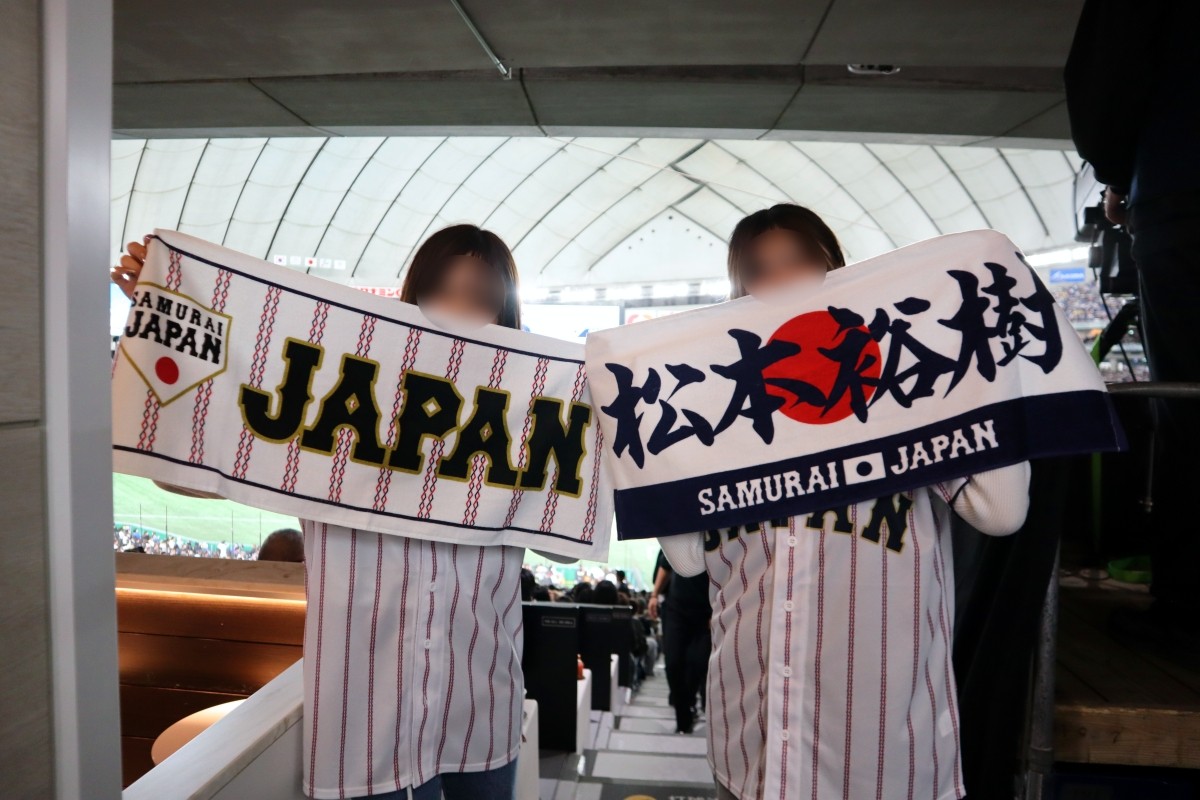
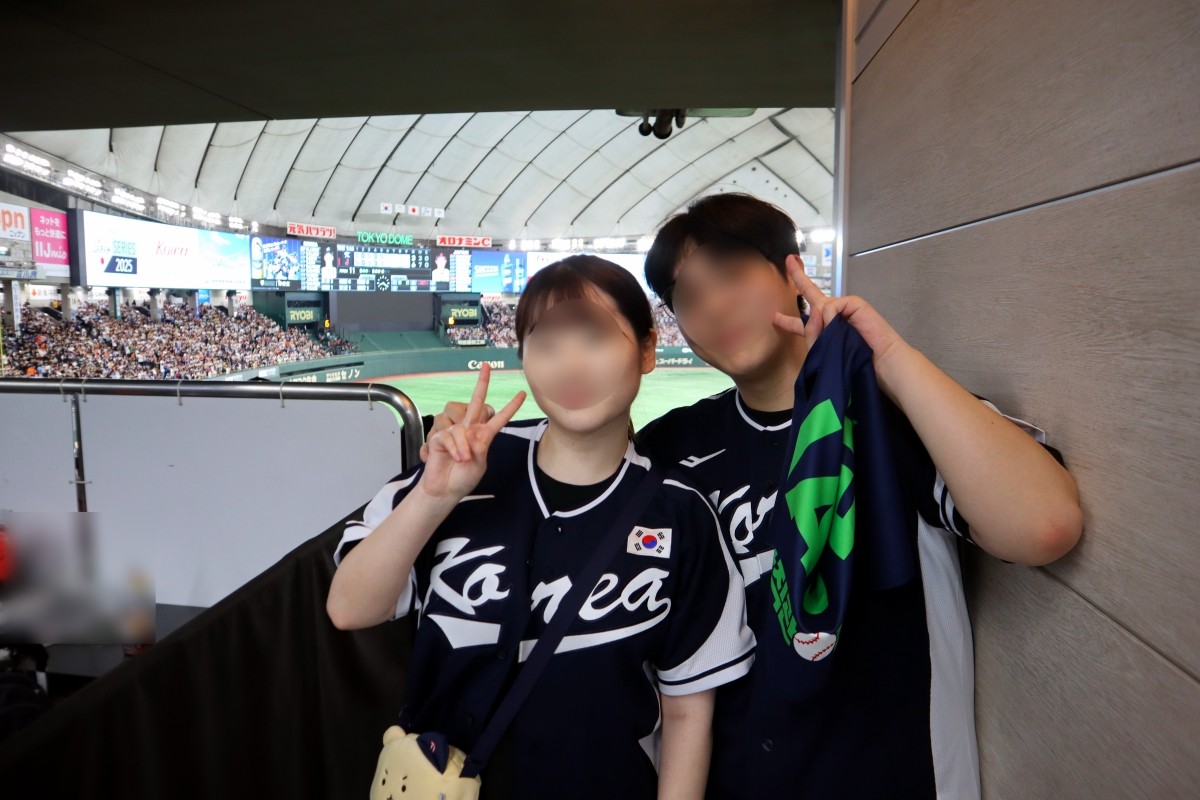
Cheering goods are a big part of the excitement at the game. Many fans were seen with megaphones and towels featuring their favorite players. Fans hold up these towels to cheer when a player hits a home run or gets a hit. As for clothing, fans wearing uniforms really stood out. Not only Samurai Japan uniforms, but also uniforms from their favorite Japanese pro teams and even Major League teams were seen throughout the stadium.
Stadium food is also a major highlight. Inside Tokyo Dome, the first, second, and fourth floors of the infield, as well as the outfield concourse, are lined with gourmet options. There are more than 60 shops. Since this was a Samurai Japan game, there were also special limited-time menu items!
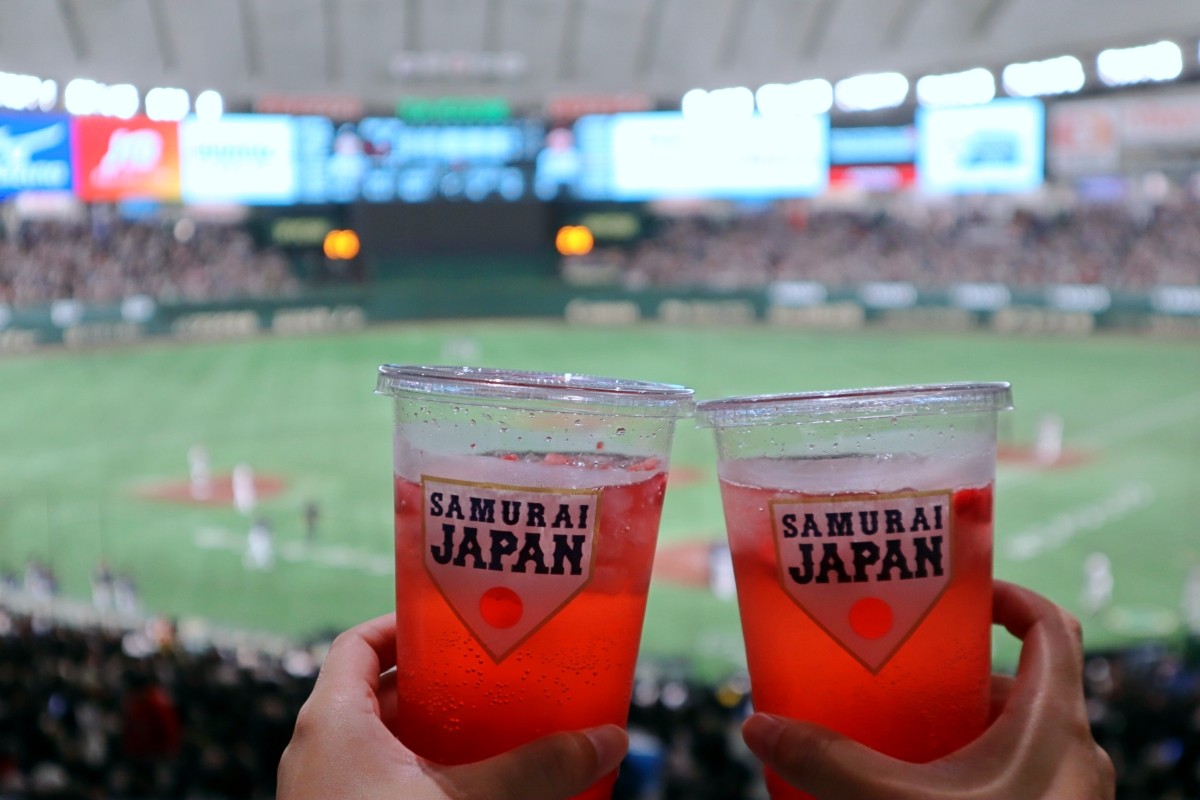
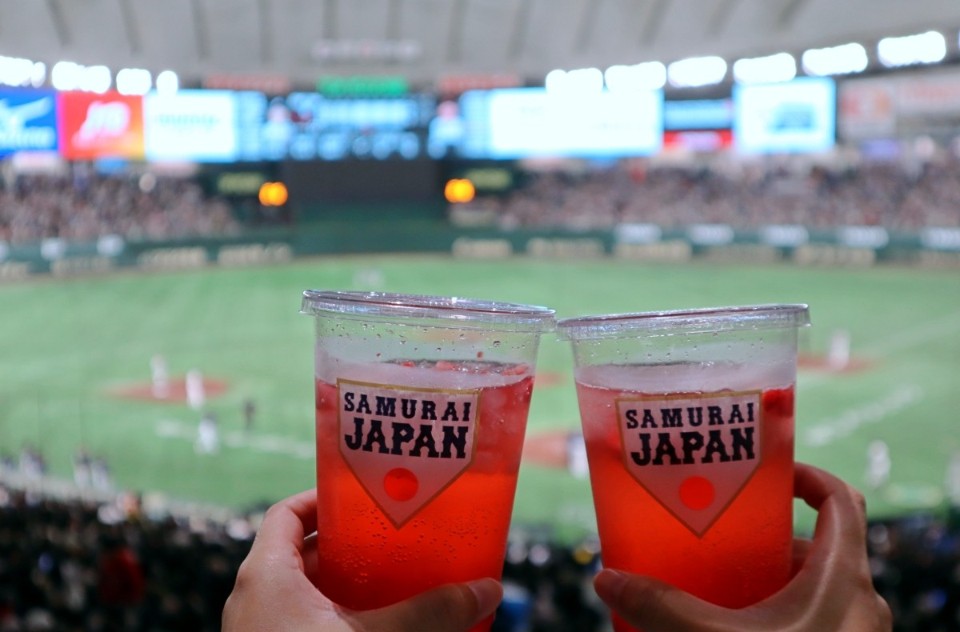
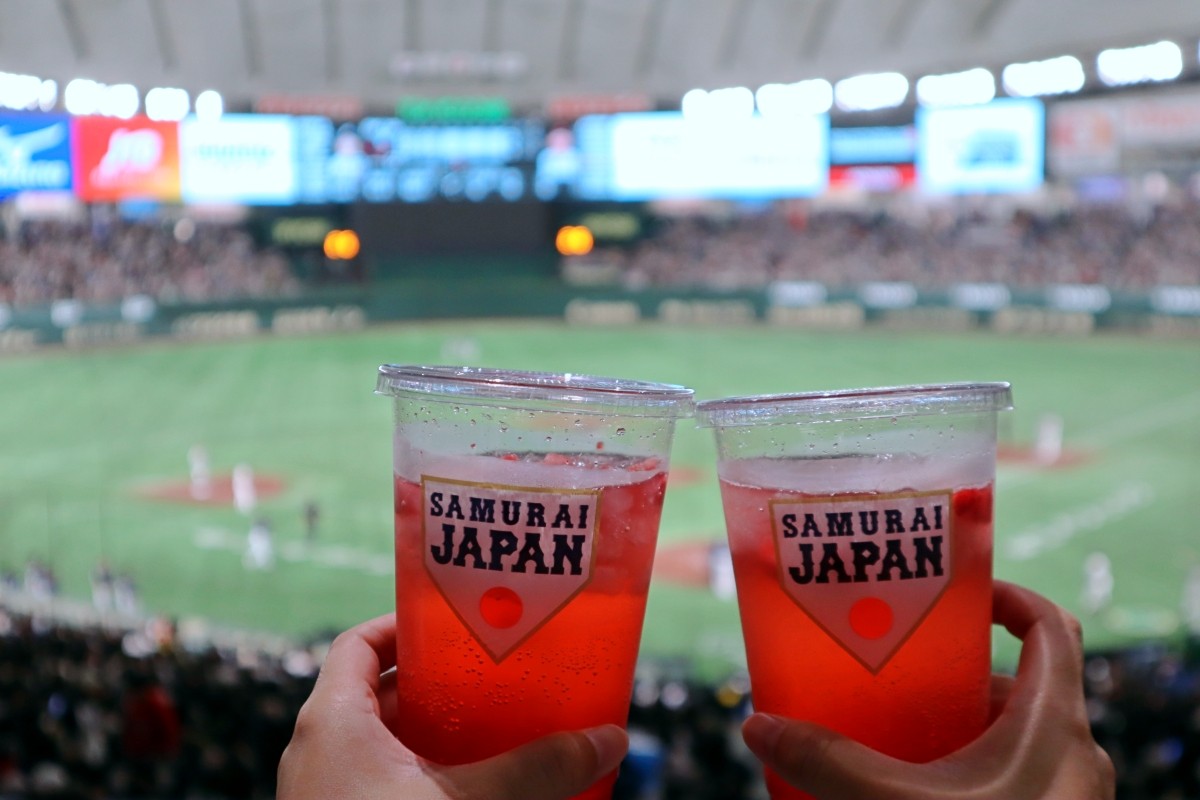
The "Victory! Samurai Japan Sour" (900 yen) is a strawberry sour with a beautiful red and white gradient, featuring the Samurai Japan logo. The chunky texture of the strawberries is simply irresistible!

Perfect for watching the game are the "Tokyo Dome Dog" (600 yen) and the "Cheese Dog" (680 yen), both of which can be enjoyed with one hand. Freshly made and piping hot, they are absolutely delicious.
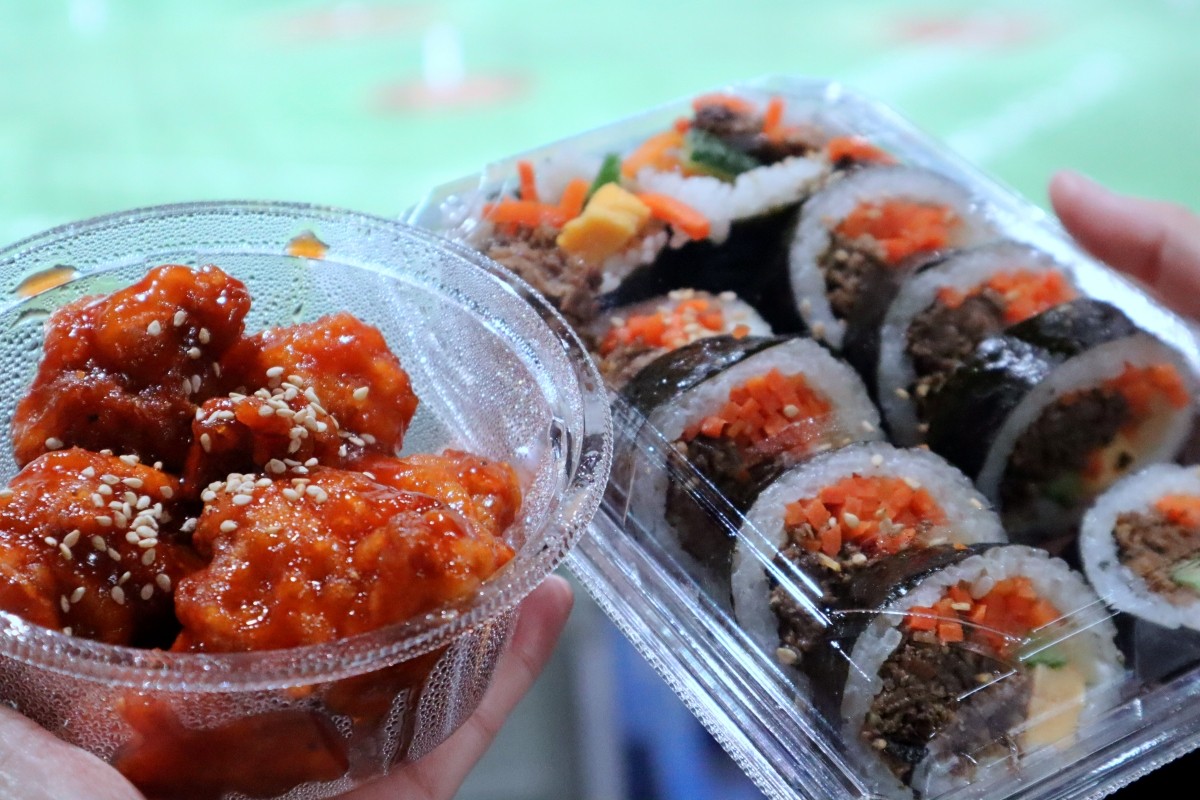
Since it was a game against Korea, authentic Korean cuisine was also available. I tried the "Yangnyeom Chicken and Bulgogi Kimbap Set" (1,280 yen) as well.
How to Watch a Samurai Japan Game in Japan: Useful Tips
How to Get Tickets and Important Points
For international tournaments featuring Samurai Japan, it is recommended to check the official Samurai Japan website or the official tournament website for ticket information before making a purchase. When games are held in Japan, ticket prices may differ between games featuring Japan and other games, so be sure to check carefully.
Tickets are generally sold in advance sales and general sales. Advance sales include Lawson Ticket lottery sales and overseas ticket lottery sales (please check the official website for sales start dates and details). General sales are mainly available online through the official website (in both Japanese and English), Lawson Ticket, Ticket Pia, and other ticket agencies.
For Samurai Japan ticket information 👉click here
If you are unable to attend due to unforeseen circumstances, it is also possible to resell your ticket.
For information about ticket resale 👉click here
If you want to watch Nippon Professional Baseball (NPB), you can purchase tickets from each team's official website, ticket agencies such as Lawson Ticket, or at the stadium box office. Popular games may sell out quickly, so if you have a specific date in mind, it is best to buy your tickets online as early as possible.
Each stadium offers unique seating options such as private box seats, balcony seats, and high counter seats. Photos of these seats are available on each team's official website, so take your time to compare and choose the best option for you.
Now, Dive into the Excitement of "Samurai Japan"!
The proud baseball warriors of Samurai Japan are the pride of the nation. International baseball tournaments to determine the world’s best are true battles between countries. They are also opportunities for cultural exchange through baseball. Even if you are new to the sport and not familiar with the rules, the excitement and unity you feel in the stadium are well worth experiencing at least once. Everyone present is sure to have a great time. The passionate plays of the athletes and the unity of the crowd create unforgettable moments. Let’s witness together the battle for the top!

Comments