
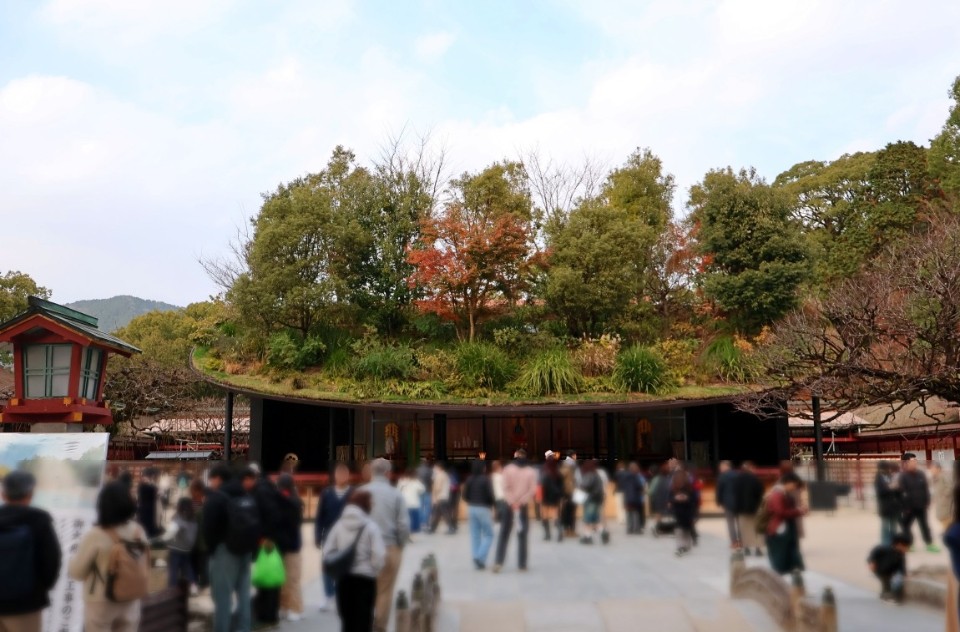
Fukuoka and Hakata are just a short trip away from the lush, sacred grounds of Dazaifu Tenmangu Shrine. This is not just a sightseeing spot, but a place of faith that continues to evolve, where the spirit of a great historical figure rests.
In 2027, the shrine will mark a historic milestone: the “Shikinen Taisai” festival, commemorating 1,125 years since the passing of the enshrined deity, Michizane Sugawara. There are many highlights to see, including the temporary main hall that can only be viewed now, and the latest art projects.
This time, our editor visited the site and interviewed Mr. Takayama, a Shinto priest at Dazaifu Tenmangu. Based on the stories we heard, this article will comprehensively explain everything travelers want to know, from the legends of the enshrined deity Michizane Sugawara, to the proper way to worship, access from Hakata Station and Tenjin, and recommended omamori (amulets).
*The enshrined deity refers to the god worshipped at that particular shrine.
*If you purchase or reserve products introduced in this article, a portion of the sales may be returned to FUN! JAPAN.
🚅 Reserve your Shinkansen tickets with NAVITIME Travel! 👉Click here
🛫 Book your flight tickets with NAVITIME Travel! 👉Click here
The History of Michizane Sugawara and the Sacred Secret of “25”
When talking about Dazaifu Tenmangu, you cannot leave out the story of the enshrined deity, Michizane Sugawara.
The Glory and Tragedy of a Genius
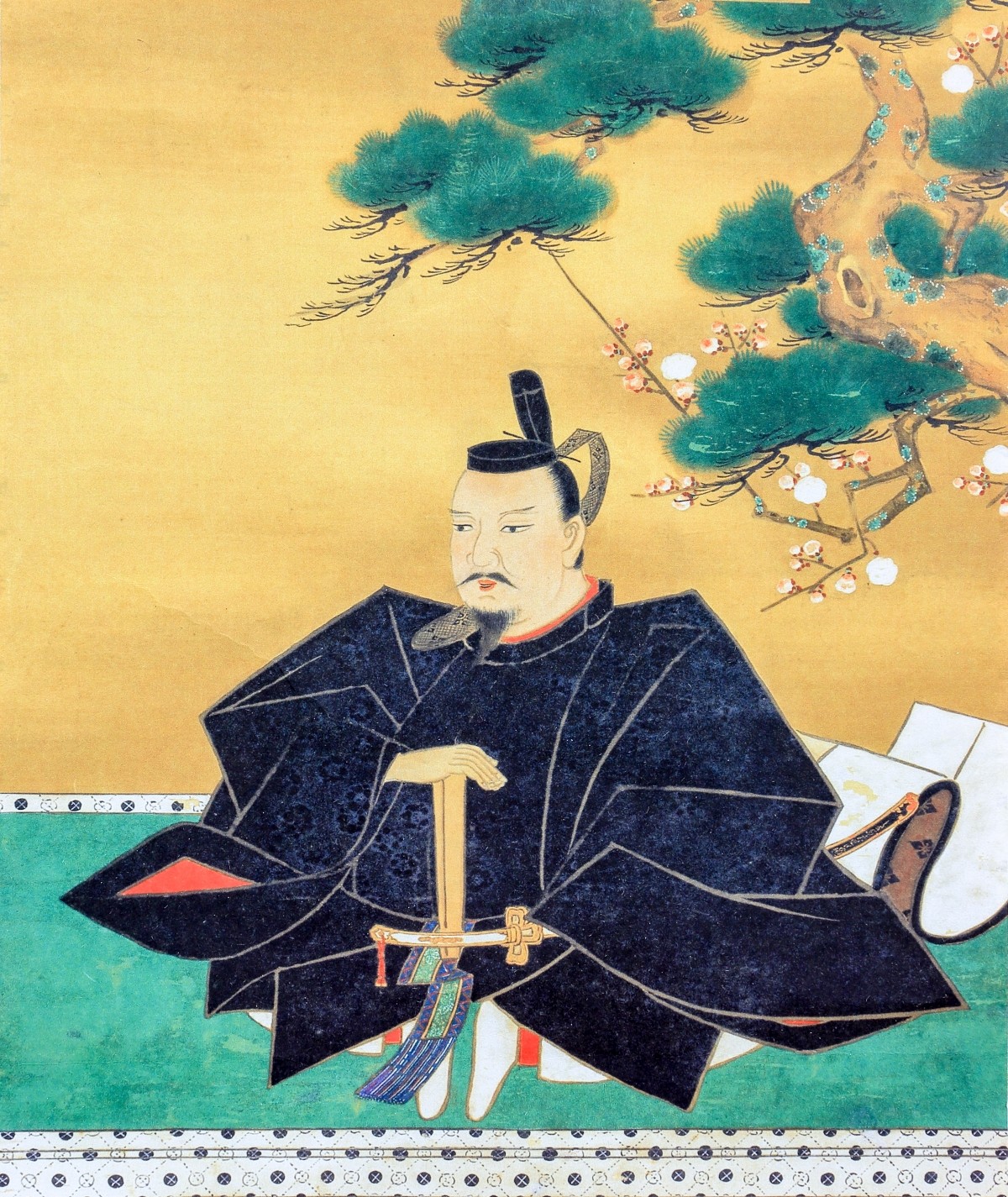
1. “Tenjin Divine Title: Portrait in Court Dress” (detail), calligraphy by Emperor Goyozei, painting by Kuroda Tsunanaga, owned by Dazaifu Tenmangu Shrine. Image provided by Dazaifu Tenmangu Shrine.
During the Heian period, Michizane Sugawara rose to the position of Minister of the Right thanks to his extraordinary talent, but he was falsely accused and exiled to distant Dazaifu. Even in his harsh circumstances, he never lost his sincerity and continued to care for his country, but he passed away just two years later. His innocence was later proven, and today he is worshipped worldwide as the god of learning, culture and the arts, sincerity, and protection from misfortune.
*In ancient times, it was written as “Dazaifu,” and from the medieval period onward as “Dazaifu.”
Why is “25” so important?
The number “25” is held in great importance at Dazaifu Tenmangu Shrine.
- Michizane Sugawara’s birthday: June 25
- Michizane Sugawara’s memorial day: February 25
Because of this connection, a special “Tsukinami-sai” festival is held on the 25th of every month, and a large-scale “Shikinen Taisai” is held every 25 years. The “1,125th Anniversary Shikinen Taisai” in 2027 is truly a once-in-a-lifetime special occasion.
Why is Michizane Sugawara called “Tenjin-sama”? The Origin and Legend
The Origin of Michizane Sugawara as “Tenjin-sama”
During his life, Michizane Sugawara was exiled to Dazaifu for a crime he did not commit, but even when he struggled to meet his basic needs, he prayed wholeheartedly for the peace of the nation.
After his death, his innocence was proven, and he came to be revered as “Tenman Daijizai Tenjin,” or “Tenjin-sama.” Dazaifu Tenmangu Shrine is now cherished by many as the sacred site of Tenjin worship.
The Legend of the Flying Plum Tree (Tobi-ume)
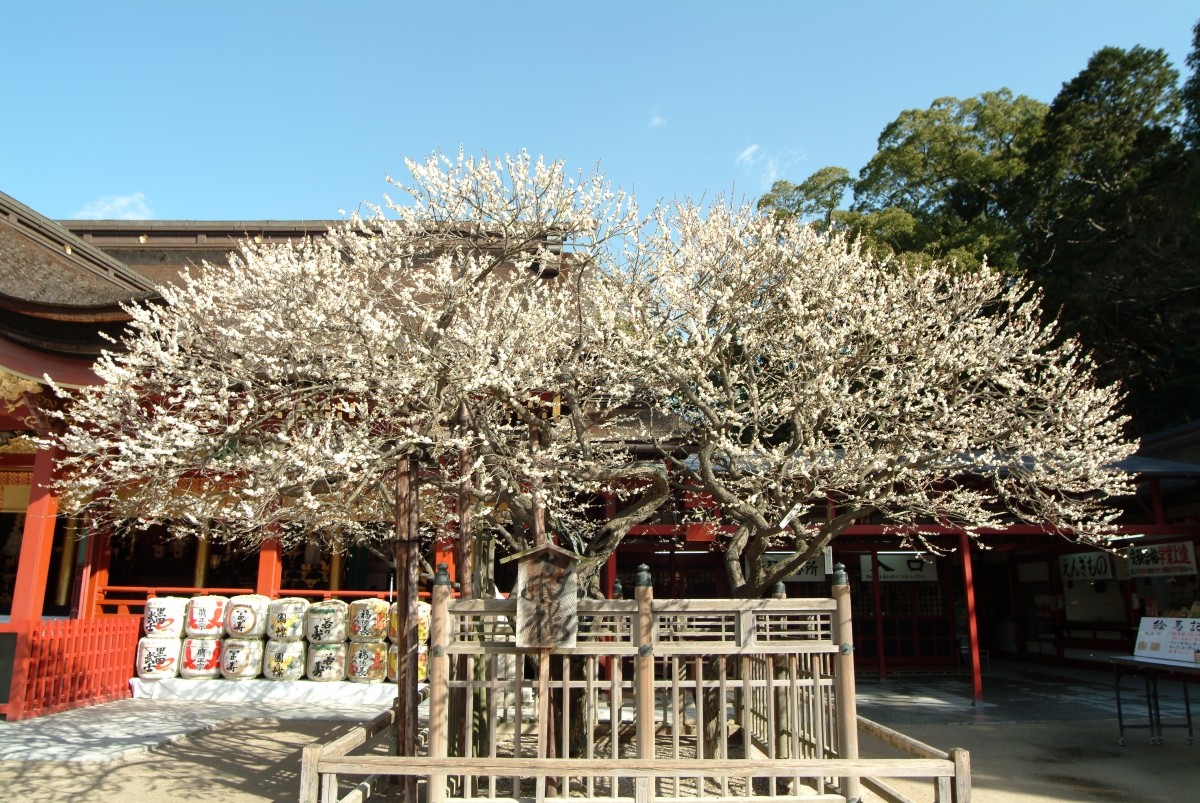
When Michizane was leaving Kyoto, he composed a poem expressing his sorrow at parting with the plum tree in his garden. It is said that the plum tree, longing for its master, flew through the sky in a single night all the way to Dazaifu. The plum tree blooming next to the main shrine is believed to be this very "Tobiume," and even today, it continues to blossom within the shrine grounds, enchanting visitors.
This Tobiume can still be seen even during the renovation of the main shrine.
At Dazaifu Tenmangu Shrine, the plum trees loved by Tenjin-sama are cherished, and plum motifs can be found throughout the shrine grounds, including on the shrine crest. One of the pleasures of visiting is searching for the various "plum" motifs scattered around the precincts.
The Origin of the Famous Local Sweet "Umegae-mochi"
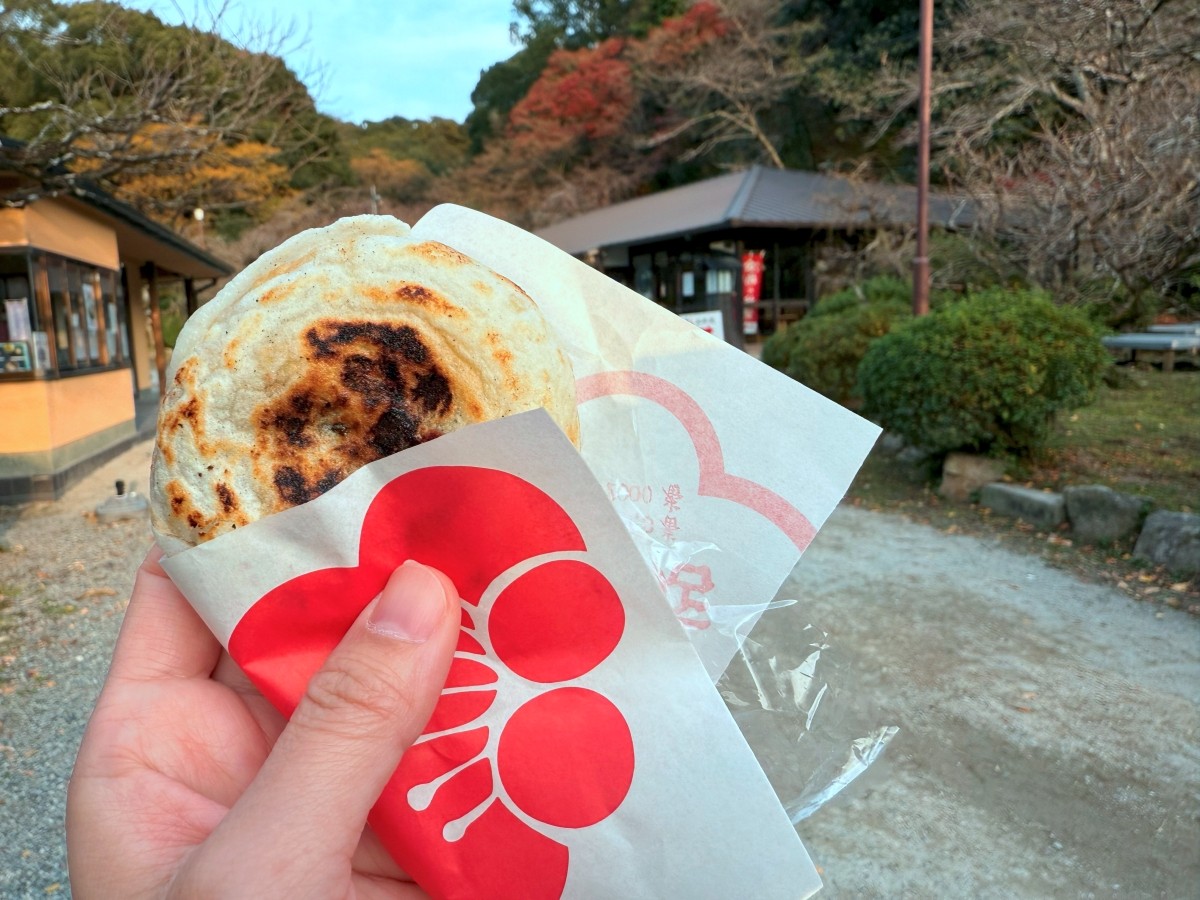
The famous treat along the approach to the shrine is "Umegae-mochi." Despite the name "ume" (plum), it actually contains no plum and does not taste like plum.
According to legend, when Michizane was demoted and treated almost like a criminal, suffering from hunger, an elderly woman in the neighborhood took pity on him and offered him rice cake (mochi) on a plum branch. This is said to be the origin of the sweet (though there are various theories). Umegae-mochi is sold at many shops along the approach and within the shrine grounds, and each shop has its own unique flavor, so tasting and comparing them is part of the fun. Many shops close or sell out by around 4:00 p.m., so it is recommended to visit earlier in the day.
On the 25th of every month, which is known as "Tenjin-sama Day," a special yomogi (mugwort) Umegae-mochi is sold.
Mr. Takayama, a Shinto priest whom we interviewed, also said about Umegae-mochi, "It's so delicious that I never get tired of eating it every day!" I myself tried freshly made Umegae-mochi for the first time at the shrine, and was amazed by how delicious it was. The Umegae-mochi from 'Kasanoya' is especially famous, and is also sold at Hakata Station and Fukuoka Airport, but the taste I experienced at Dazaifu was unforgettable. I even bought another one at Hakata Station on my way home because I couldn't get enough.
Proper Way to Worship and Blessings
Now, let us introduce the main points of the proper way to worship. The official route is to walk from Nishitetsu Dazaifu Station along the approach to the shrine grounds.
1. Prepare Your Mind at the Taiko Bridge
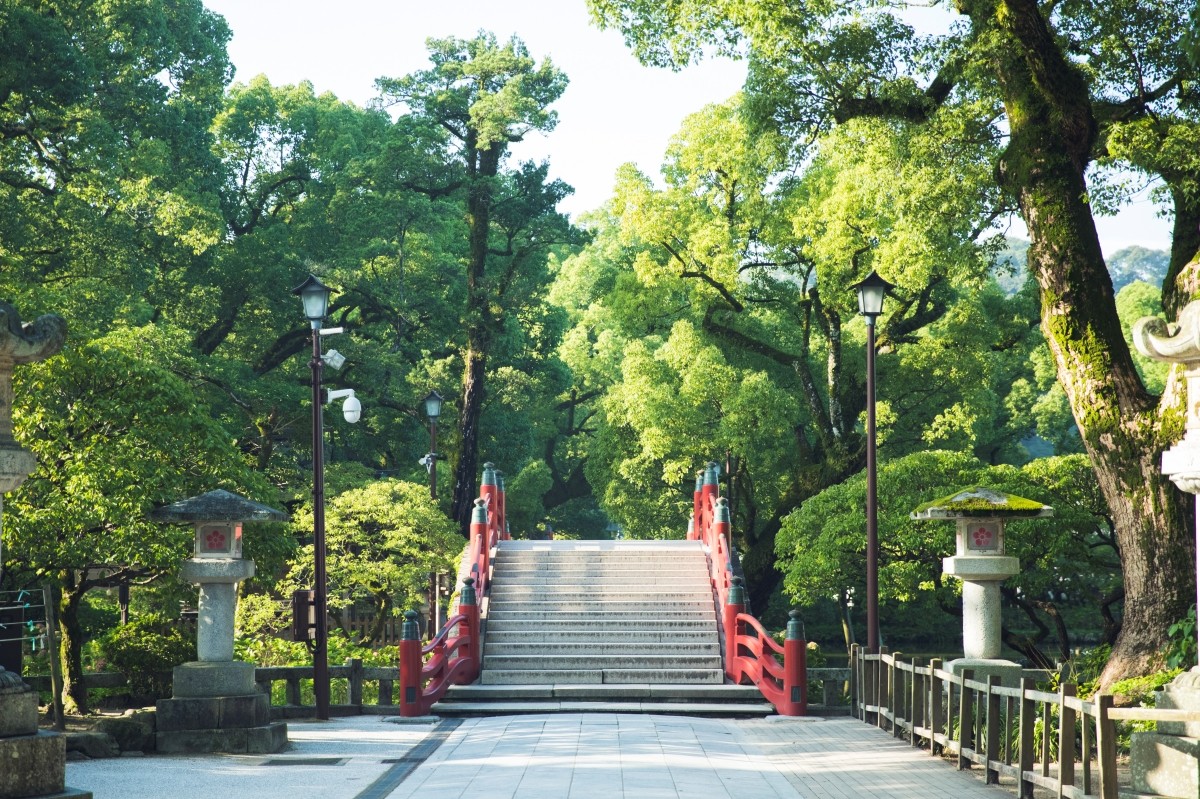
The three bridges over the Shinji Pond are said to represent "the past, present, and future." By crossing the bridges, you purify your mind and body before entering the sacred area.
2. Temizuya (Purification Fountain)
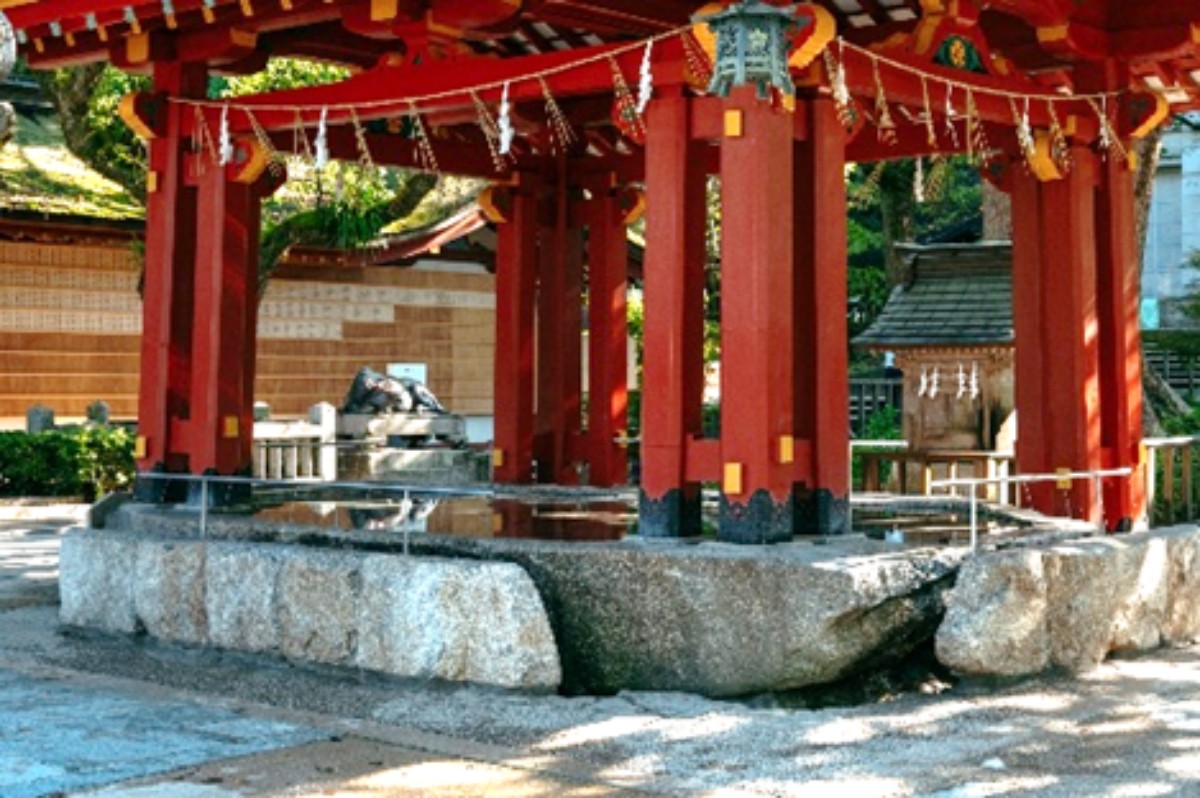
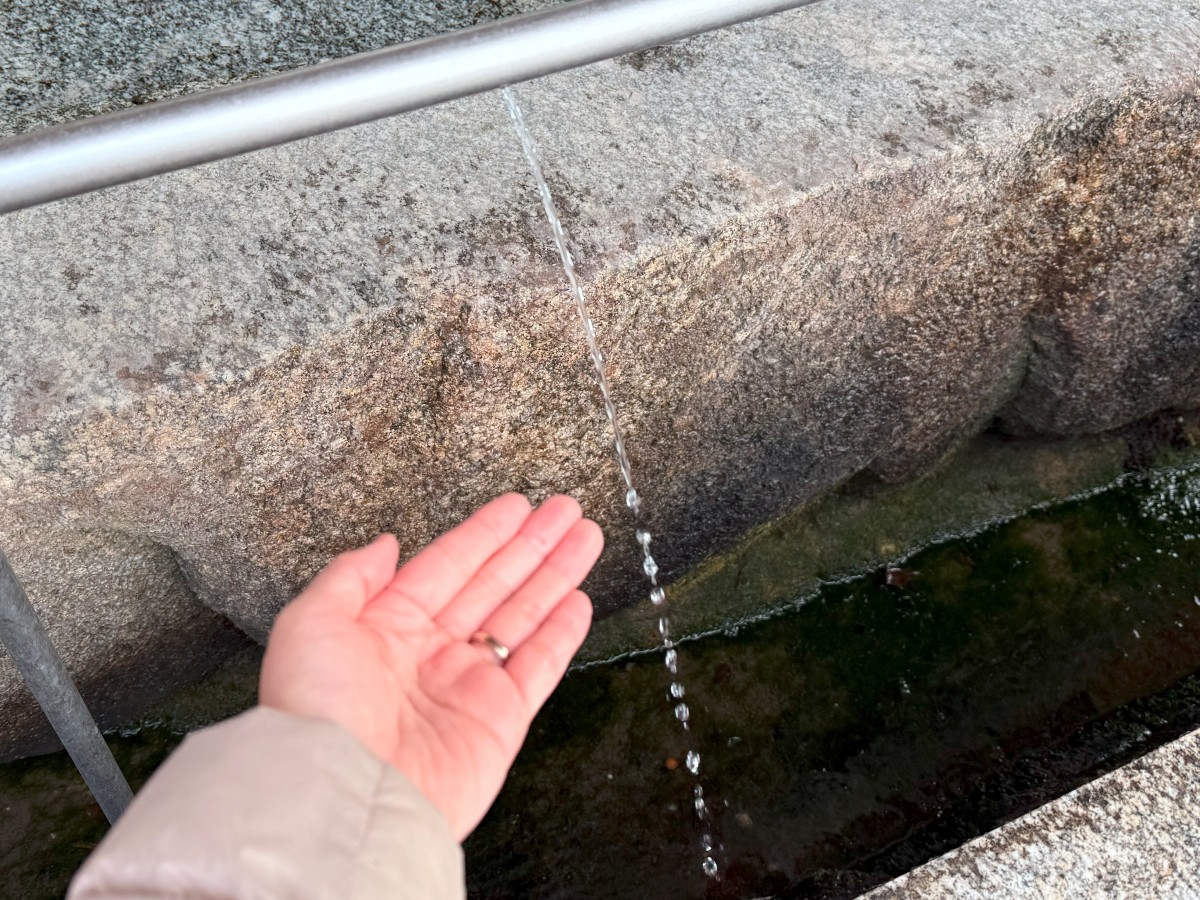
Before passing through the Romon gate, cleanse your hands and mouth so you can approach the gate with a pure heart.
*Romon (楼門) refers to a two-story gate found at shrines and temples.
3. Main Shrine (Currently Under Renovation)
There are many highlights within the shrine grounds, but upon arrival, the first thing to do is visit the main shrine. As of January 2026, the main shrine at Dazaifu Tenmangu is under renovation, so for a limited time, worship is conducted at a special temporary hall set up in front of the main shrine. After visiting the main shrine, there is no particular order to follow, so feel free to stroll around the grounds, look for amulets or collect goshuin (shrine stamps).
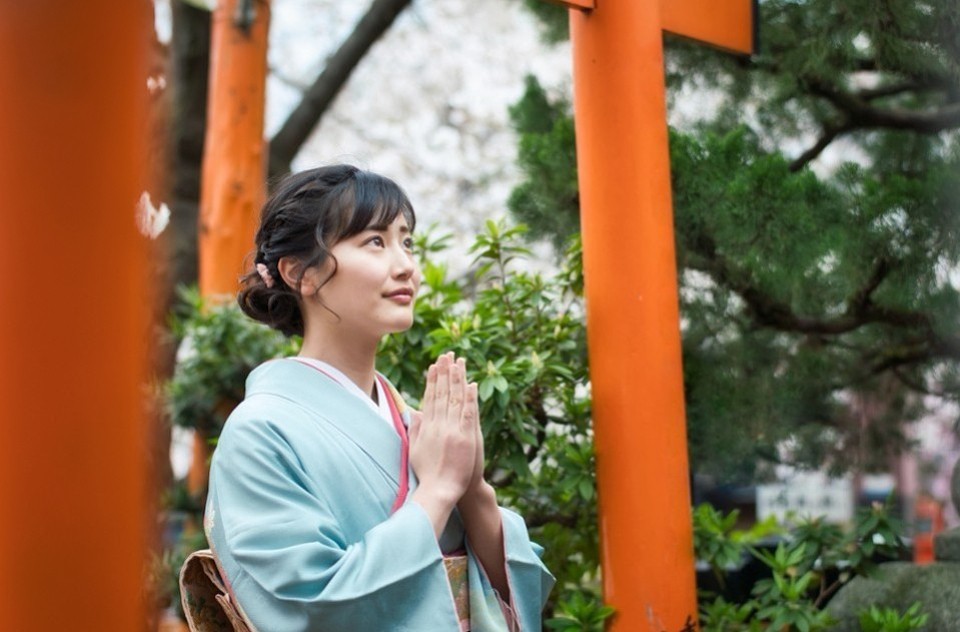
4. Two Bows, Two Claps, One Bow
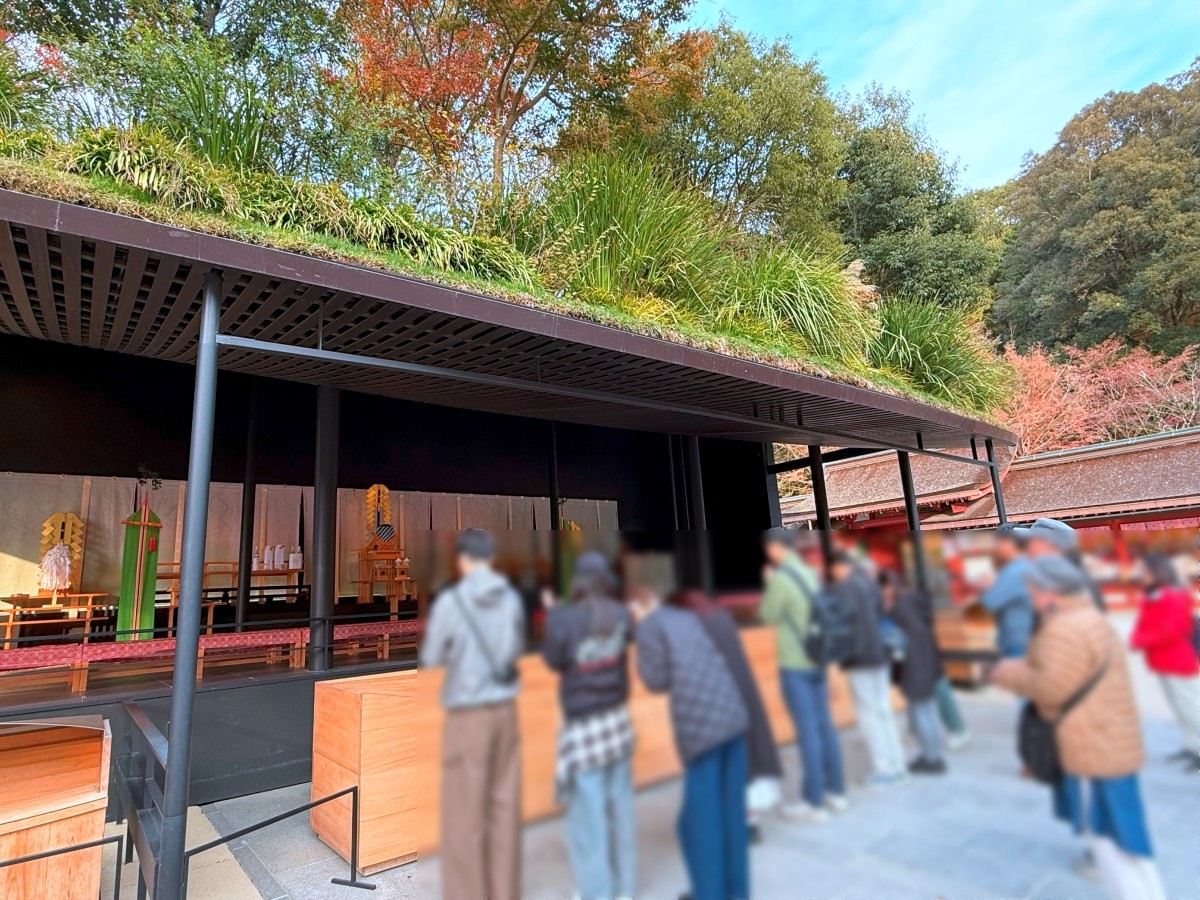
Etiquette when offering prayers: Bow deeply twice, clap your hands twice, and finally bow deeply once more.
5. How to Understand the Blessings
Because Sugawara no Michizane is revered as the god of learning, many people visit Dazaifu Tenmangu to pray for academic success. However, the true blessing of Tenjin-sama is not only passing exams but also protecting those who, like Michizane, make sincere and honest efforts.
6. Shopping and Street Food After Your Visit
There are many attractive souvenir shops and restaurants along the approach and in the surrounding area, but it is best to save the enjoyment of shopping for after you have paid your respects to the deity.
7 Must-See Spots in the Shrine Grounds Recommended by the Editor and Shrine Priest
The shrine grounds are full of highlights. We asked Mr. Takayama, a Shinto priest, about the most popular and recommended spots for international visitors.
1. Temporary Main Hall [Limited Time Until Early May 2026]
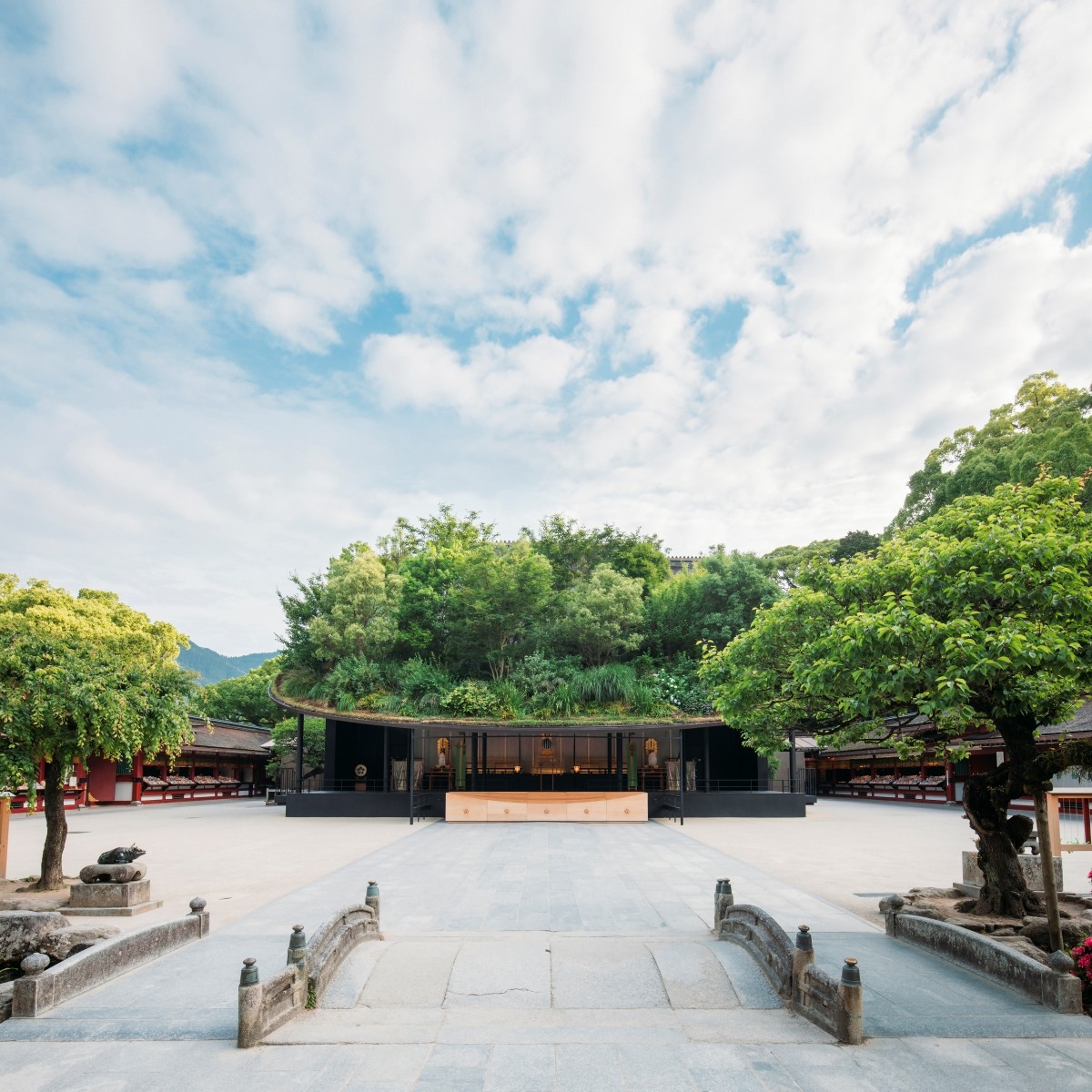
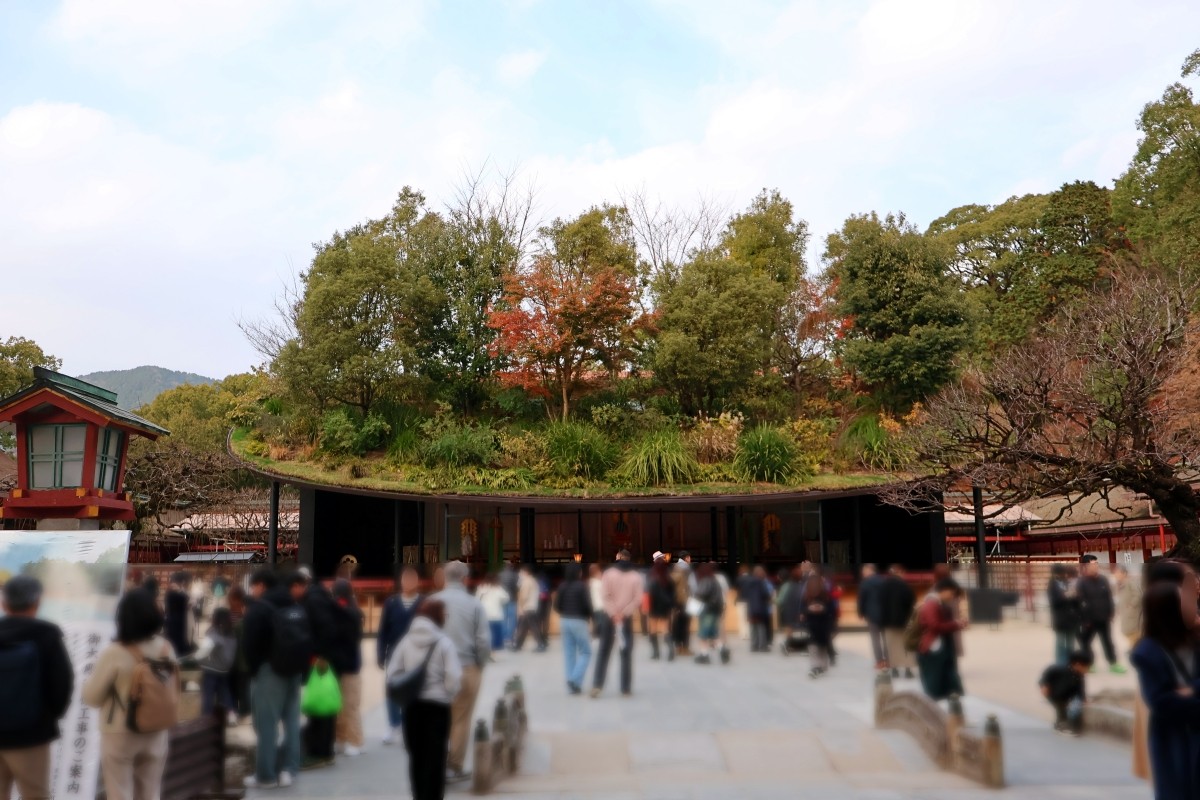
The top recommendation right now is the Temporary Main Hall. Designed by Japanese architect Sousuke Fujimoto, this unique structure features real trees planted on its roof, creating a miraculous landscape that can only be seen now. The interior is decorated with designs for the ceremonial curtains and screens by the world-renowned fashion brand Mame Kurogouchi, and the acoustics are supervised by NF Inc., led by Ichiro Yamaguchi of the Japanese rock band Sakanaction. In this way, contemporary creators have gathered under Tenjin-sama, who is also revered as a deity of culture and the arts.
The Temporary Main Hall will be in place until early May 2026, after which it will be dismantled. However, the forest on the roof will be transplanted to the shrine grounds, connecting to the future. From around mid-May, visitors will be able to worship at the newly restored Main Hall.
2. Tenkai Inari Shrine
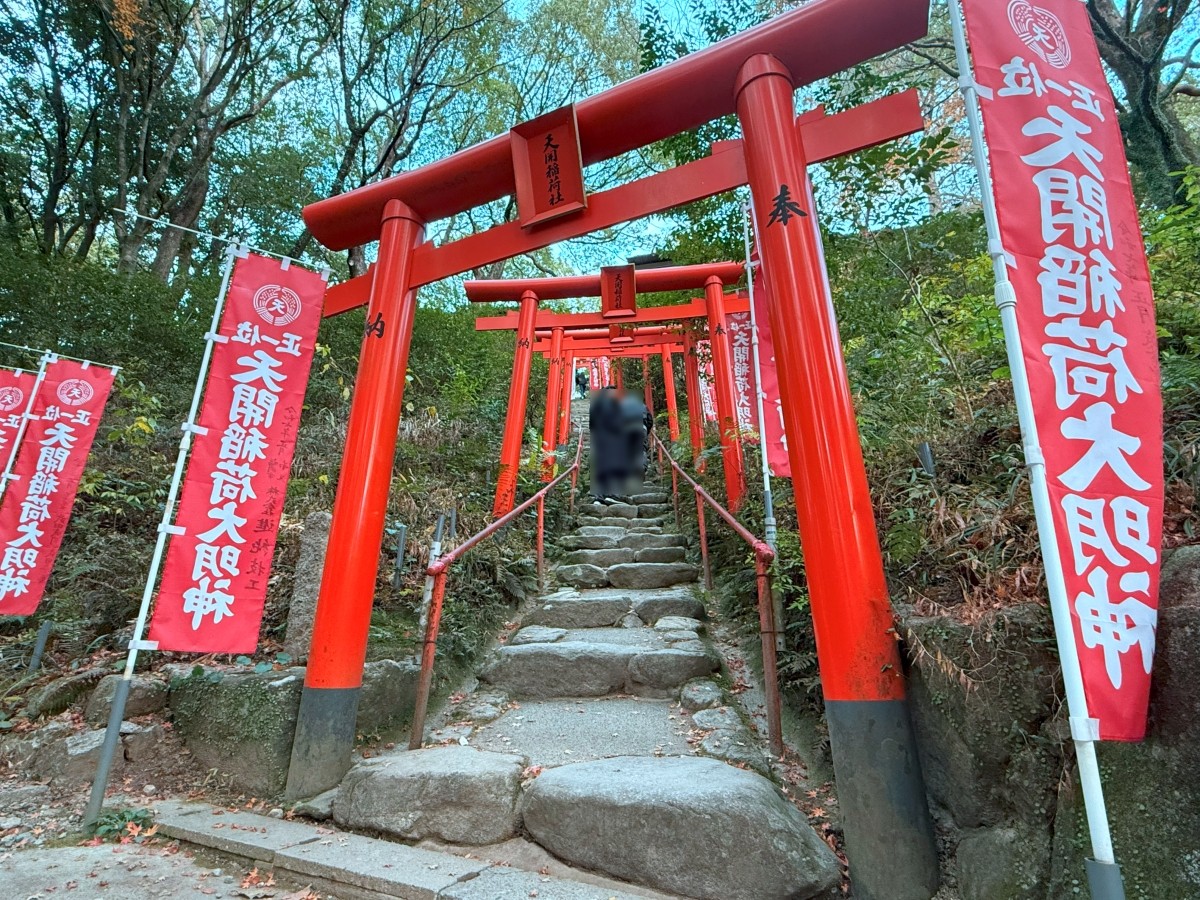
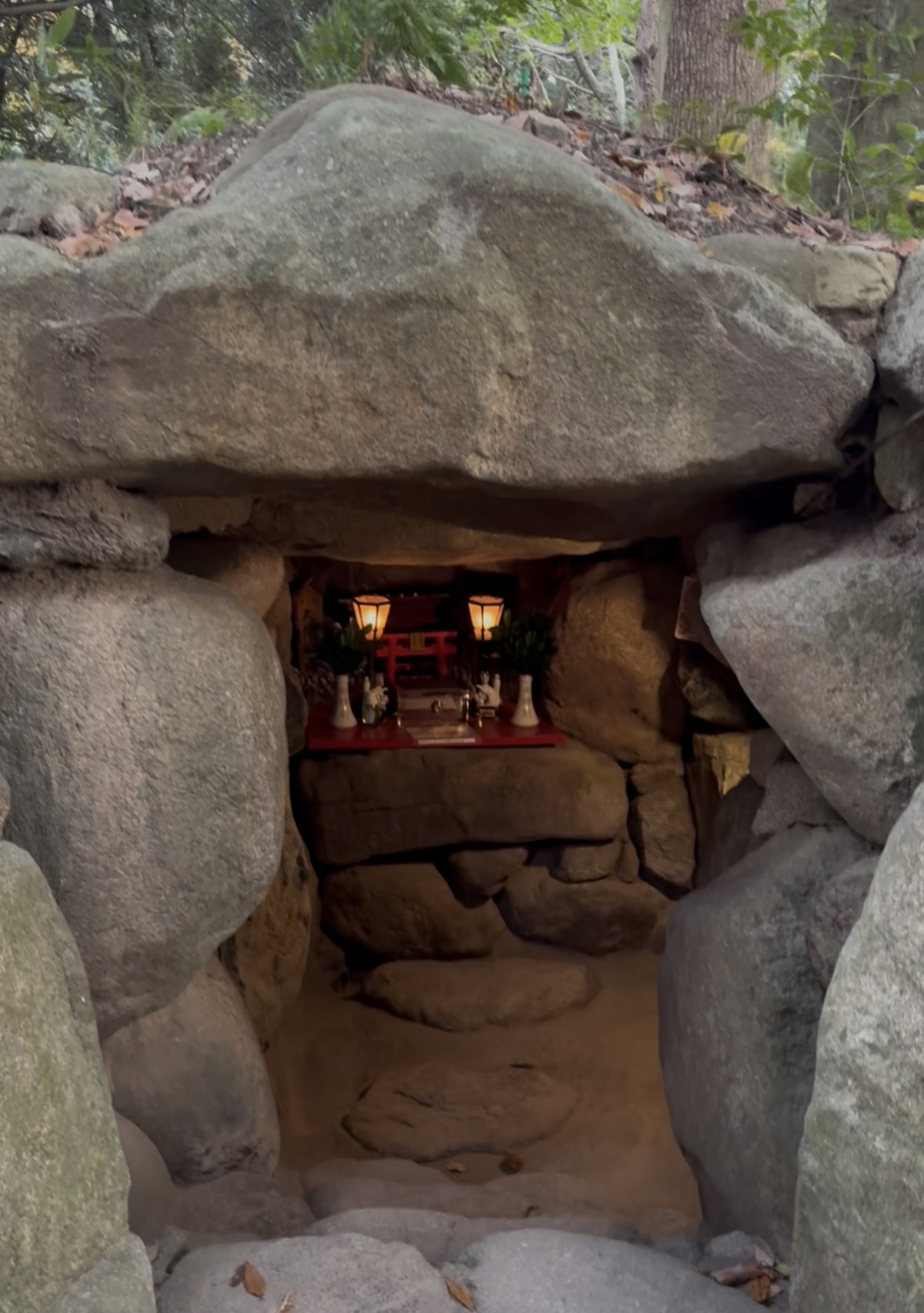
Located about a 10-minute walk from the Main Hall, Tenkai Inari Shrine is known as the oldest Inari shrine in Kyushu. The rows of red torii gates along the stairs and approach are especially popular with international visitors.
If you continue up the stairs behind the Main Hall, you will find the inner sanctuary surrounded by stones, enveloped in a quiet and mystical atmosphere.
From here, it is said that you can also reach Kamado Shrine with about a 40-minute walk.
3. The 11 Sacred Ox Statues
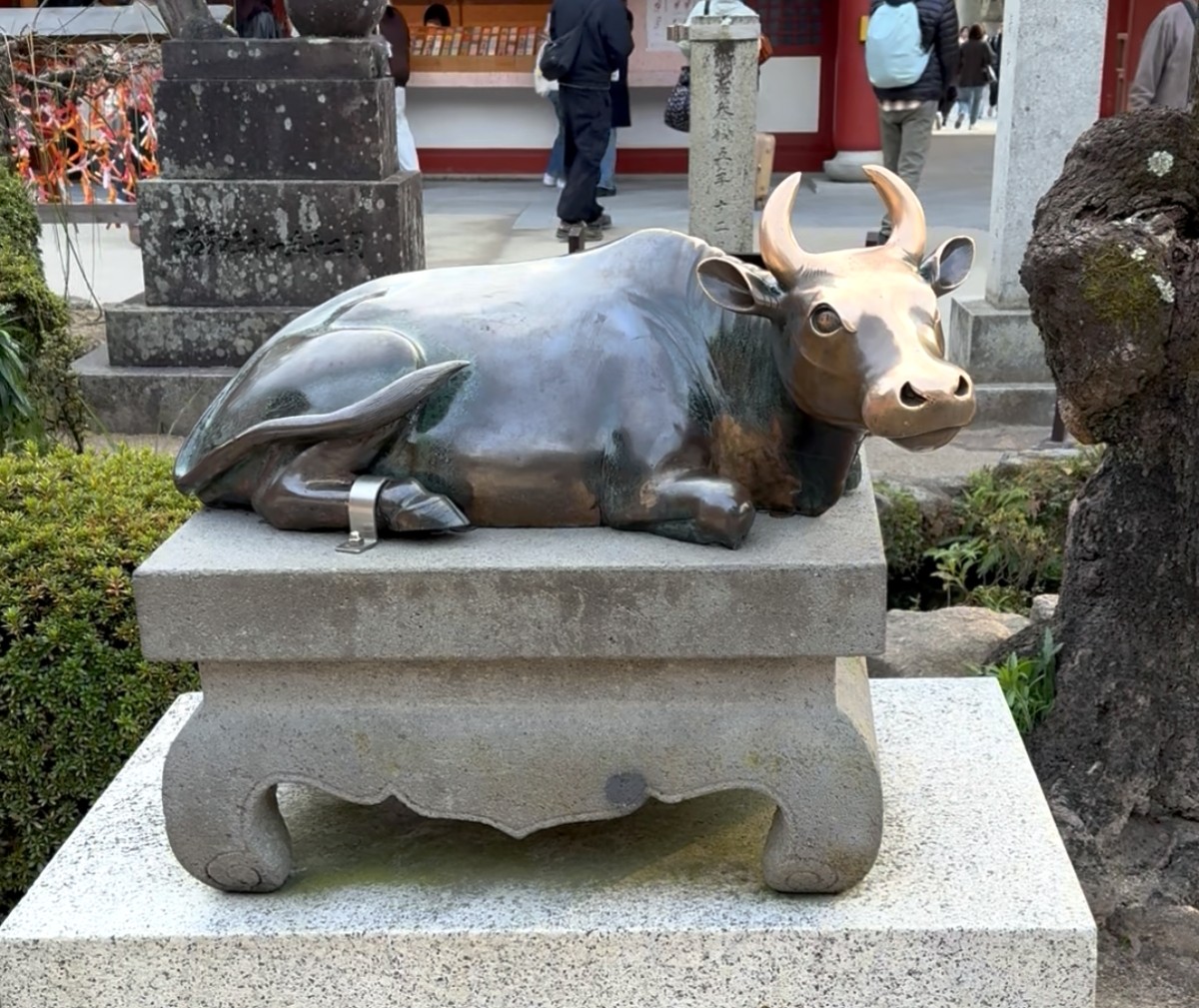
There are 11 sacred ox statues enshrined within the grounds. There are two main reasons why oxen are featured.
Sugawara no Michizane was born in the year of the ox (845, the year of Kinoto-ushi). The first reason is to commemorate his birth year.
The second reason comes from a legend: when Michizane passed away in Dazaifu, the ox pulling his remains lay down at a certain spot and would not move. It is said that his grave was built there, which led to the construction of the Main Hall.
All 11 sacred ox statues are depicted lying down, which is said to be based on this legend.
It is believed that if you touch the head of these ox statues, you will be granted wisdom, so they are also called "Nade-ushi" (stroking ox) by visitors.
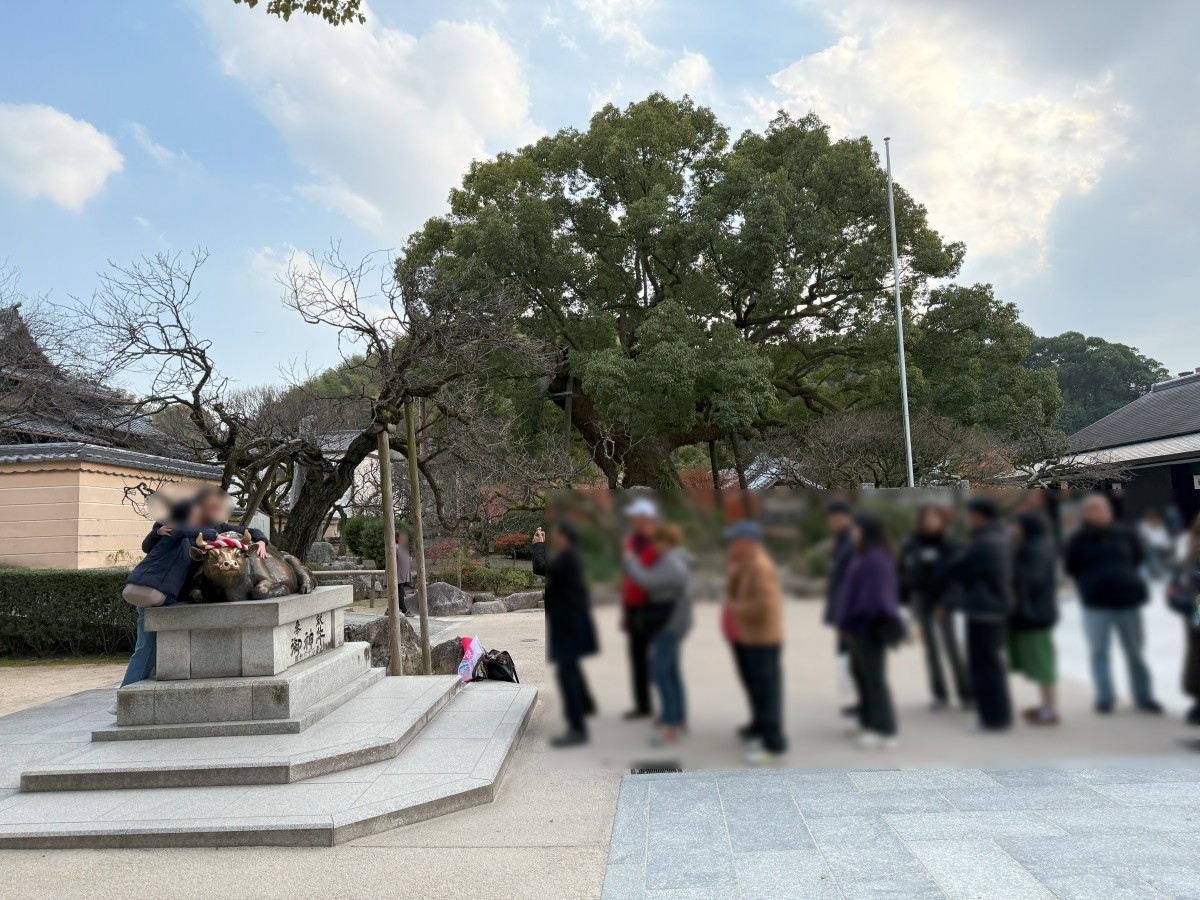
The statue located just inside the shrine grounds is famous and often attracts a line of people waiting to take photos. However, there are actually ten other statues in total, so why not try searching for them as well?
4. Shiga Shrine (Shiga-sha)【Important Cultural Property】
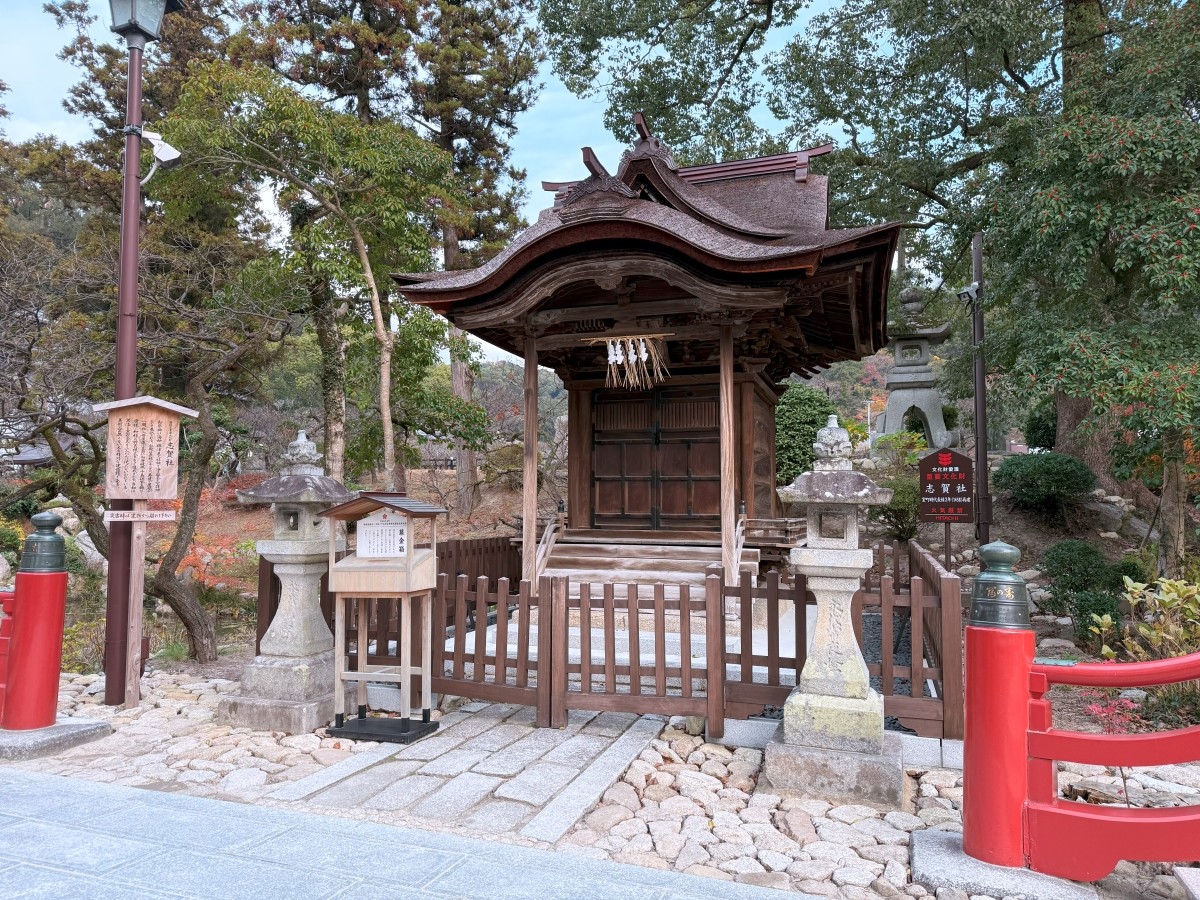
This small shrine building is located beside the arched bridge as you cross the Shinji Pond. The shrine, said to have been built in the second year of Choroku during the Muromachi period (1458), is the oldest shrine architecture within the grounds and is designated as an Important Cultural Property by the Japanese government.
It enshrines the three Watatsumi deities, gods of the sea, and has long been believed to bring blessings for trade and safe voyages.
5. Confectionery Ancestral Shrine Nakashima Shrine (Kaso Nakashima Jinja)
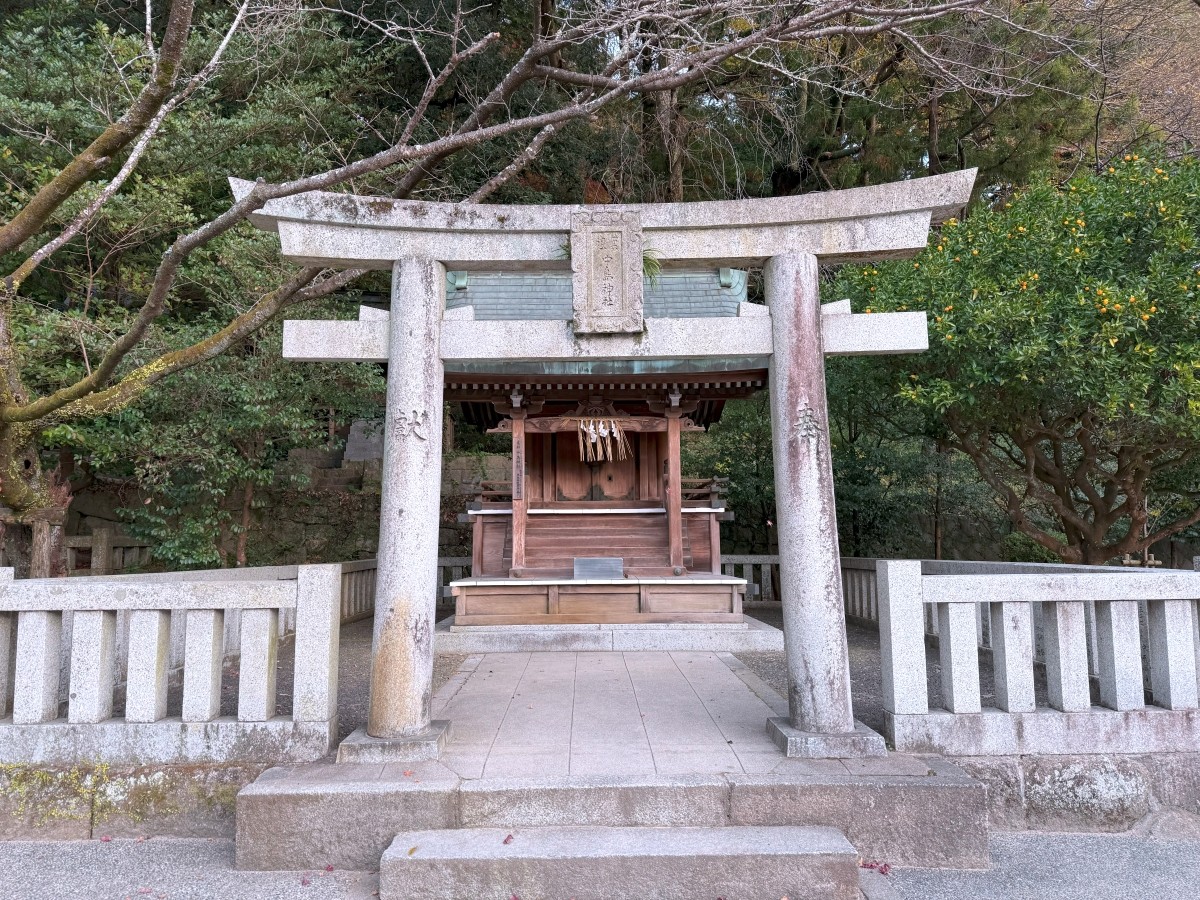
One unique shrine that comes highly recommended is the "Confectionery Ancestral Shrine Nakashima Shrine." It enshrines Tajimamori-no-Mikoto, the deity of sweets and confectionery.
At the shrine office within the grounds, you can find omamori (amulets) from Nakashima Shrine, featuring adorable designs with illustrations of sweets that are very popular. These amulets are said to carry the wish that you will encounter delicious sweets.
6. Great Camphor Tree and Married Camphor Trees (O-kusu & Meoto-gusu)
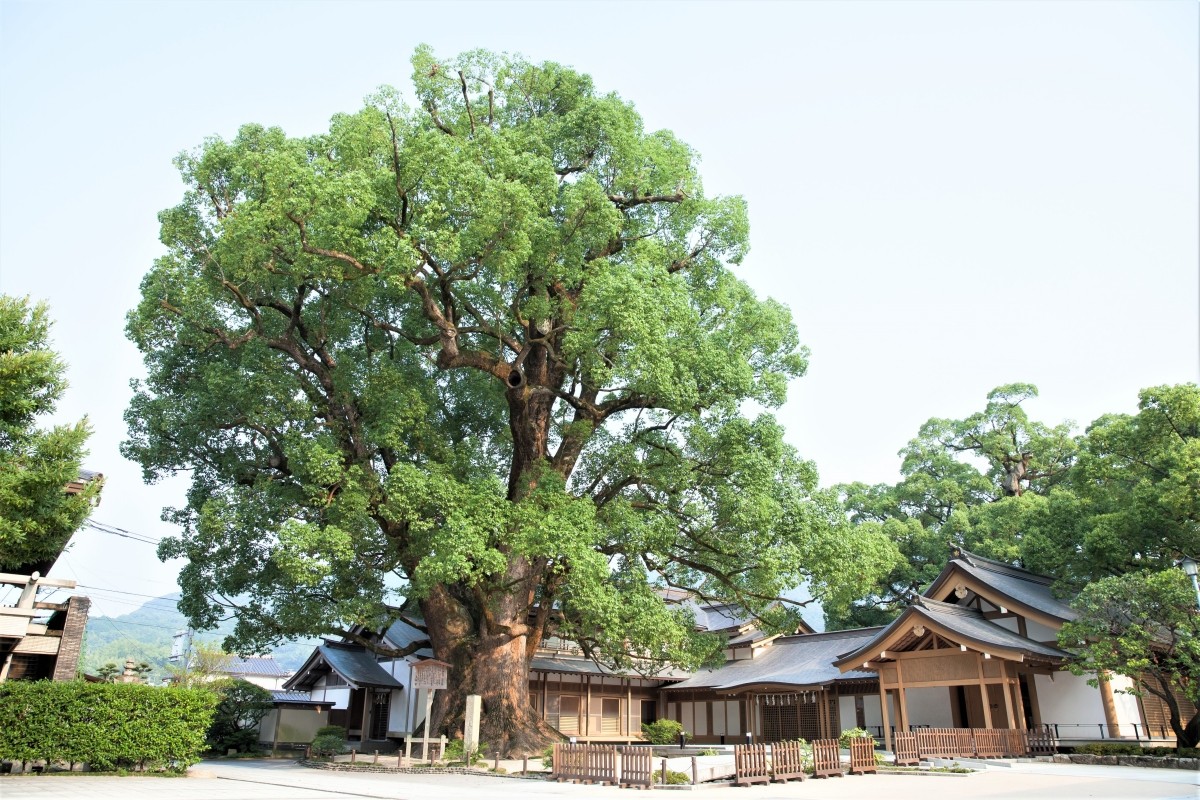
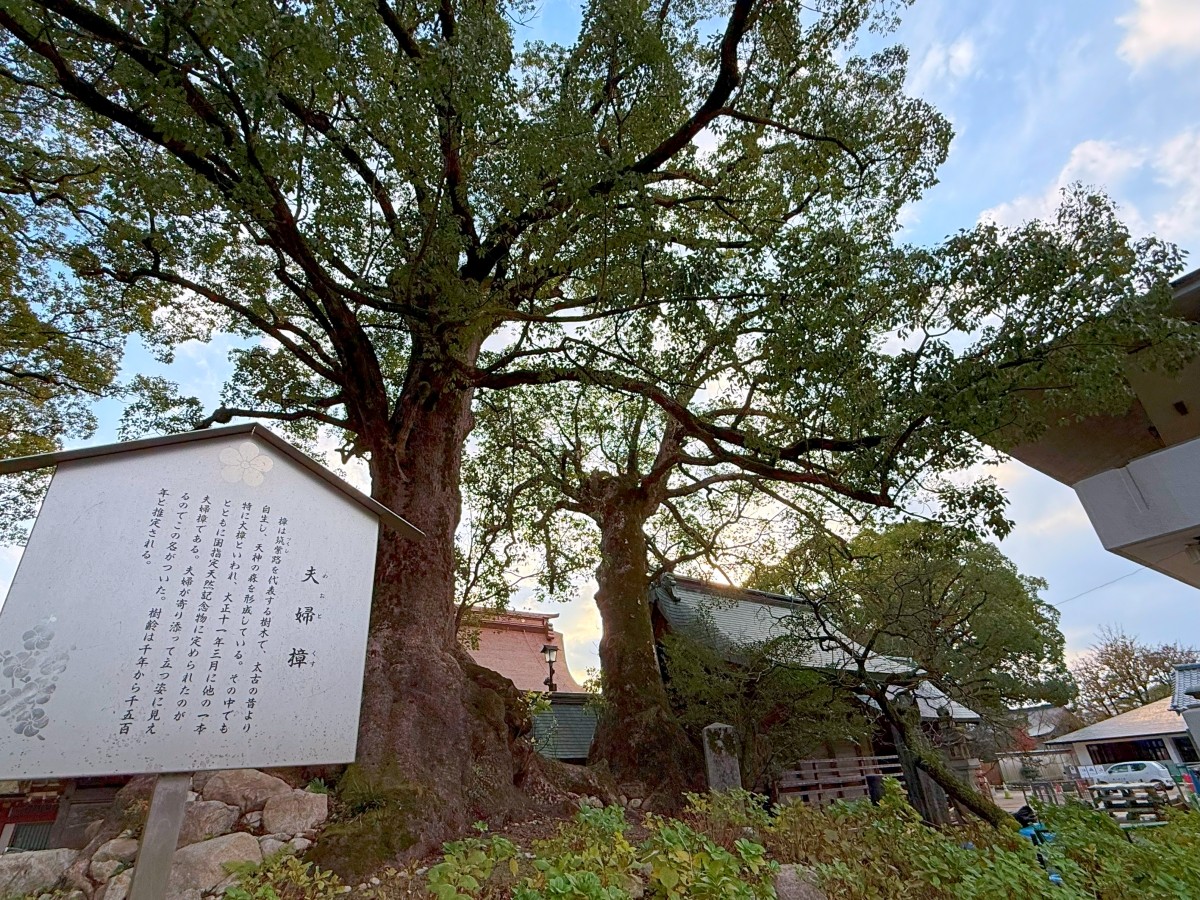
There are several giant trees on the shrine grounds that are over 1,000 years old.
Standing in front of Seishinkan is the Great Camphor Tree, which is 28.5 meters tall and has a trunk circumference of 11.7 meters. It is over 1,500 years old and has stood in this spot since the time of Michizane himself.
The two giant trees behind the main hall are called the Married Camphor Trees and are designated as a National Natural Monument. The fresh green leaves in April and May are especially vibrant and beautiful, radiating with life.
7. Treasure Hall and Sugawara Historical Museum (Homotsuden & Kanko Rekishikan)
If you have extra time, it is also recommended to visit the "Treasure Hall" and the "Sugawara Historical Museum."
The Treasure Hall houses and displays about 10,000 cultural properties related to Dazaifu Tenmangu and Michizane. In recent years, it has also hosted exhibitions of contemporary art, including the "Dazaifu Tenmangu Art Program." You can also purchase limited edition items and books at the museum shop.
At the Sugawara Historical Museum, you can learn about the life of Michizane through a story told with unique Hakata dolls dressed in costumes. Multilingual materials explaining the story are available at the reception, so please make use of them if needed.
Popular Omamori and Shrine Items, and Multilingual Support
Here are some of the most popular shrine items at Dazaifu Tenmangu. The shrine is also notable for its extensive support for visitors from overseas.
Multilingual Support

Multilingual pamphlets and the official website are available in six languages: English, Chinese (Simplified and Traditional), Korean, Thai, and French.
Additionally, at the reception desk of the amulet office, there is an "Omamori List" in English, Chinese (Simplified and Traditional), and Korean, allowing visitors to purchase amulets by simply pointing, even if they do not speak the language. Omikuji (fortune slips) are available in English and Simplified Chinese versions.
Yume-mamori "Kanaito" 1,500 yen
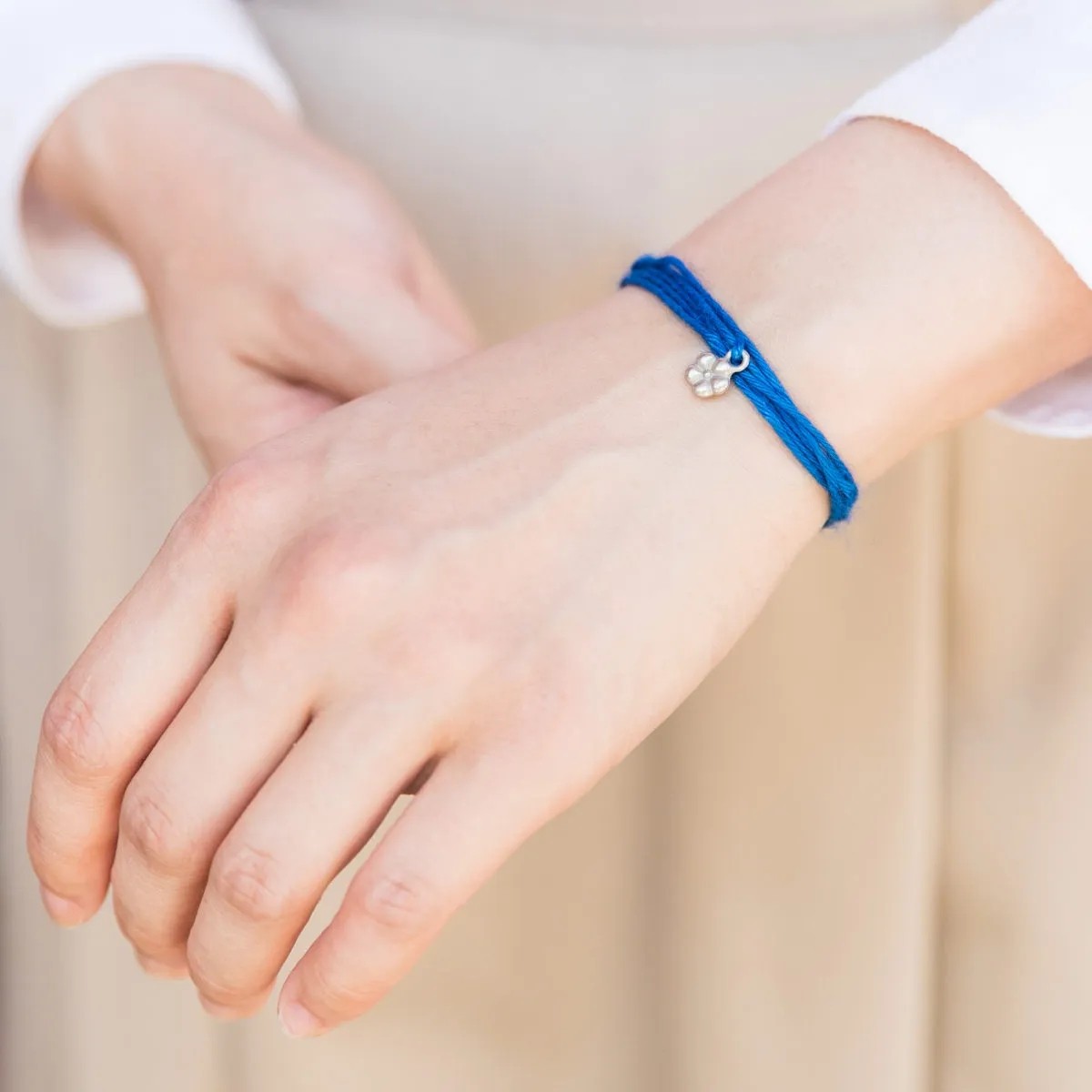
This is a wearable amulet for wishing the realization of dreams. It is recommended not only for your own dreams but also for wishing the fulfillment of dreams for someone important to you. A small plum blossom decorates the blue string, which symbolizes dreams and intelligence.
Shigoto-mamori 1,000 yen
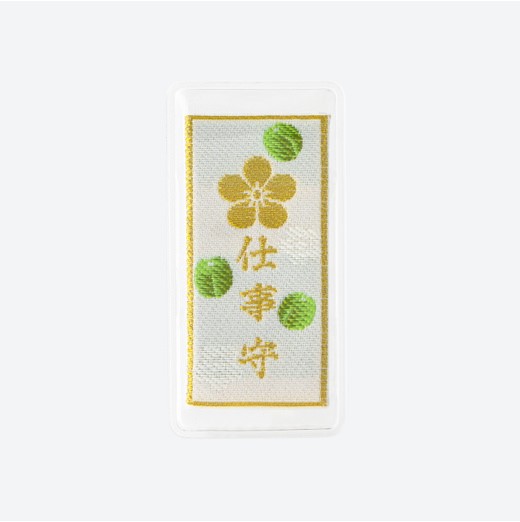
Dazaifu Tenmangu is most famous for its academic amulets, but these amulets for success at work and passing certification exams are also recommended. They are thin and do not have a string, making them easy to carry in a pass case or wallet.
Kashi-mamori 1,500 yen
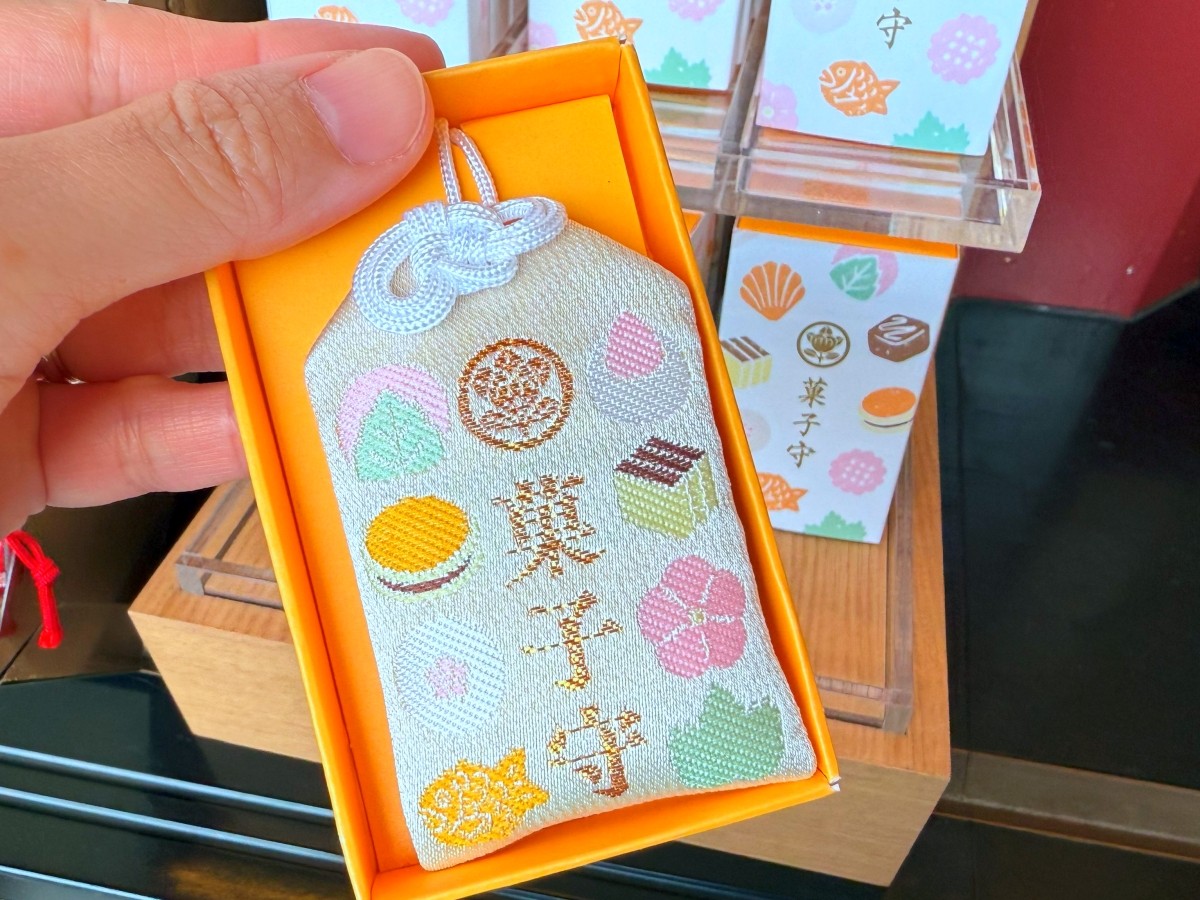
This is a unique amulet inspired by Nakashima Shrine, the deity of sweets located within the shrine grounds, which was also introduced in the highlights section. The pop design and colors are cute and are sure to attract attention if you attach it to your bag.
Tradition and Innovation: The Ever-Evolving Face of Dazaifu
Mr. Takayama, a Shinto priest, shared that Dazaifu Tenmangu values the idea of "considering how Tenjin-sama, who foresaw the future, would feel if he were living in this era" and "continuing to change in order to preserve tradition." Knowing about these initiatives that embody this concept will make your visit even more enjoyable.
Art Program
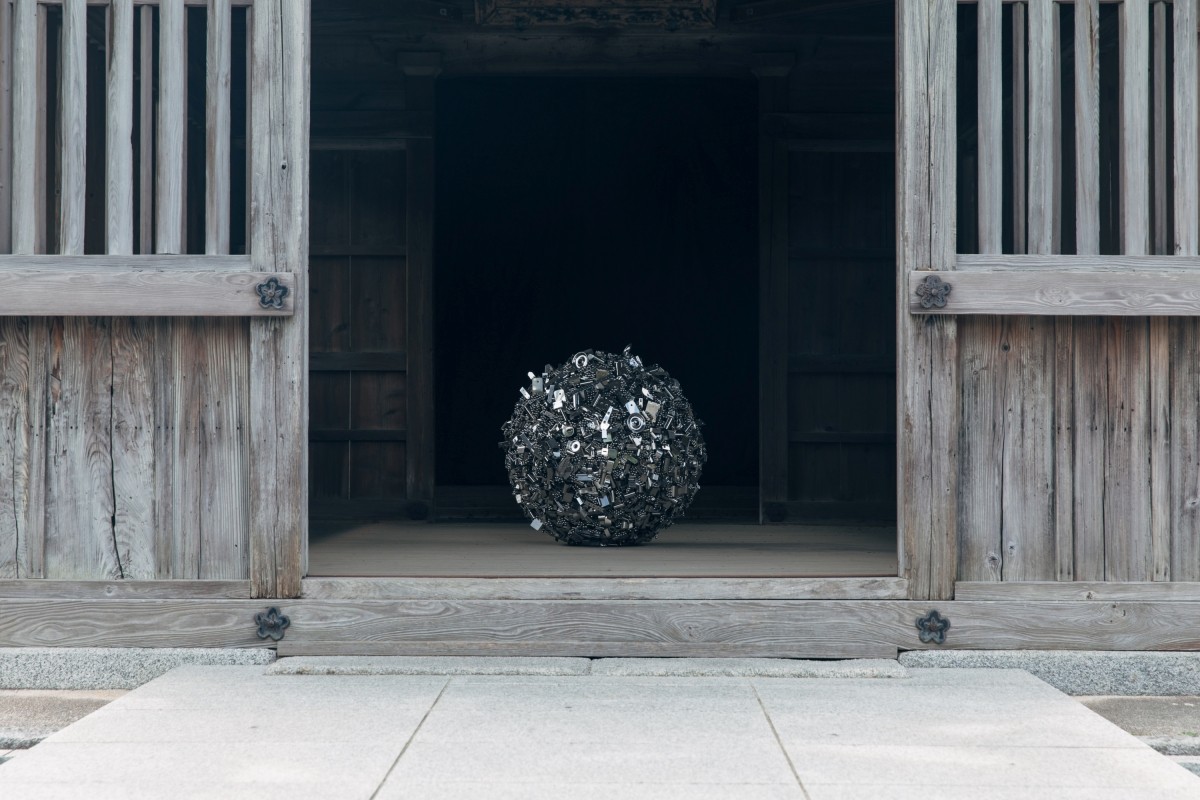
1 Really shiny stuff that doesn’t mean anything, ©Ryan Gander, 2011, Courtesy of TARO NASU, Photo by Yasushi Ichikawa *The door is usually closed. In addition, the exhibit may not be on display due to shrine events. Image provided by Dazaifu Tenmangu
Tenjin-sama is worshipped not only as the "God of Learning" but also as the "God of Culture and the Arts." Since 2006, the "Dazaifu Tenmangu Art Program" has been held, in which artists create works after researching and staying in Dazaifu. Modern art pieces that harmonize with the history and nature of the shrine grounds are scattered throughout as an "on-site museum." In 100 or even 1,000 years, some of these works may become cultural properties.
"Ume-shigoto" by Shrine Staff
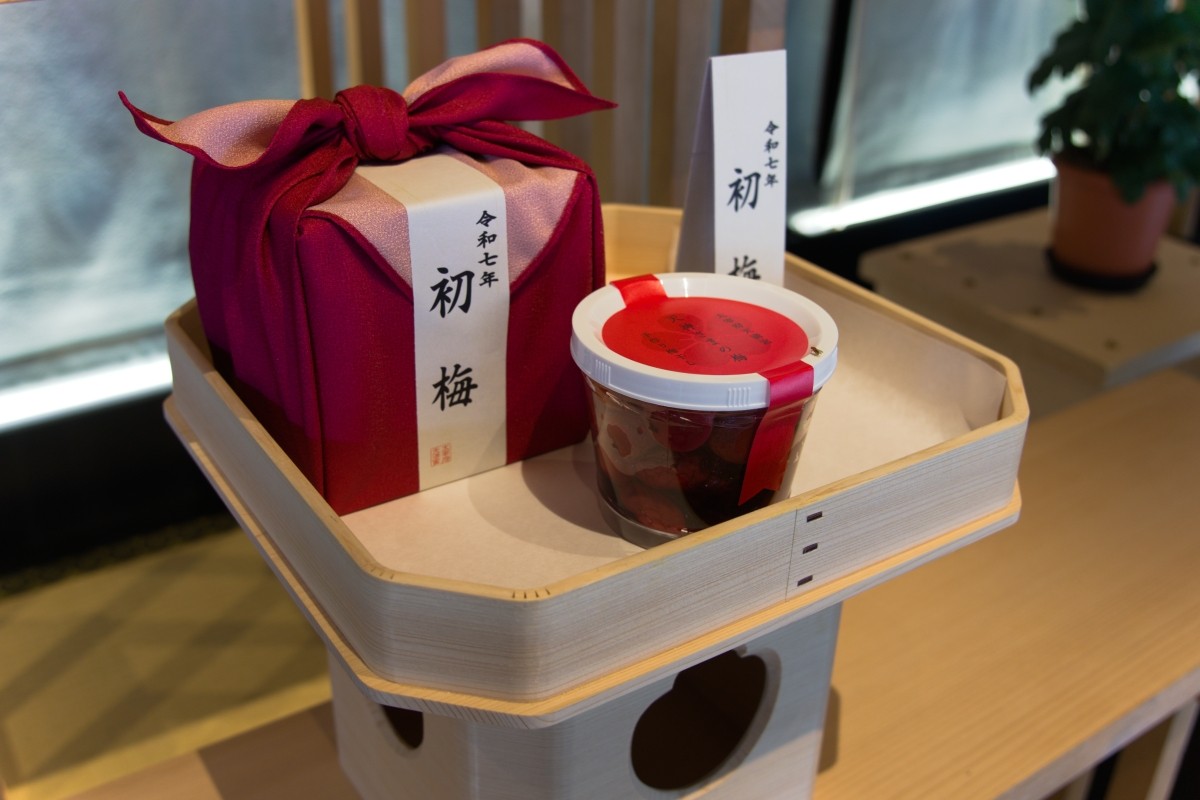
Within the shrine grounds, there are about 200 varieties of plum trees, and it is said that none of these were planted by the shrine itself, but all were donated by ordinary people. The trees are so carefully tended that there is even a special role called "Umemori" (Plum Guardian) responsible for their care.
In February, beautiful blossoms are in full bloom, delighting the eyes of visitors. From around mid-May, it is a tradition for all the staff serving at Dazaifu Tenmangu Shrine to harvest the plums from the trees on the grounds and sun-dry them to make "umeboshi" (pickled plums). The very first umeboshi of the year is first offered to Tenjin-sama at the "Hatsuume Kenjo-sai" (First Plum Offering Festival) on November 1. After that, they are distributed at the shrine office and have become a popular item among those in the know.
Harmony Between Modern Brands and Tradition
The area around the shrine is also full of highlights. There is a Starbucks designed by architect Kengo Kuma and a shop from BEAMS, one of Japan’s leading select shop brands, along the approach to the shrine, bringing new life to the traditional streetscape. Be sure to stop by after your visit.
Check Out the Starbucks Designed by Kengo Kuma👉15 Special Starbucks Locations Showcasing Traditional Japanese Architecture and Culture
Main Access Routes from Hakata and Tenjin
1. From Hakata Station: The Easiest Route with No Transfers
Nishitetsu Dazaifu Sightseeing Bus "Tabito"
- Bus Stop: Hakata Bus Terminal 1F (Stop No. 11)
- Travel Time: About 40 minutes
- Fare: 700 yen *600 yen between Fukuoka Airport and Dazaifu
- Point: No need to worry about transfers, and you can sit and go directly, making it ideal for international tourists.
2. From Tenjin: Enjoy the "Sightseeing Train" Route
Nishitetsu Dazaifu Sightseeing Train "Tabito"
- Route: Nishitetsu Fukuoka (Tenjin) Station → (Express) → Nishitetsu Futsukaichi Station (transfer) → Dazaifu Station
- Travel Time: About 35 minutes
- Fare: From 420 yen
- Point: If you ride the sightseeing train "Tabito," you can enjoy the Japanese-style interior and the scenery from the train windows.
Why You Should Visit Dazaifu Tenmangu Now
One of the most memorable things from the interview was when Mr. Takayama, a Shinto priest, said, "Dazaifu Tenmangu is a 'living shrine.'" Rather than simply preserving past glory, Dazaifu Tenmangu continues to surprise and heal people by carefully protecting its 1,100-year history while also incorporating contemporary art and architecture. This is why it continues to captivate people even today.
A journey to experience the "scenery unique to this moment" leading up to the 2027 Grand Festival and to encounter the "true spirit" cherished by the shrine priests. On your next trip to Fukuoka, be sure to feel the story of Tenjin-sama in the pure air of the shrine grounds.
Dazaifu Tenmangu Shrine
Address: 4-7-1 Saifu, Dazaifu City, Fukuoka Prefecture
Access: 5-minute walk from Dazaifu Station
Visiting Hours: [Opening] 6:00 from the Vernal Equinox, 6:30 from the Autumnal Equinox [Closing] April–May & September–November 19:00, June–August 19:30, December–March 18:30
Closed: Open year-round
Admission: Free *Some facilities may require a separate viewing fee
Website: https://www.dazaifutenmangu.or.jp/en/
🏨Book Accommodation in Fukuoka and Dazaifu
Comments