
※This article was published at November 2014.※
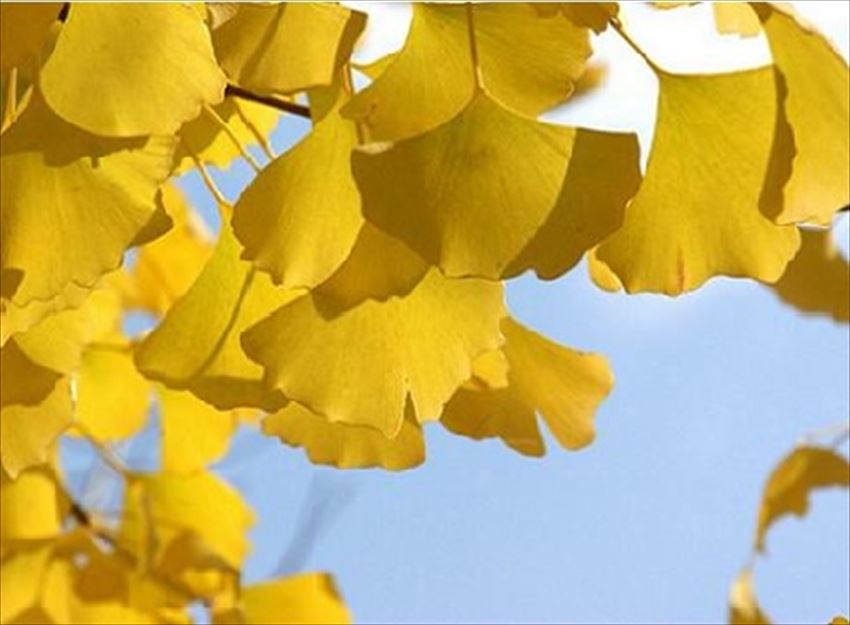
As mornings and evenings are getting colder, the gingko leaves we see in the city are beginning to change from green to bright yellow.
These gingko trees have not only survived unchanged from ancient times, but because the gingko tree is the only member of the ginkgo family, these trees have been called “living fossils.”
In addition, because they have very strong fertility and high seed germination rates, there are many gingko trees that are over 1,000 years old.
In the language of flowers they literally embody longevity.
Ginkgo trees are dioecious and characterized by smooth, semi-circular leaves.
Recently, there has been much focus on the gingko tree products as health foods, as extracts from the leaves revitalize the brain cells.
In addition, the trunk of the gingko tree is very workable and is widely used as timber, and the gingko nut is said to have the effect of suppressing phlegm and coughing.
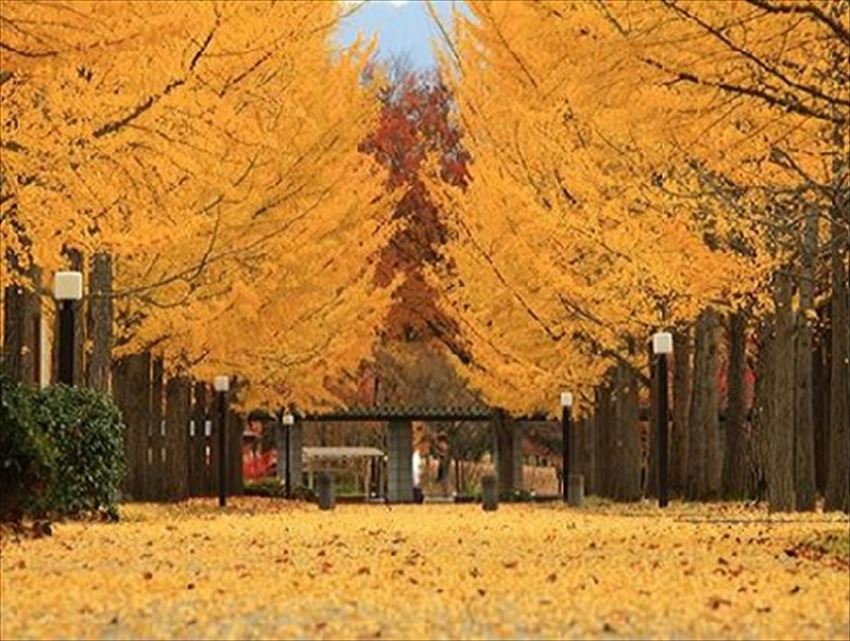
In addition, the gingko tree is often planted as a decorative street tree due to the beauty of its color.
For example, the row of gingko trees at Outer Gardens of the Meiji Shrine in Tokyo and Midosuji in Osaka are well known and appreciated.
The overpowering golden color produced by rows of gingko trees creates a romantic atmosphere, and you may have seen locations such as these used as scenes in television shows and movies.
The gingko tree is wonderful plant representative of fall, with leaves and nuts that have various effects, a trunk that is frequently used as timber, and a beautiful appearance that allows them to be enjoyed as decorative trees.
Comments